When to Winterize Your Smart Lawn Irrigation System
The Critical Window: Why Timing is Everything
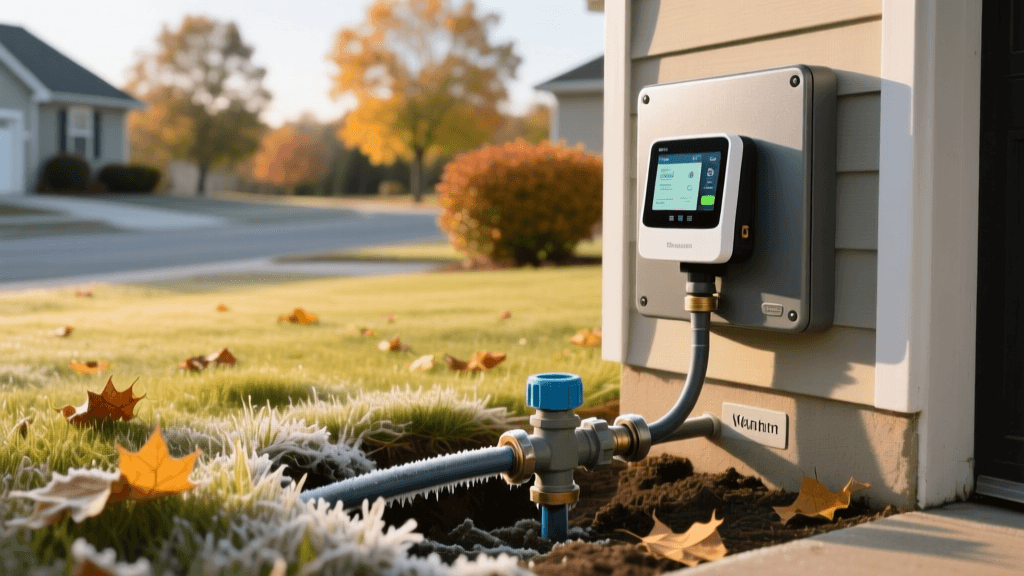
Transitioning your outdoor living spaces and landscaping for winter requires precise timing, and nowhere is this more critical than with your smart lawn irrigation system. Winterizing your sprinklers and drip lines is a delicate balancing act. Shut down the system too early, and your turfgrass may enter winter dormancy stressed and dehydrated, leaving it vulnerable to weed invasion and snow mold. Wait too long, and you risk catastrophic damage to your PVC pipes, smart valves, and backflow preventers when the water inside them freezes and expands. For homeowners investing in smart home integration, protecting the delicate solenoids and Wi-Fi-enabled manifolds is paramount. According to the EPA WaterSense program, proper seasonal maintenance of irrigation systems not only prevents costly water waste from cracked pipes but also ensures the longevity of water-efficient technologies. This comprehensive when-to timing guide will walk you through the exact seasonal markers, smart controller settings, and blowout procedures required to protect your landscape investment.
The Science of Timing: When Exactly Should You Winterize?
The golden rule of irrigation winterization is to complete the blowout process after your lawn has gone dormant but before the ground freezes solid. Turfgrass typically enters dormancy when soil temperatures consistently drop below 45°F (7°C). However, the true danger zone for your irrigation infrastructure is the frost line. When nighttime air temperatures consistently dip below 40°F (4°C), the risk of a hard freeze increases exponentially. You can find your historical first freeze date and regional frost line data using resources like the Old Farmer's Almanac Frost Dates calculator. As a general rule, you should schedule your winterization exactly one to two weeks before your region's average first hard freeze date. This provides a safety buffer against unexpected early cold snaps while allowing the soil to retain enough residual autumn moisture to sustain the root systems of your lawn, ornamental grasses, and perennial garden beds throughout the winter months.
Regional Timing Chart for Irrigation Blowouts
Because climate zones vary drastically across the country, a one-size-fits-all approach to winterization does not work. Below is a structured timing guide to help you pinpoint your specific winterization window based on your geographic region.
| Region | Typical Blowout Window | Soil Temp Target | Smart Controller Action |
|---|---|---|---|
| Pacific Northwest | Late October to Mid-November | Below 45°F | Enable Rain/Freeze Sensor Override |
| Midwest | Early October to Late October | Below 40°F | Activate 'Winterize' Mode |
| Northeast | Mid-October to Early November | Below 40°F | Pause Schedules & Drain Valves |
| Mountain West | Late September to Mid-October | Below 45°F | Shut Off Main Line & Blowout |
| Southwest / Arid | December (If applicable) | Below 35°F | Reduce Winter Watering Schedules |
Adjusting Your Smart Irrigation Controller for Winter
One of the greatest advantages of smart home integration is the ability to manage your irrigation system remotely, but smart controllers require specific end-of-season protocols. Simply turning the dial to 'Off' is often insufficient for modern Wi-Fi-enabled systems like Rachio, Rain Bird (ESP-TM2), or Orbit B-hyve. Here is how to properly prep your smart hub for the winter:
- Pause, Do Not Delete: Most smart controllers feature a 'Seasonal Pause' or 'Standby' mode. This halts all scheduled watering while retaining your customized zone run-times and soil-type data for spring reactivation.
- Disable Weather Intelligence: Features like Rachio's Weather Intelligence or Rain Bird's smart rain delays should be toggled off. In winter, freezing rain or snow accumulation can confuse the controller's local weather API, potentially triggering an accidental watering cycle during a mid-winter thaw.
- Protect the Physical Unit: If your smart controller is mounted outdoors in a weatherproof box, ensure the gasket seals are intact. Condensation inside the enclosure can short-circuit the motherboard when temperatures fluctuate. Consider placing a silica gel desiccant pack inside the enclosure to absorb ambient moisture.
- IFTTT and Smart Home Routines: If you have integrated your irrigation system with platforms like Amazon Alexa, Google Home, or IFTTT (e.g., triggering sprinklers based on soil moisture sensors), disable these automations. Winter moisture readings can easily trigger erroneous watering cycles if the smart routines are left active.
Winterizing Drip Lines for Raised Garden Beds
For those who practice garden-to-table living, your raised vegetable beds and ornamental planters likely utilize drip irrigation. Drip lines are notoriously fragile and highly susceptible to UV degradation and freeze-thaw damage. Unlike underground PVC pipes, drip tubing holds water in low-lying emitters that are impossible to clear completely with an air compressor. The timing for drip line winterization is slightly earlier than your main sprinkler zones. You should flush and drain drip lines as soon as your autumn harvest is complete and you have put your garden beds to rest. Disconnect the main poly tubing from the backflow preventer, open all manual flush valves at the ends of the drip lines, and use a wet-dry vacuum to extract residual water from the emitter heads. Store above-ground smart timers and battery-operated drip manifolds indoors in a climate-controlled garage or shed to prevent the LCD screens and internal diaphragms from cracking in sub-zero temperatures.
The Blowout Process: PSI Limits and Pipe Materials
The Irrigation Association strongly recommends using compressed air to evacuate water from irrigation lines in climates where the ground freezes. However, the timing of the blowout must be paired with the correct air pressure to avoid destroying your smart valves. When hooking up an air compressor to your mainline, you must know your pipe material. Polyethylene (poly) pipes, commonly used in flexible residential setups, are highly sensitive to pressure spikes. Never exceed 50 PSI when blowing out poly pipes, as the friction and heat generated by high-pressure air can melt the interior walls and warp the barbed fittings. Rigid PVC pipes can generally handle up to 80 PSI. Furthermore, high-pressure air can easily shatter the delicate plastic diaphragms inside smart irrigation valves and damage the electronic solenoids that connect to your Wi-Fi controller. Always use a pressure regulator on your compressor and introduce the air slowly, allowing the water to gently push out of the zone rather than blasting it with a sudden shockwave of compressed air.
The Cost of Mistakes: What Happens If You Miss the Window?
Failing to adhere to the proper when-to timing guide for winterization can result in severe financial consequences when the spring thaw arrives. Below is a breakdown of potential repair costs if water is left inside your system and freezes:
- Cracked Brass Backflow Preventer: $250 to $600+ for parts and professional replacement.
- Shattered Smart Valve Manifold: $150 to $300 per zone, plus the cost of reprogramming the smart controller to recognize new wiring.
- Burst PVC Mainline: $500 to $1,500+ depending on the depth of the pipe and the extent of the landscape restoration required to access the leak.
- Ruined Smart Controller Motherboard: $150 to $250 if freezing water backs up into the valve box and shorts the underground wiring connected to the smart hub.
Spring Reactivation: When to Turn It Back On
Just as autumn winterization requires precise timing, so does spring reactivation. Turning your smart irrigation system back on too early is a common mistake that leads to flooded yards and blown valves. You must wait until the frost line has completely retreated below your deepest sprinkler heads (usually 8 to 12 inches deep). A reliable indicator is when daytime soil temperatures consistently remain above 40°F (4°C) for at least two weeks. When you do reactivate the system, do not simply press 'Start' on your smart app. Manually open the main water valve a quarter-turn to let the pipes pressurize slowly, preventing water hammer that can crack freshly thawed, brittle fittings. Once pressurized, run a manual test cycle through your smart controller to inspect every zone for leaks, misaligned heads, and damaged drip lines before resuming your automated seasonal watering schedule.