When To Winterize Smart Irrigation And Outdoor Pipes
The High Cost of Poor Timing
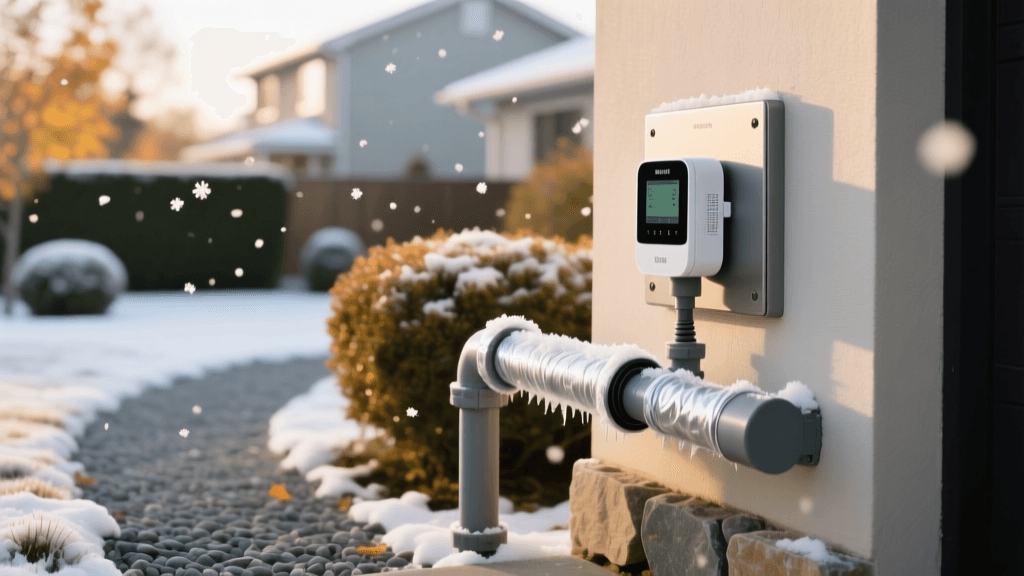
Bridging the gap between indoor smart home technology and outdoor landscaping requires a deep understanding of seasonal timing. While your smart thermostat knows exactly when to turn on the indoor heat, your smart irrigation system and outdoor plumbing rely entirely on your proactive timing to survive the winter. Failing to winterize your outdoor water features at the exact right moment can lead to catastrophic damage. A single hard freeze can crack a $300 smart controller's internal flow meter, shatter a brass backflow preventer, or burst underground PVC pipes, leading to thousands of dollars in excavation and repair costs.
Unlike traditional manual sprinkler systems, modern smart irrigation setups—featuring controllers like the Rachio 3, Orbit B-hyve, or Hunter Hydrawise—incorporate sensitive electronic components, Wi-Fi antennas, and advanced flow sensors that are particularly vulnerable to extreme temperature fluctuations and moisture intrusion. Knowing precisely when to initiate the winterization process is the difference between a seamless spring startup and a complete system overhaul. This comprehensive timing guide will walk you through the exact seasonal windows for auditing, draining, and putting your smart outdoor water systems to sleep.
Understanding the Freeze Thresholds
To time your winterization correctly, you must understand the difference between a light frost and a hard freeze. According to the National Weather Service, a light frost occurs when temperatures dip to 33°F–36°F, which can damage delicate plant foliage but generally will not freeze water inside underground pipes or insulated above-ground valves. A hard freeze, however, occurs when temperatures drop to 28°F or lower for a sustained period. This is the critical threshold where water inside your backflow preventers, valves, and pipes expands as it turns to ice, generating enough pressure to rupture metal and plastic alike.
The golden rule of irrigation timing is to begin your physical winterization process two to three weeks before your region's historical average first hard freeze. Relying on the first freeze warning is a gamble; sudden, unpredicted cold snaps can occur days before the historical average, catching unprepared homeowners off guard. Furthermore, the EPA WaterSense program emphasizes that proper seasonal maintenance of irrigation systems not only prevents physical damage but also ensures water efficiency when the system is eventually reactivated in the spring.
Regional Winterization Timing Matrix
The exact timing for winterizing your smart irrigation system depends heavily on your geographic location and USDA Hardiness Zone. Use the following matrix to determine your ideal window for action.
| Region | Typical First Hard Freeze | Ideal Winterization Window | Primary Smart Controller Action |
|---|---|---|---|
| Upper Midwest / Northern Plains | Early to Mid-October | Late September | Enable Freeze Skip & Schedule Blowout |
| Northeast / New England | Late October to Early Nov | Mid-October | Sleep Mode & Compressed Air Blowout |
| Pacific Northwest | Mid to Late November | Early November | Manual Drain & Winterize Settings |
| Mid-Atlantic / Transition Zone | Early to Mid-November | Late October | Auto-Adjust & Insulate Backflow |
| Deep South / Sunbelt | Rare (December/January) | Early December | Seasonal Shift & Pouch Insulation |
Phase 1: Late Summer and Early Fall (The Smart Audit)
Timing begins long before the first frost. In late August and early September, your smart controller should be transitioning its watering schedules based on local Evapotranspiration (ET) data. This is the perfect time to conduct a pre-winter system audit. Run a manual test cycle through every zone using your controller's mobile app. Pay close attention to the smart flow sensor readings if your system is equipped with one. A sudden spike in water usage on a specific zone indicates a leak or a broken sprinkler head that should be repaired before winter, as digging up frozen soil in November to fix a leak is nearly impossible.
During this phase, check the Wi-Fi signal strength at your outdoor controller enclosure. Smart controllers rely on a steady connection to pull hyper-local weather data. If the signal is weak, the controller may fail to receive critical 'freeze skip' commands from the cloud during sudden autumn cold snaps. Install a Wi-Fi extender in your garage or near the exterior wall if necessary to ensure your smart hub remains connected as you approach the winterization window.
Phase 2: Mid-Fall (The Physical Blowout Window)
The most critical physical step in the timing guide is the 'blowout' or drainage phase. This must be completed after your lawn has gone dormant but before the ground freezes solid. For most of the country, this window falls between mid-October and early November. The Irrigation Association strongly recommends using compressed air to evacuate water from the lines, as manual drainage rarely removes all the water trapped in low-lying pipe bellies.
If you are hiring a professional or renting an air compressor to do it yourself, timing the pressure correctly is vital to protect your smart valves. Smart valves, such as the Hunter ICV or Rain Bird DV series, contain sensitive solenoids and diaphragms that can be destroyed by excessive air pressure. Never exceed 50 PSI for polyethylene pipes and 80 PSI for Schedule 40 PVC pipes. The volume of air (CFM) is more important than the pressure (PSI). You want a high-volume, low-pressure push to gently sweep the water out of the lines without generating enough friction heat to melt the plastic fittings or damage the smart valve internals.
During this phase, you must also address the backflow preventer. Whether you have a Pressure Vacuum Breaker (PVB) or a Reduced Pressure Zone (RPZ) assembly, these above-ground brass components hold water in their internal chambers. Shut off the main water supply to the irrigation system, open the test cocks to a 45-degree angle, and leave the ball valves partially open to prevent trapped water from expanding and cracking the brass casing during a freeze.
Phase 3: Late Fall (Controller Sleep Mode and Sensor Care)
Once the physical lines are cleared of water, the final timing step involves the digital winterization of your smart home ecosystem. Do not simply unplug your smart controller. Unplugging devices like the Rachio 3 or Orbit B-hyve will cause them to lose their internal memory and require a full system reconfiguration in the spring. Instead, use the companion app to put the controller into 'Sleep' or 'Standby' mode. This disables all scheduled watering while keeping the device connected to your Wi-Fi network, allowing it to download firmware updates over the winter and retain your complex zone configurations.
If your system utilizes a wireless rain/freeze sensor or a soil moisture probe, these must be protected. While most modern sensors are rated for outdoor use, the repeated freeze-thaw cycles of late fall and early winter can degrade their battery life and external casings. Remove the battery from your wireless freeze sensor and store it indoors. For soil moisture sensors buried in the garden beds, mark their locations with a landscaping flag so you do not accidentally drive an aerator or garden spade into them during early spring yard cleanup.
Finally, invest in an insulated backflow preventer cover. These insulated pouches, typically costing between $30 and $50, wrap tightly around your above-ground brass valves. While they will not protect against a deep, sustained hard freeze on their own, they provide a crucial buffer against the rapid temperature drops and icy winds that characterize late autumn weather, buying you extra time if a sudden cold front arrives earlier than expected.
When to Reactivate in Spring
Just as knowing when to shut down is crucial, knowing when to wake your system up is equally important. The biggest mistake homeowners make is turning their smart irrigation back on during the first warm week of spring, usually in March. This premature activation often leads to catastrophic damage when a late-season April freeze inevitably rolls through.
The correct timing for spring reactivation is dictated by soil temperature, not air temperature. Wait until the soil temperature at a depth of four inches is consistently above 50°F for at least five consecutive days. You can monitor this using a smart soil sensor or a standard soil thermometer. Once the soil is warm enough, slowly open the main water valve to a quarter-turn to allow the pipes to pressurize gradually, preventing water hammer that could blow apart your smart valves. Finally, take your controller out of 'Sleep' mode, run a manual zone test to check for winter damage, and let your smart controller's local weather intelligence take over for the new growing season.