Home & Garden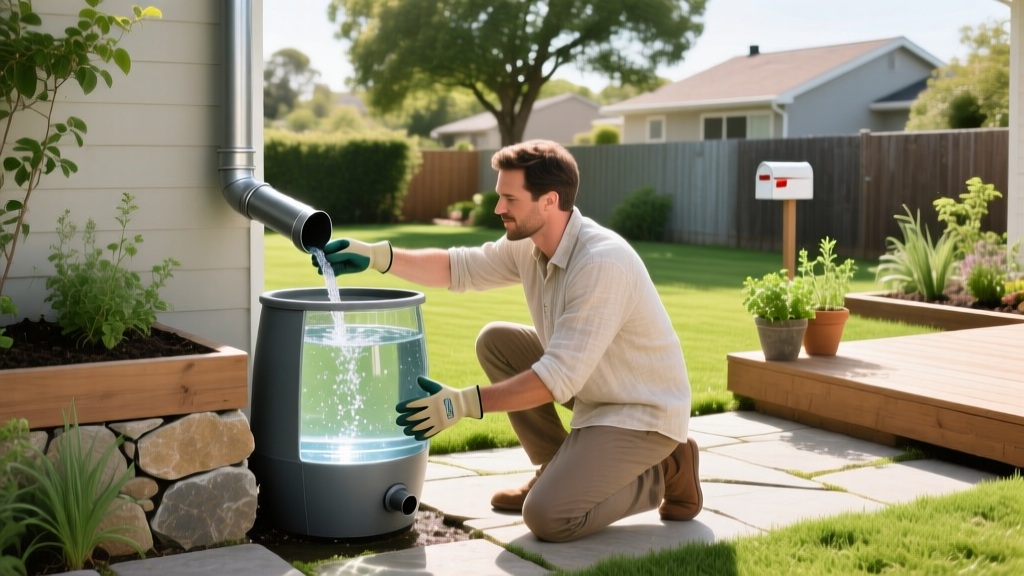
Is Collecting Rainwater Illegal? State Laws & HOA Rules Explained
The short answer to the question “is collecting rainwater illegal” is no; it is not federally illegal in the United States. However, the complete legal reality is far more nuanced. Rainwater harvesting is governed by a complex patchwork of state water rights doctrines, local municipal codes, and Homeowner Association (HOA) covenants. While states like Texas and California actively incentivize residential rainwater collection, others like Colorado and Nevada impose strict capacity limits or require specific permits due to historical water rights laws.
For homeowners looking to install a 50-gallon rain barrel or a 2,500-gallon cistern, understanding the legal boundaries is critical to avoiding fines and system teardowns. This guide breaks down the exact legal frameworks, state-by-state capacity limits, and code-compliant equipment requirements for residential rainwater harvesting.
The Core Legal Divide: Riparian Rights vs. Prior Appropriation
To understand why rainwater laws vary so drastically across the country, you must understand the two foundational doctrines of U.S. water law. The legality of your rain barrel depends entirely on which doctrine your state follows.
Riparian Rights (Eastern and Midwestern U.S.)
States with abundant water resources generally follow the riparian doctrine. Under this system, landowners whose property borders a water source have the right to make reasonable use of it. Because water is plentiful, the state does not strictly track precipitation. In these states, collecting rainwater is overwhelmingly legal, largely unregulated for residential use, and often encouraged by local municipalities to reduce stormwater runoff.
Prior Appropriation Doctrine (Western U.S.)
Western states operate under the “prior appropriation” doctrine, often summarized as “first in time, first in right.” Water rights are treated as distinct property rights that can be bought, sold, and severed from the land. In this framework, all precipitation—including rain that falls on your roof—is technically considered state property that has already been allocated to downstream senior water rights holders. Historically, this made rainwater harvesting strictly illegal in states like Colorado. Today, most western states have carved out specific exemptions for residential rain barrels, provided they adhere to strict capacity limits.
Expert Insight: According to the National Conference of State Legislatures (NCSL), over 30 states now have specific statutes addressing rainwater harvesting, with a clear legislative trend moving toward deregulation and incentivization for non-potable outdoor use.
State-by-State Rainwater Harvesting Legality Matrix
Below is a breakdown of residential rainwater collection laws for some of the most heavily regulated and highly incentivized states. Always verify with your local county water authority before installing systems exceeding 100 gallons.
| State | Legal Status | Max Capacity (No Permit) | Key Regulation & Code |
|---|---|---|---|
| Colorado | Legal (Restricted) | 220 Gallons | HB 16-1005 allows a maximum of two 110-gallon barrels per single-family home. Water must be used outdoors on the property where it was captured. |
| Utah | Legal (Registered) | 2,500 Gallons | Must register with the Division of Water Rights. Unregistered collection is limited to one 100-gallon container. |
| Texas | Legal (Unrestricted) | Unlimited | Highly incentivized. HOAs are legally prohibited from banning rain barrels under Texas Property Code Sec. 202.007. |
| California | Legal (Unrestricted) | Unlimited | The Rainwater Capture Act of 2012 explicitly authorizes residential collection for non-potable uses without a permit. |
| Nevada | Restricted | N/A (Permit Required) | Generally illegal to collect rainwater without a water right permit, with very narrow exemptions for specific wildlife guzzlers. |
| Ohio | Legal (Unrestricted) | Unlimited | Regulated under the Ohio EPA. Systems over 1,000 gallons may require local zoning approval for structural footprint. |
For residents in Colorado, the Colorado Water Conservation Board (CWCB) provides explicit guidelines ensuring that your two 110-gallon barrels are equipped with sealable lids to prevent mosquito breeding and evaporation, a strict requirement under state law.
Navigating HOA Restrictions and Local Zoning Ordinances
Even if your state legally permits unlimited rainwater harvesting, your local Homeowner Association (HOA) or municipal zoning board may impose aesthetic and placement restrictions.
The Texas Precedent: SB 302
In 2011, Texas passed Senate Bill 302 (now codified in Texas Property Code Sec. 202.007), which explicitly voids any HOA covenant that prohibits a homeowner from installing a rainwater harvesting system. However, the law does allow HOAs to require that the system be screened from view or painted to match the home’s exterior, provided these aesthetic requirements do not significantly increase the cost or decrease the efficiency of the system.
Zoning Setbacks and Structural Loads
For larger cisterns (1,000+ gallons), local zoning ordinances treat the tank as an accessory structure.
- Setbacks: Most municipalities require large cisterns to be placed at least 5 to 10 feet away from property lines and rear easements.
- Weight Loads: Water weighs 8.34 pounds per gallon. A 1,000-gallon tank exerts over 8,300 pounds of force. Zoning boards require a compacted gravel base (typically 4 to 6 inches of crushed 3/4-inch aggregate) or a reinforced concrete pad to prevent soil subsidence and tank tipping.
Warning: Never place a large rainwater cistern on standard wooden decking or未经 compacted topsoil. The dynamic load of shifting water can cause catastrophic structural failure and deck collapse.
Health, Safety, and Code Compliance for Residential Systems
If you are collecting rainwater for irrigating edible crops (vegetable gardens) or if your system connects to indoor plumbing for toilet flushing, you must adhere to strict health and safety codes.
First-Flush Diverters and Filtration
Bird droppings, asphalt shingle granules, and pollen accumulate on your roof between rain events. A code-compliant system must include a first-flush diverter. The Rain Harvesting 4-inch First Flush Diverter (Model RH4F) is an industry standard that isolates the first 5 to 10 gallons of roof runoff in a sealed PVC pipe before allowing clean water to flow into the main tank. This prevents fecal coliform bacteria and heavy metals from entering your storage vessel.
Mosquito and Algae Control
Standing water is a primary vector for mosquitoes carrying West Nile and Dengue.
- Physical Barriers: All tank inlets and overflows must be fitted with 1/16-inch stainless steel mesh screens.
- Biological Control: Use Summit Responsible Solutions Mosquito Bits, which contain Bti (Bacillus thuringiensis israelensis). Bti is a naturally occurring bacterium that targets mosquito larvae but is 100% safe for pets, wildlife, and edible garden irrigation.
- Light Deprivation: Algae requires sunlight to photosynthesize. Always use opaque, UV-stabilized polyethylene tanks (like the RTS 50-Gallon or Good Ideas 65-Gallon models) rather than translucent IBC totes, which will rapidly turn green and clog drip irrigation emitters.
Financial Incentives: Tax Credits and Rebates
Many municipalities offset the cost of rainwater harvesting equipment through utility rebates.
- Austin Water (Texas): Offers a rebate of up to $500 for residential rainwater harvesting systems, calculated at $0.50 per gallon of storage capacity installed.
- Santa Clara Valley Water District (California): Provides rebates up to $1,000 for cisterns that capture at least 1,000 gallons, provided the system includes a first-flush diverter and a motorized pump.
- Federal Tax Credits: While there is no direct federal tax credit for standalone rain barrels, if your rainwater system is integrated into a certified solar-powered irrigation pump setup, the hardware may partially qualify under the Residential Clean Energy Credit.
Frequently Asked Questions (FAQ)
Can I use collected rainwater to water my vegetable garden?
Yes, but with precautions. Rainwater collected from asphalt shingles or untreated metal roofs is safe for root-zone irrigation (drip lines or soaker hoses). Avoid using overhead sprinklers on leafy greens (like lettuce or spinach) within 48 hours of a rain event to minimize the risk of transferring airborne pathogens from roof runoff to edible foliage.
Is it illegal to collect rainwater if I live in a city with combined sewer overflows (CSOs)?
No, it is actually highly encouraged. Municipalities with CSOs actively promote rain barrels because capturing roof runoff reduces the volume of water entering the storm drains during heavy downpours, preventing raw sewage from overflowing into local waterways.
Do I need a permit for a 50-gallon rain barrel?
In 48 out of 50 states, a standard 50-gallon rain barrel connected to a residential downspout requires zero permits, inspections, or registrations. Only in highly restricted western jurisdictions (like specific counties in Nevada) might you need to notify the local water master, though enforcement on single 50-gallon barrels is virtually nonexistent.