Landscaping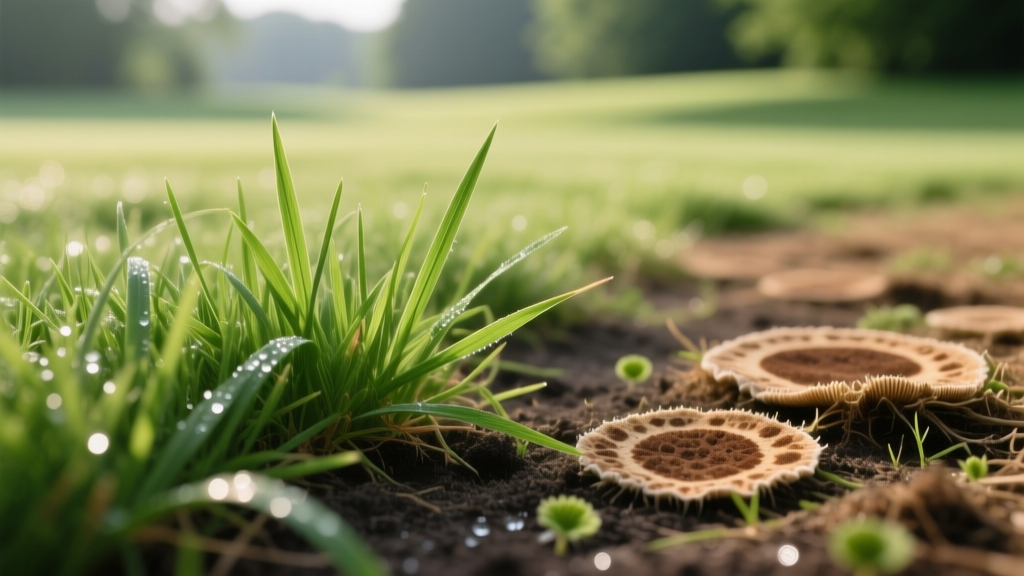
How to Identify and Treat Brown Patch and Dollar Spot
Mike RodriguezPublished
The Role of Healthy Turf in Landscape Design
A masterfully designed landscape relies on the seamless integration of hardscaping, structured garden beds, and lush, vibrant turfgrass. The lawn serves as the visual foundation of your outdoor living space, providing a lush green canvas that highlights your curb appeal improvements and sustainable landscaping practices. However, nothing disrupts the aesthetic harmony of a landscape faster than a severe fungal outbreak. Among the most destructive and common turfgrass diseases in North America are Brown Patch and Dollar Spot. These fungal pathogens can rapidly transform a pristine lawn into a patchy, unsightly mess, undermining the time and financial investment you have poured into your landscape design.
Understanding the biology, identification markers, and treatment protocols for these diseases is essential for any homeowner or landscape professional. In this comprehensive guide, we will explore how to accurately diagnose Brown Patch and Dollar Spot, implement cultural landscaping practices to prevent their recurrence, and apply targeted chemical treatments to restore your turf to its former glory.
Identifying Brown Patch (Rhizoctonia solani)
Brown Patch is a devastating fungal disease caused by the pathogen Rhizoctonia solani. It primarily targets cool-season grasses such as Tall Fescue, Kentucky Bluegrass, and Perennial Ryegrass, though it can also affect warm-season grasses like St. Augustine and Zoysia during their cooler growing periods. According to Penn State Extension, Brown Patch thrives in conditions of high humidity and warm nights, typically striking when nighttime temperatures remain above 65°F (18°C) and daytime temperatures hover between 80°F and 90°F.
Visual Symptoms:
- Patch Formation: The disease manifests as large, irregular, circular patches of blighted turf that can range from a few inches to several feet in diameter. In severe cases, these patches merge to cover vast areas of the lawn.
- Smoke Rings: In the early morning when dew is present, you may observe a dark, purplish-gray 'smoke ring' at the outer edge of the patch. This is the active mycelium of the fungus spreading outward.
- Leaf Lesions: Upon close inspection of individual grass blades, you will notice irregular, tan-colored lesions with distinct dark brown or purplish borders. The leaf blade often twists and collapses at the site of the lesion.
Brown Patch is heavily exacerbated by excessive nitrogen fertilization during the late spring and summer months, as well as poor soil drainage and compacted thatch layers that trap moisture against the turf canopy.
Identifying Dollar Spot (Clarireedia jacksonii)
Dollar Spot, formerly classified as Sclerotinia homoeocarpa and now known as Clarireedia jacksonii, is a pervasive disease that affects both cool-season and warm-season turfgrasses. Unlike Brown Patch, which favors excessive moisture and high nitrogen, Dollar Spot frequently exploits turf that is under stress from low soil moisture, low nitrogen fertility, and heavy thatch accumulation. The University of Wisconsin-Madison Extension notes that this pathogen is most active when temperatures range between 60°F and 85°F (15°C to 29°C) combined with high humidity and prolonged leaf wetness.
Visual Symptoms:
- Spot Size: True to its name, the initial symptoms appear as small, circular, straw-colored spots roughly the size of a silver dollar (1 to 3 inches across). As the disease progresses, these spots coalesce into large, irregular blighted areas.
- Cobweb Mycelium: During the early morning hours, before the sun burns off the dew, a white, cobweb-like fungal growth (mycelium) can be seen spanning across the infected spots.
- Hourglass Lesions: Individual grass blades exhibit distinct, hourglass-shaped lesions that are bleached white or tan in the center with reddish-brown to purplish margins. The tip of the leaf blade above the lesion often dies back completely.
Diagnostic Comparison: Brown Patch vs. Dollar Spot
Accurate identification is the first step toward effective treatment. Misdiagnosing the disease can lead to the application of the wrong fungicide or cultural practice, wasting time and money. Use the comparison table below to differentiate between the two pathogens in your landscape.
| Feature | Brown Patch (Rhizoctonia solani) | Dollar Spot (Clarireedia jacksonii) |
|---|---|---|
| Patch Size | Large (6 inches to several feet) | Small (1 to 3 inches, merges later) |
| Optimal Temperature | Warm (75°F to 95°F day, >65°F night) | Moderate (60°F to 85°F) |
| Nitrogen Preference | Thrives in high nitrogen environments | Thrives in low nitrogen / deficient soils |
| Leaf Lesion Shape | Irregular, asymmetric tan spots | Distinct hourglass shape with dark borders |
| Morning Mycelium | Smoke ring at the patch perimeter | Cobweb-like growth across the entire spot |
Cultural Landscaping Practices for Prevention
Before reaching for chemical controls, it is vital to audit your landscape maintenance routines. Fungal spores are ubiquitous in the soil; they only cause disease when the environment favors the pathogen over the plant. Implementing sustainable landscaping practices can drastically reduce the severity of both Brown Patch and Dollar Spot.
- Auditing Irrigation Systems: Water your lawn deeply and infrequently to encourage deep root growth. Aim for 1 to 1.5 inches of water per week, applied in one or two sessions. Always irrigate in the early morning (between 4:00 AM and 8:00 AM) so the grass blades dry quickly once the sun rises. Evening watering leaves the canopy wet overnight, creating an incubator for fungal spores.
- Thatch Management and Aeration: A thatch layer thicker than 0.5 inches acts as a sponge, holding moisture against the crown of the grass and providing a physical barrier that prevents water and nutrients from reaching the soil. Perform core aeration annually in the fall for cool-season grasses to alleviate soil compaction, improve drainage, and accelerate thatch decomposition.
- Precision Mowing: Never remove more than one-third of the grass blade in a single mowing. For Tall Fescue and Kentucky Bluegrass, maintain a mowing height of 2.5 to 3.5 inches during the heat of summer. Taller grass shades the soil, reducing moisture evaporation and keeping the root zone cooler. Furthermore, ensure your mower blades are razor-sharp; torn and frayed grass blades lose excess moisture and provide easy entry points for fungal pathogens.
- Nitrogen Balancing: Avoid heavy applications of quick-release nitrogen fertilizers in late spring and summer, as the resulting flush of soft, succulent growth is highly susceptible to Brown Patch. Conversely, if Dollar Spot is a recurring issue, a light application of slow-release nitrogen (0.5 lbs per 1,000 sq ft) can help the turf outgrow the damage.
Chemical Treatments: Fungicides, Rates, and FRAC Codes
When cultural practices are insufficient to halt an active outbreak, chemical intervention is necessary. To prevent the fungi from developing resistance, landscape professionals utilize the Fungicide Resistance Action Committee (FRAC) coding system, which categorizes fungicides by their mode of action. It is critical to rotate between different FRAC codes throughout the growing season.
For Brown Patch, preventative applications are vastly superior to curative ones. According to NC State TurfFiles, applications should begin in late spring when nighttime temperatures consistently reach 65°F. Active ingredients such as Azoxystrobin (FRAC Code 11, e.g., Heritage SC) or Propiconazole (FRAC Code 3, e.g., Banner MAXX) are highly effective. Apply at a rate of 2 to 4 ounces per 1,000 square feet, using a backpack sprayer equipped with a flat-fan nozzle to ensure even coverage of the leaf canopy. Water the product in with 0.1 to 0.2 inches of irrigation immediately after application to move the active ingredient into the thatch and soil layer where the pathogen resides.
For Dollar Spot, contact and penetrant fungicides work exceptionally well. Products containing Chlorothalonil (FRAC Code M05, e.g., Daconil) provide excellent surface protection, while systemic options like Fluopyram (FRAC Code 7) or Boscalid (FRAC Code 7) offer both preventative and curative control. Apply these at the first sign of mycelium or lesion formation. Because Dollar Spot often strikes during periods of turf stress, pairing your fungicide application with a biostimulant or seaweed extract can help the grass recover its cellular integrity faster.
Cost Analysis and Seasonal Timing
Budgeting for disease management is a crucial component of long-term landscape planning. For a standard 5,000-square-foot lawn, a DIY preventative fungicide program using consumer-grade granular products (like Scotts DiseaseEx) will cost approximately $15 to $25 per application. You will need to apply this every 14 to 28 days during the peak summer months (June through August), resulting in a seasonal cost of roughly $60 to $125.
Professional landscape management companies typically charge between $40 and $75 per application for liquid, commercial-grade fungicides, which offer superior coverage and longer residual control. While the upfront cost is higher, professional services include precise calibration, accurate disease identification, and integrated pest management strategies that protect your broader landscape investments. Always time your applications based on local weather patterns rather than the calendar; a cool, wet spring may delay Brown Patch, while an unseasonably humid May can trigger an early Dollar Spot outbreak. By staying vigilant and combining sound hardscaping drainage solutions with proactive turf care, your lawn will remain a vibrant, disease-free centerpiece of your outdoor living space.