Landscaping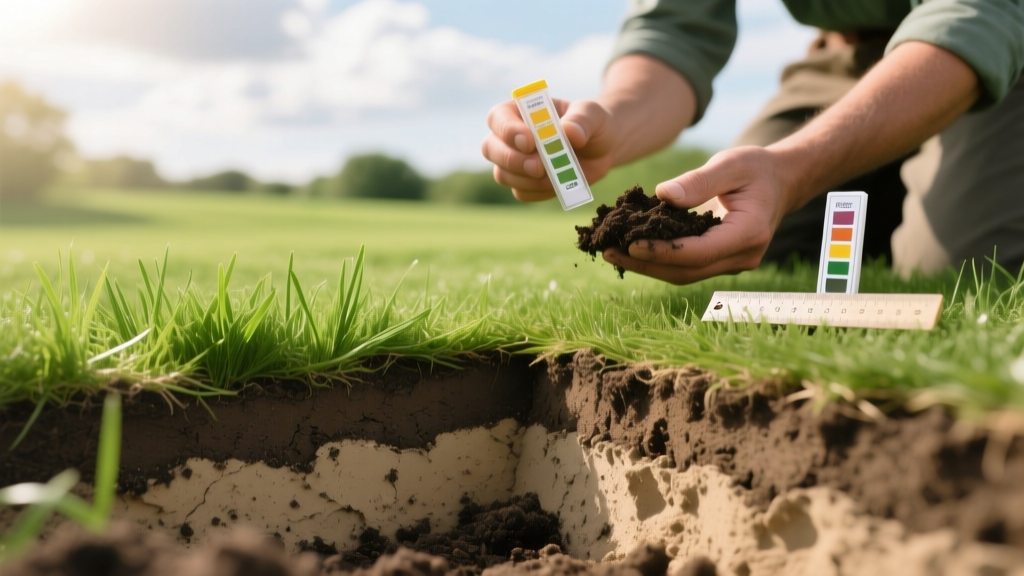
Matching Grass Species to Soil Types: A Complete Landscaping Guide
James MillerPublished
The Foundation of a Thriving Landscape: Why Soil Matters
Every professional landscaper knows a secret that many homeowners overlook: the health of your lawn is determined long before the first seed is sown or the first sod is laid. It begins beneath the surface. Matching the right grass species to your specific soil type is the single most critical step in landscape design and turf management. Planting a water-loving grass in fast-draining sandy soil, or a shallow-rooted variety in heavy, compacted clay, guarantees a perpetual cycle of brown patches, disease, and wasted fertilizer.
In this comprehensive guide, we will break down the primary soil profiles, explain how to test your yard, and provide actionable, cost-effective strategies to match your soil with the perfect turfgrass for a resilient, vibrant landscape.
Identifying the Big Four Soil Types
Before selecting a grass variety, you must understand the physical properties of the dirt in your yard. Soil is primarily composed of weathered rock particles, organic matter, water, and air. The size of these mineral particles dictates your soil type:
- Sandy Soil: Characterized by large, coarse particles. Sand drains rapidly and warms up quickly in the spring, making it easy to work with. However, its large pore spaces mean it struggles to retain water and essential nutrients, leading to frequent fertilizer leaching.
- Clay Soil: Composed of microscopic, flat particles that pack tightly together. Clay is incredibly rich in nutrients and holds water exceptionally well. Unfortunately, it is highly prone to severe compaction, poor drainage, and surface crusting, which can suffocate grass roots.
- Silty Soil: Featuring medium-sized particles that feel like flour when dry and slippery when wet. Silt is highly fertile and holds moisture better than sand, but it is very susceptible to erosion and can easily become compacted under foot traffic.
- Loam Soil: The holy grail of landscaping. Loam is a balanced mixture of roughly 40% sand, 40% silt, and 20% clay. It offers the perfect equilibrium of drainage, moisture retention, and nutrient availability.
How to Test Your Soil Accurately
Never guess your soil type or pH level. You can perform a DIY "ribbon test" by moistening a handful of soil and squeezing it. If it forms a long, sticky ribbon, you have heavy clay. If it crumbles immediately, it is sandy. If it holds its shape but breaks apart when poked, you likely have loam or silt.
For precise pH and N-P-K (Nitrogen, Phosphorus, Potassium) levels, invest $15 to $30 in a laboratory soil test. As recommended by turf experts at Penn State Extension, testing every three years ensures your amendment strategy is based on hard data rather than guesswork. Additionally, you can map your regional baseline and understand local topography using the USDA Natural Resources Conservation Service Web Soil Survey tool.
The Ultimate Soil-to-Grass Matching Chart
Use the table below as a quick-reference guide to align your regional grass options with your specific soil profile.
| Soil Type | Best Cool-Season Grass | Best Warm-Season Grass | Primary Challenge | Amendment Strategy |
|---|---|---|---|---|
| Clay | Tall Fescue (RTF cultivars) | Zoysia / Bermuda | Compaction, Poor Drainage | Core Aeration, Gypsum, Organic Matter |
| Sandy | Fine Fescue | Bermuda / Bahia | Nutrient Leaching, Drought | Frequent Light Fertilizing, Compost Topdressing |
| Silty | Kentucky Bluegrass | St. Augustine | Erosion, Surface Crusting | Mulching, Light Aeration, Organic Matter |
| Loam | Perennial Ryegrass | Centipede / Zoysia | Minimal (Maintenance) | Standard Compost Topdressing |
Deep Dive: Grass Selection by Soil Profile
Landscaping for Heavy Clay
Clay soils require grasses with aggressive, deep root systems capable of penetrating dense earth. For cool-season regions, Tall Fescue is the undisputed champion. Look for modern Rhizomatous Tall Fescue (RTF) or "Titan Ultra" cultivars, which spread laterally and tolerate the low-oxygen environment of clay. In warm-season zones, Zoysia grass (specifically "Meyer" or "Zeon" varieties) provides a dense, tough carpet that withstands clay's density, while Bermuda grass can thrive if the clay is heavily amended and well-drained.
Landscaping for Sandy Soils
Sandy soils demand drought-tolerant species that require minimal nitrogen, as excess fertilizer will simply wash away into the water table. For cooler climates, Fine Fescue blends (including creeping red fescue and chewings fescue) are excellent choices due to their low water and nutrient requirements. In the South, Bermuda grass and Bahia grass are exceptionally well-suited to sandy coastal plains, utilizing deep taproots to hunt for moisture.
Landscaping for Silty Soils
Silt is fertile but prone to washing away. Grasses that spread via underground rhizomes or above-ground stolons are ideal because they act as a biological net, holding the soil in place. Kentucky Bluegrass is perfect for cool zones due to its aggressive rhizomatous growth. For warm zones, St. Augustine grass provides a thick, interlocking mat of stolons that protects silty topsoil from heavy rain erosion.
Actionable Amendment Strategies and Costs
Even if your soil is less than ideal, you can modify the top few inches to create a hospitable seedbed. According to the Environmental Protection Agency (EPA), incorporating organic compost improves soil structure, increases water retention in sand, and breaks up compaction in clay.
Topdressing with Compost
- Measurement: Apply a 1/4 to 1/3-inch layer of screened compost over your existing lawn or seedbed. One cubic yard of compost will cover approximately 1,000 square feet at a 1/3-inch depth.
- Cost: Bulk screened compost typically costs between $30 and $50 per cubic yard, plus delivery fees.
- Timing: Apply during your grass's peak growing season. Early fall for cool-season grasses; late spring for warm-season grasses.
Core Aeration and Clay Flocculation
If you are battling heavy clay, compost alone is not enough. You must physically relieve compaction.
- Core Aeration: Renting a walk-behind core aerator costs roughly $70 to $100 for four hours. This machine pulls 3-inch soil plugs, allowing oxygen, water, and amendments to reach the root zone.
- Gypsum Application: For highly alkaline clay soils, apply pelletized gypsum (calcium sulfate) at a rate of 40 lbs per 1,000 square feet. Gypsum costs about $10 to $15 per bag and works by flocculating (clumping) clay particles together, creating microscopic air pockets without altering your soil's pH.
Tailoring Your Watering Schedule to Soil Type
Matching your grass to your soil is only half the battle; you must also adjust your irrigation habits to match the soil's infiltration rate.
- Clay Soils: Clay absorbs water very slowly. If you run your sprinklers for 30 minutes straight, you will likely see runoff. Apply 1 inch of water per week, but split it into two 1/2-inch sessions spaced three days apart. Use the "tuna can test" (placing empty tuna cans around the yard to measure sprinkler output) to ensure accuracy.
- Sandy Soils: Sand drains before the water can spread laterally. Apply 1 inch of water per week, but split it into three 1/3-inch sessions spaced every other day to keep the shallow root zone consistently moist without leaching.
- Loam and Silt: Standard deep, infrequent watering applies. Apply 1 inch of water per week in a single, uninterrupted session to encourage deep, drought-resistant root growth.
Conclusion
A beautiful, resilient landscape is a partnership between the grass you choose and the soil it lives in. By taking the time to accurately test your soil, selecting a turfgrass species naturally adapted to your yard's physical profile, and implementing targeted, cost-effective amendment strategies, you eliminate the root causes of lawn failure. Whether you are breaking up heavy clay with gypsum and core aeration or building up sandy soil with rich organic compost, aligning your landscaping practices with your soil type guarantees a lush, sustainable lawn for years to come.