Landscaping
How to Identify and Eradicate Nutsedge in Landscape Beds
Anna KowalskiPublished
The Menace of Nutsedge in Landscape Design
For homeowners and landscape professionals alike, few weeds are as notoriously frustrating as nutsedge. Often mistaken for a grass, nutsedge is actually a sedge, and it possesses an aggressive reproductive system that allows it to infiltrate pristine garden beds, exploit cracks in hardscaping, and outcompete desirable ornamental plants. Unlike standard broadleaf weeds or annual grasses, nutsedge is a perennial menace that thrives in the exact conditions that many landscape designs inadvertently create: compacted, poorly drained soil.
Successfully managing nutsedge requires more than just a quick pull or a generic application of weed killer. It demands a comprehensive understanding of its biology, precise identification, and a multi-faceted approach that integrates chemical control with fundamental landscaping and drainage solutions. In this guide, we will break down exactly how to identify, remove, and permanently discourage nutsedge from ruining your outdoor living spaces and garden beds.
Identifying the Enemy: Sedges vs. Grasses
Before you can eradicate nutsedge, you must correctly identify it. Landscape maintenance crews often make the mistake of treating nutsedge with standard grass-selective or broadleaf herbicides, which have absolutely no effect on it. To remember the difference, botanists and horticulturists rely on a classic rhyme:
"Sedges have edges, rushes are round, grasses have nodes that go all the way down."
If you roll the stem of the weed between your thumb and forefinger and feel a distinct triangular shape, you are dealing with a sedge. Nutsedge also features a thicker, lighter green leaf blade that grows faster than the surrounding turf or ornamental grasses, causing it to stick out awkwardly just days after a landscape maintenance visit. According to Penn State Extension, the leaves of nutsedge are arranged in sets of three at the base of the stem, whereas true grasses have leaves arranged in sets of two.
Yellow vs. Purple Nutsedge: A Comparison Guide
There are two primary species of nutsedge that plague North American landscapes: Yellow Nutsedge (Cyperus esculentus) and Purple Nutsedge (Cyperus rotundus). While they share similar growth habits, they have distinct characteristics and varying levels of cold tolerance. Purple nutsedge is generally more aggressive and harder to control, but it is limited to warmer southern climates, whereas yellow nutsedge is found nationwide.
| Characteristic | Yellow Nutsedge | Purple Nutsedge |
|---|---|---|
| Flower/Seedhead Color | Golden to yellow-brown | Dark purple to reddish-brown |
| Leaf Tip | Sharply pointed, tapered | Blunt, rounded tip |
| Leaf Width | Wider (up to 1/2 inch) | Narrower (less than 1/4 inch) |
| Tuber (Nutlet) System | Single nutlets at rhizome ends | Chains of nutlets connected by rhizomes |
| Climate Preference | Widespread across North America | Primarily Southern and coastal regions |
The Tuber Network: Why Manual Pulling Fails
The most critical mistake homeowners make when dealing with nutsedge in garden beds is pulling it by hand. When you pull a nutsedge plant, you are only removing the visible foliage and perhaps the topmost tuber. The plant's true survival mechanism lies underground in a complex network of rhizomes and tubers, commonly referred to as 'nutlets'.
According to research highlighted by NC State University, a single yellow nutsedge plant can produce hundreds of tubers in a single growing season. These tubers can remain dormant in the soil profile for several years, waiting for the right moisture and temperature conditions to sprout. Furthermore, the act of pulling the plant often snaps the rhizome, leaving the deeper tubers completely intact. In the case of purple nutsedge, pulling can actually stimulate the dormant tubers in the 'chain' to break dormancy and sprout multiple new plants, effectively turning one weed into five.
Manual Eradication Strategies for Hardscapes and Beds
While pulling is discouraged, manual removal is sometimes necessary in sensitive landscape areas, such as immediately around the root zones of delicate annuals or in tight hardscape joints where chemical overspray is a risk.
- Timing is Everything: If you must dig, do it early in the season (late spring) before the plant has developed its summer tuber crop. The goal is to remove the plant before it reaches the six-leaf stage, which is when tuber production typically begins.
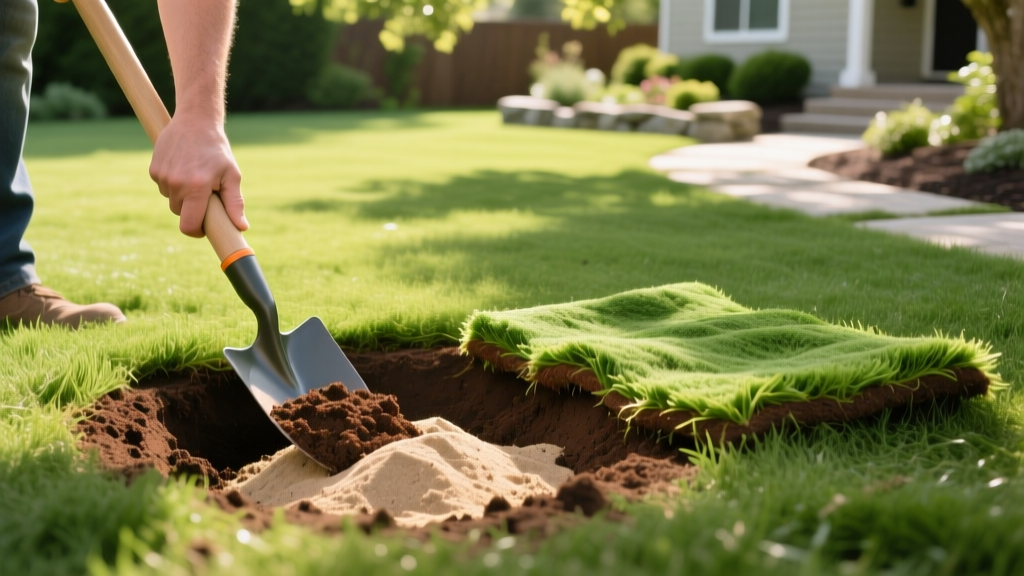
- Deep Excavation: Use a narrow weeding tool or a soil knife to dig at least 8 to 10 inches deep into the soil to extract the entire rhizome network. Sifting the soil in heavily infested raised beds may be required to remove the tiny, pea-sized nutlets.
- Hardscape Joints: Nutsedge is notorious for pushing through the joints of paver patios and retaining walls. Remove the weeds, clean out the old jointing sand, and replace it with high-quality polymeric sand, which hardens when wet and creates a physical barrier that nutsedge shoots struggle to penetrate.
Chemical Control: Selective Herbicides for the Landscape
Because nutsedge is neither a broadleaf weed nor a true grass, standard herbicides like 2,4-D or glyphosate (which only burns the top growth) are ineffective for long-term control. To achieve systemic eradication, you must use herbicides specifically formulated for sedges.
Post-Emergent Solutions
The gold standard for post-emergent nutsedge control in both turf and many ornamental landscape beds is Halosulfuron-methyl (widely available under the brand name SedgeHammer). This active ingredient is absorbed through the foliage and translocated down into the tuber system, effectively starving the plant and preventing future sprouting. Another highly effective option is Sulfentrazone, which acts faster and provides excellent control of both yellow and purple nutsedge.
Pre-Emergent Solutions
For long-term landscape bed maintenance, applying a pre-emergent herbicide containing Dimethenamid-P (such as FreeHand or Tower) in early spring can create a chemical barrier in the soil that prevents nutsedge shoots from emerging. Always read the product label carefully to ensure the herbicide is safe for use around your specific ornamental shrubs, perennials, and trees.
Landscaping Solutions: Fixing the Root Cause
Nutsedge is widely considered an 'indicator weed.' Its presence is a massive red flag for landscape designers, signaling that the underlying soil environment is heavily compacted and consistently waterlogged. You can spray herbicides all day, but if you do not correct the drainage and soil structure, nutsedge will continually return.
Improving Soil Drainage
To make your landscape beds inhospitable to nutsedge, you must eliminate standing water and improve percolation. According to the University of Minnesota Extension, improving soil structure is one of the most effective cultural controls for sedges.
- Regrading: Ensure that your landscape beds have a minimum 2% slope away from your home's foundation and hardscape patios to encourage surface runoff.
- French Drains: In low-lying garden areas where water pools, install a French drain. Dig a trench, lay a bed of washed gravel, place a 4-inch perforated PVC pipe wrapped in filter fabric, and cover with more gravel. This will intercept subsurface water and route it away from the bed.
- Soil Amendment: Incorporate 2 to 3 inches of organic compost into the top 6 inches of your garden beds. This breaks up heavy clay soils, improves aeration, and allows water to drain more efficiently, removing the boggy conditions nutsedge requires to thrive.
The Mulching Myth: Why Standard Wood Chips Fail
Many homeowners believe that laying down a thick layer of standard shredded hardwood mulch will smother nutsedge. Unfortunately, nutsedge shoots are incredibly sharp and possess the mechanical strength to pierce right through 3 inches of wood mulch, as well as standard woven landscape fabrics.
If you are dealing with a severe infestation in a new landscape bed, consider soil solarization before planting. Tilling the area, moistening the soil, and covering it with a clear, 4-mil polyethylene plastic sheet for 4 to 6 weeks during the peak heat of summer will essentially cook the tubers in the top layers of the soil. Once the bed is cleared, use a heavy-duty, non-woven geotextile fabric (rather than cheap woven plastic) and top it with 3 to 4 inches of coarse arborist wood chips. The coarse chips create a dry, airy surface layer that discourages the moisture-loving nutsedge seeds and shoots from establishing.
Conclusion: Patience and Persistence
Eradicating nutsedge from your landscape is not a weekend project; it is a season-long commitment. Because of the dormant tuber chains hidden beneath your garden beds, you must monitor the area closely and spot-treat any new emergent shoots with halosulfuron-methyl before they reach the six-leaf stage. By combining targeted chemical applications with fundamental landscape drainage improvements and proper hardscape joint maintenance, you can reclaim your outdoor living spaces and maintain a pristine, weed-free landscape design for years to come.