Landscaping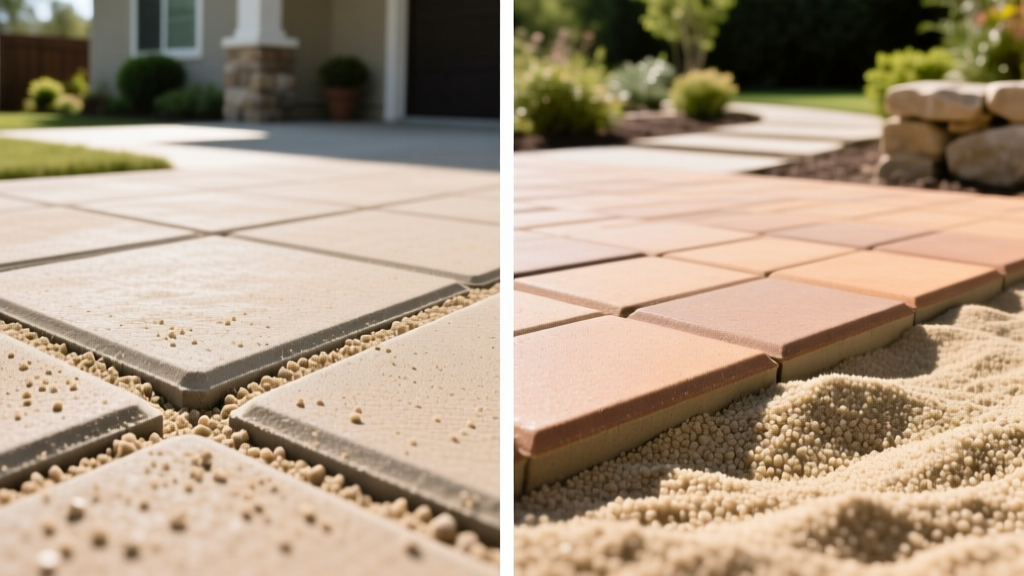
Polymeric Sand vs. Mason Sand: Best Paver Joint Filler
Mike RodriguezPublished
The Unsung Heroes of Hardscaping: Paver Joints
When designing an outdoor living space or planning a new hardscaping project, homeowners and landscape professionals often spend hours selecting the perfect pavers. Whether you are building a sprawling patio, a winding garden path, or a durable driveway, the color, texture, and pattern of the pavers take center stage. However, the true longevity and structural integrity of your hardscape depend on something far less glamorous: the joint filler. The material you choose to lock your pavers in place dictates how well your patio resists weeds, insect infestations, shifting, and water damage.
For decades, the debate in the landscaping industry has centered on two primary materials: traditional regular mason sand and modern polymeric sand. Both serve the fundamental purpose of filling the voids between interlocking concrete or stone pavers, but they perform vastly differently over time. Choosing the wrong jointing material can lead to sunken pavers, rampant weed growth, and costly repairs within just a few seasons.
In this comprehensive guide, we will break down the science, costs, installation processes, and long-term maintenance requirements of polymeric sand versus regular mason sand. By the end, you will know exactly which product is best suited for your specific landscaping project.
What is Polymeric Sand?
Polymeric sand is a highly engineered jointing material composed of fine silica sand mixed with water-activated binding agents, typically acrylic or latex-based polymers. When swept into the joints and misted with water, these polymers activate and cure, creating a flexible, concrete-like bond that locks the pavers together while still allowing for minor thermal expansion and contraction.
According to guidelines from the Interlocking Concrete Pavement Institute (ICPI), polymeric sand is the industry standard for most residential and commercial paver installations where true permeability is not the primary engineering goal. The chemical bond formed by the polymers creates a hostile environment for weed seeds and burrowing insects like ants, which are notorious for undermining traditional sand joints.
Pros of Polymeric Sand
- Weed and Insect Resistance: The hardened surface prevents seeds from taking root and stops ants from excavating the joints.
- Erosion Control: Withstands heavy rainfall and pressure washing without washing out.
- Structural Integrity: Adds lateral stability to the paver matrix, reducing shifting and settling.
- Aesthetic Variety: Available in multiple colors to match or contrast with your pavers.
What is Regular Mason Sand?
Regular mason sand (also known as washed concrete sand or jointing sand) is a natural, fine-grained sand that has been washed to remove silt, clay, and organic impurities. It has been the traditional choice for filling paver joints for generations. Because the grains are fine and uniform, mason sand easily flows into tight joints and provides a clean, natural look.
However, because it lacks any binding agents, mason sand remains loose within the joint. It relies entirely on the friction between the sand grains and the paver edges to stay in place. Over time, environmental factors such as heavy rain, freeze-thaw cycles, and foot traffic will inevitably displace the sand.
Pros of Mason Sand
- Cost-Effective: Significantly cheaper upfront than polymeric alternatives.
- Forgiving Installation: No curing time, no risk of polymeric haze, and easy to sweep in.
- High Permeability: Excellent for projects requiring maximum water infiltration into the base.
Head-to-Head Comparison Chart
| Feature | Polymeric Sand | Regular Mason Sand |
|---|---|---|
| Material Composition | Silica sand + water-activated polymers | Natural, washed fine-grained sand |
| Average Cost (Material) | $30 - $45 per 50 lb. bag | $30 - $50 per ton (approx. $3 - $5 per 50 lbs) |
| Weed Resistance | Excellent (when installed correctly) | Poor (requires chemical herbicides) |
| Insect Resistance | Excellent (deters ant colonies) | Poor (ants easily excavate loose sand) |
| Erosion Resistance | High (withstands pressure washing) | Low (washes out during heavy storms) |
| Installation Difficulty | Moderate (requires precise watering) | Easy (sweep and compact) |
| Curing Time | 24 to 48 hours (dry weather required) | None (immediate use) |
Cost Analysis: Upfront vs. Long-Term Investment
When budgeting for a hardscaping project, it is crucial to look beyond the initial receipt and consider the total cost of ownership over a 10-year period. Let us break down the costs for a standard 400-square-foot patio with 1/4-inch joints.
Upfront Material Costs
For a 400 sq. ft. patio, you will need approximately 4 to 5 bags of polymeric sand. At an average of $35 per bag, your material cost will be around $140 to $175. In contrast, mason sand is typically purchased by the ton. A single ton of washed mason sand (which costs between $30 and $50 depending on your region) is more than enough to fill the joints of a 400 sq. ft. patio, bringing your material cost to under $50.
Long-Term Maintenance Costs
While mason sand wins the upfront battle, it loses the war on maintenance. Because mason sand washes out over time, homeowners must re-sand their patios every 1 to 2 years. Furthermore, the loose sand invites weed growth, necessitating the purchase of commercial herbicides or the time-consuming labor of hand-pulling weeds. Ants also love to build colonies in loose mason sand, which can lead to uneven paver settling and require costly leveling repairs. Polymeric sand, when installed correctly, can last 10 years or more with zero maintenance, making it the more economical choice over the lifespan of the patio.
Installation Guide and Timing Differences
The installation process is where these two products diverge most dramatically. Mason sand is incredibly forgiving, while polymeric sand demands precision and strict adherence to manufacturer instructions.
Installing Regular Mason Sand
- Preparation: Ensure the pavers are completely dry and the joints are clear of debris down to a depth of at least 1 inch.
- Application: Broadcast the sand over the patio and use a stiff push broom to sweep it into the joints.
- Compaction: Run a plate compactor over the surface to vibrate the sand deep into the joints.
- Top-Off: Sweep a final layer of sand over the top and lightly hose down the patio to settle the material.
Installing Polymeric Sand
- Preparation: The pavers must be bone-dry. Any moisture on the surface will cause the polymers to activate prematurely, resulting in a stubborn white film known as "polymeric haze."
- Application: Sweep the sand into the joints, leaving a 1/8-inch gap from the top of the paver to allow for expansion and drainage.
- Compaction: Use a plate compactor to vibrate the sand, ensuring a dense, void-free fill.
- Activation: This is the most critical step. You must mist the surface with a fine spray of water. Do not flood the patio. Flooding will wash the polymers out of the joint and leave the sand unbonded. Leading manufacturers like Belgard Hardscapes recommend multiple light mistings over 15 minutes until the joints are fully saturated but not overflowing.
- Curing: The patio must remain completely dry for 24 to 48 hours. Check the weather forecast meticulously before starting.
Expert Landscaping Tip: To avoid polymeric haze, always sweep and blow off every last grain of sand from the surface of the pavers before you begin misting. If haze does occur, it can often be removed using a specialized polymeric haze remover or a hot pressure washer, but prevention is always the best strategy.
Drainage and Environmental Considerations
In modern landscaping, stormwater management is a critical factor. The Environmental Protection Agency (EPA) heavily promotes the use of permeable pavements in green infrastructure to reduce runoff, filter pollutants, and recharge local groundwater aquifers. This is where the choice of joint filler becomes highly relevant.
Regular mason sand is naturally permeable, allowing rainwater to infiltrate through the joints and into the aggregate base below. However, because it shifts and washes out, it can eventually clog the base layer with fine silt, reducing permeability over time. Polymeric sand, once cured, forms a semi-permeable or nearly impermeable seal depending on the brand and application depth. While it prevents surface water from washing away the joint, it also forces water to sheet off the surface, which may require careful grading and the installation of French drains or dry creek beds to manage runoff.
Note: If your local municipality requires a fully permeable hardscape to meet stormwater regulations, neither standard polymeric sand nor mason sand is the correct choice. Instead, you must use open-graded, angular crushed stone (like ASTM No. 8 or No. 9 aggregate) specifically designed for permeable interlocking concrete pavements (PICP).
Common Mistakes to Avoid
Whether you choose polymeric or mason sand, avoiding common pitfalls will save you time and money.
- Using Play Sand or Builder's Sand: Never use unwashed sands. They contain clay and silt that will stain your pavers and prevent proper drainage.
- Over-Watering Polymeric Sand: As mentioned, using a high-pressure hose nozzle will blast the polymers out of the joint, leaving you with loose sand that will never cure.
- Filling Joints to the Brim: Both materials require a slight recess (about 1/8 to 1/4 inch below the paver surface) to prevent the sand from being tracked into the house or pool by foot traffic.
- Ignoring the Base: No jointing sand can fix a poorly constructed base. If your patio is sinking due to a lack of compacted crushed stone base, the sand joints will crack and fail regardless of the material used.
Final Verdict: Which Should You Choose?
The choice between polymeric sand and regular mason sand ultimately comes down to your budget, your patience for maintenance, and the specific requirements of your landscape design.
Choose Polymeric Sand if: You are building a residential patio, pool deck, or walkway where weed resistance, insect deterrence, and low maintenance are your top priorities. The higher upfront cost is easily justified by the decade-long lifespan and the elimination of weekend weeding chores.
Choose Regular Mason Sand if: You are working on a tight budget, installing a temporary pathway, or working in an area where maximum water infiltration is required but engineered permeable aggregates are not an option. It is also the better choice for DIYers who are intimidated by the strict watering and curing requirements of polymeric products.
By understanding the unique properties of both materials, you can ensure your hardscaping project remains beautiful, stable, and functional for years to come.