Landscaping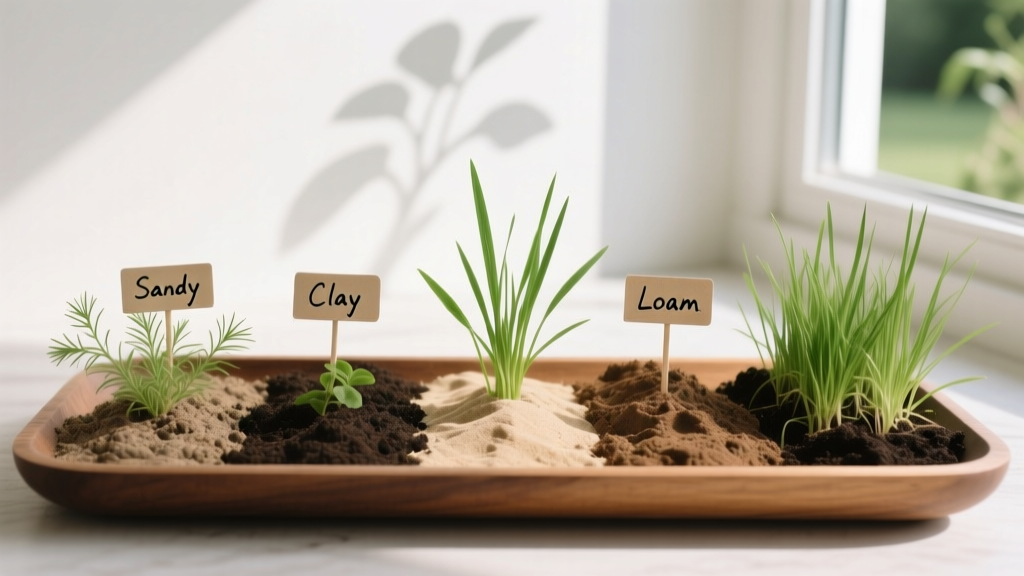
Soil Types and Grass Matching: The Ultimate Landscaping Guide
Mike RodriguezPublished
The Foundation of a Thriving Landscape: Soil and Turfgrass Synergy
When planning a landscaping project or installing a new lawn, homeowners often spend hours selecting the perfect grass species based on climate zone, sun exposure, and aesthetic preferences. However, the most critical factor in long-term turfgrass health is frequently overlooked: the soil profile beneath the surface. According to the United States Department of Agriculture (USDA), soil is a complex, living ecosystem that dictates water retention, nutrient availability, and root penetration. Planting a moisture-loving grass in fast-draining sandy soil, or a shallow-rooted species in dense clay, sets your landscape up for failure before the first seed even germinates. Understanding your soil texture and matching it to the appropriate turfgrass is the cornerstone of sustainable landscaping and effective lawn care.
Understanding the Big Four Soil Types
Soil texture is determined by the proportion of three mineral particles: sand, silt, and clay. The combination of these particles creates four primary soil categories, each with distinct advantages and challenges for landscaping.
1. Sandy Soil
Sandy soil features large, coarse particles that create significant macropores. This structure allows for rapid water drainage and excellent aeration, which prevents root rot. However, the trade-off is a very low Cation Exchange Capacity (CEC), meaning sandy soils struggle to hold onto essential nutrients and organic matter. Lawns in sandy soils often require frequent, light fertilization and more regular irrigation.
2. Clay Soil
Clay particles are microscopic and pack tightly together, resulting in heavy, dense soil. Clay boasts a high CEC, holding onto nutrients exceptionally well. Unfortunately, it drains poorly, compacts easily under foot traffic, and restricts oxygen flow to turfgrass roots. In the summer, clay can bake into a hard, cracked surface; in the spring, it remains a waterlogged sponge.
3. Silt Soil
Silt particles are medium-sized, offering a middle ground between sand and clay. Silt is naturally fertile and holds moisture well, but it is highly susceptible to erosion and surface crusting. When subjected to heavy rainfall or irrigation, silt can compact and form a hard crust that prevents grass seedlings from emerging.
4. Loam Soil
Loam is the gold standard for landscaping, typically consisting of roughly 40% sand, 40% silt, and 20% clay. It offers the perfect balance of drainage, moisture retention, and nutrient availability. While few properties naturally possess perfect loam, targeted soil amendments can help you achieve this ideal profile.
How to Test Your Soil Before Planting
Before purchasing seed or sod, you must accurately identify your soil type and pH level. You have two primary options:
- DIY Home Test Kits: Products like the Luster Leaf Rapitest Soil Test Kit (typically costing around $15 to $20) provide a quick baseline for pH, nitrogen, phosphorus, and potassium. While convenient, they lack the precision of laboratory analysis.
- University Extension Lab Tests: For approximately $20 to $30, you can mail a soil sample to a local university extension office. They will provide a comprehensive report detailing your exact soil texture, pH, organic matter percentage, and specific amendment recommendations.
- Macro-Level Mapping: You can also use the USDA NRCS Web Soil Survey to map the native soil types in your specific geographic area, providing a baseline understanding of your property's geological history.
The Mason Jar Soil Test
For a free, highly effective way to determine your soil texture at home, perform the Mason Jar Test. Fill a clear glass jar one-third full with garden soil (taken from 4 inches below the surface). Fill the rest with water, add a teaspoon of dish soap, and shake vigorously for three minutes. Let the jar sit undisturbed for 24 hours. The sand will settle at the bottom within the first minute, silt will form the middle layer over the next few hours, and clay will settle at the top after a full day. Measure the layers to calculate your soil's exact composition.
Matching Grass Species to Your Soil Type
Once you have identified your soil, you must select a turfgrass that thrives in those specific conditions. The University of Minnesota Extension emphasizes that matching grass to site conditions drastically reduces long-term maintenance, water usage, and chemical inputs.
Best Grasses for Sandy Soil
You need drought-tolerant, deep-rooted grasses that can survive rapid drainage. For warm-season regions, Bermudagrass and Zoysiagrass are excellent choices due to their aggressive rhizome networks that stabilize loose sand. In cool-season zones, Tall Fescue is the premier choice; its extensive root system can reach depths of 2 to 3 feet, allowing it to access deep water reserves that shallow-rooted grasses cannot reach.
Best Grasses for Clay Soil
Turfgrass in clay soil must tolerate periodic waterlogging and resist compaction. For warm-season lawns, Bermudagrass and Buffalograss perform well, as their dense growth habits choke out weeds that try to exploit clay's surface moisture. For cool-season climates, Tall Fescue and specific rhizomatous varieties of Kentucky Bluegrass are highly recommended. Tall Fescue's robust roots can physically penetrate heavy clay, while modern Kentucky Bluegrass cultivars have been bred for improved disease resistance in poorly drained environments.
Best Grasses for Silt and Loam
If you are fortunate enough to have loam or well-managed silt, your options are vast. Kentucky Bluegrass, Perennial Ryegrass, and Fine Fescues will thrive in cool-season loam. In warm-season loam, St. Augustinegrass and Centipedegrass will produce a lush, dense carpet with minimal intervention.
Turfgrass and Soil Compatibility Chart
| Grass Species | Season Type | Preferred Soil | Ideal pH Range | Drought Tolerance |
|---|---|---|---|---|
| Tall Fescue | Cool | Loam, Clay, Sand | 5.5 - 7.5 | High |
| Kentucky Bluegrass | Cool | Loam, Silt | 6.0 - 7.0 | Moderate |
| Bermudagrass | Warm | Sand, Clay, Loam | 6.0 - 7.0 | Very High |
| Zoysiagrass | Warm | Loam, Sand | 6.0 - 6.5 | High |
| Centipedegrass | Warm | Sand, Loam | 5.0 - 6.0 | Moderate |
| Buffalograss | Warm | Clay, Loam | 6.5 - 8.0 | Very High |
Amending Problem Soils for Turfgrass
If your native soil is highly problematic, you can amend it before seeding or sodding. The goal is not to completely replace your soil, but to improve its structure and organic matter content.
Fixing Heavy Clay
Avoid adding sand to clay; this combination creates a concrete-like matrix. Instead, incorporate 2 to 3 inches of high-quality organic compost and apply pelletized gypsum (calcium sulfate). Gypsum helps flocculate clay particles, binding them into larger aggregates that improve drainage without altering the soil pH. Expect to spend roughly $15 per 40-pound bag of gypsum and $30 to $50 per cubic yard of bulk compost. Till these amendments into the top 6 inches of soil using a rear-tine rototiller.
Improving Sandy Soil
To increase the water and nutrient-holding capacity of sand, incorporate peat moss, biochar, and compost. Biochar is particularly effective in sandy landscapes; its highly porous structure acts like a microscopic sponge, retaining moisture and fertilizer that would otherwise leach away. Apply 2 inches of compost and 1 inch of biochar, tilling to a depth of 6 inches.
Seasonal Timing and Seeding Costs
Matching your grass to your soil is only half the battle; timing the installation correctly is equally vital. Cool-season grasses (Tall Fescue, Kentucky Bluegrass) should be seeded in late summer to early fall (mid-August to mid-October). The warm soil promotes rapid germination, while the cool autumn air reduces heat stress. Warm-season grasses (Bermuda, Zoysia, Centipede) must be planted in late spring to early summer (May to June) when soil temperatures consistently exceed 65°F.
In terms of budgeting, high-quality turfgrass seed (such as Pennington or Scotts blends) costs between $6 and $12 per pound, covering roughly 1,000 square feet per 3 to 5 pounds. Sod provides an instant lawn and helps prevent soil erosion on slopes, but it is significantly more expensive, averaging $0.45 to $0.85 per square foot, plus delivery and installation labor. Regardless of the method chosen, always apply a starter fertilizer (like Espoma Organic Lawn Food) at the time of planting to encourage rapid root establishment in your newly matched soil environment.
Conclusion
Successful landscaping is a partnership between the plants you choose and the earth they grow in. By taking the time to test your soil, understand its physical limitations, and select a turfgrass species naturally adapted to those conditions, you drastically reduce the need for excessive watering, chemical fertilizers, and constant reseeding. Whether you are dealing with the rapid drainage of coastal sand or the heavy compaction of inland clay, there is a grass species engineered by nature to thrive in your yard. Embrace your native soil profile, amend it wisely, and watch your landscape flourish from the ground up.