Landscaping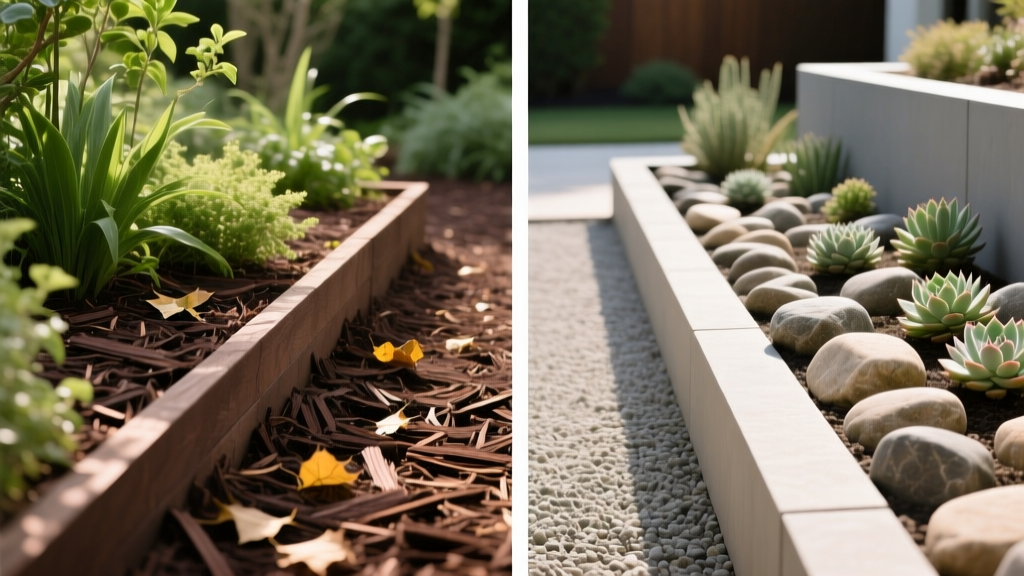
Wood Mulch vs. River Rock: Best Garden Bed Material
Emily WatsonPublished
Introduction: The Great Landscaping Debate
When designing landscape garden beds, homeowners and professional landscapers alike face a critical decision regarding the top dressing: should you use organic wood mulch or inorganic river rock? Both materials serve the fundamental purposes of defining bed borders, suppressing weeds, and retaining soil moisture. However, their long-term impacts on soil health, maintenance requirements, and microclimates are vastly different. Choosing the wrong material can lead to scorched plant roots, rampant weed growth, or unnecessary annual expenses.
In this comprehensive product comparison, we will break down wood mulch versus river rock across several critical categories, including upfront costs, installation methods, weed suppression, and environmental impact. By the end of this guide, you will know exactly which material is best suited for your specific hardscaping and garden bed projects.
Wood Mulch: Pros, Cons, and Costs
Organic wood mulch is a byproduct of the timber industry, typically consisting of shredded hardwood bark, pine needles, cedar chips, or arborist woodchips. It is the most popular choice for traditional perennial beds, tree rings, and shrub borders.
The Advantages of Wood Mulch
- Soil Enrichment: As wood mulch decomposes, it adds vital organic matter to the soil, feeding earthworms and beneficial microbes.
- Temperature Regulation: Mulch acts as an insulator, keeping plant roots cool in the summer and protecting them from freeze-thaw cycles in the winter.
- Cost-Effective: Upfront material costs are significantly lower than stone. Double-shredded hardwood bark typically costs between $30 and $45 per cubic yard.
The Disadvantages
- Annual Maintenance: Because it decomposes, mulch must be replenished every 1 to 2 years to maintain an effective depth.
- Pest Attraction: Wood mulch placed too close to a home's foundation can provide a bridge for termites and carpenter ants.
- Washouts: In areas with heavy water runoff or steep slopes, lightweight wood mulch can easily wash away during heavy storms.
Installation Specs: Apply wood mulch at a depth of 2 to 3 inches. According to the University of Minnesota Extension, piling mulch deeper than 4 inches or creating "mulch volcanoes" around tree trunks can suffocate roots and invite fungal diseases.
River Rock: Pros, Cons, and Costs
River rock consists of smooth, rounded stones naturally tumbled by waterways. For landscaping beds, 1.5-inch to 3-inch graded river rock is the most common size, as it is heavy enough to resist washouts but small enough to lay relatively flat.
The Advantages of River Rock
- Permanence: Unlike wood, stone does not decompose. A properly installed river rock bed can last 20 years or more without needing replacement.
- Erosion Control: The heavy weight of river rock makes it the superior choice for drainage swales, dry creek beds, and areas with heavy water flow.
- Pest Resistance: Rocks offer no nutritional value or shelter for termites, rodents, or fungal pathogens.
The Disadvantages
- High Upfront Cost: River rock is expensive, typically costing $150 to $250 per ton. When factoring in the mandatory landscape fabric, installation can cost $2.00 to $4.00 per square foot.
- Soil Degradation: Rock adds zero nutritional value to the soil. Furthermore, the required landscape fabric can block the natural integration of organic matter.
- Heat Radiation: Stone absorbs solar radiation and radiates it back into the soil and surrounding air, which can scorch delicate shade plants and increase local air temperatures.
Installation Specs: River rock must be installed at a depth of 3 to 4 inches over a heavy-duty, 3 oz to 4 oz woven polypropylene geotextile fabric. Never use cheap, non-woven plastic sheeting, as it will trap water, destroy soil structure, and tear within a single season.
Head-to-Head Comparison Chart
To help you visualize the differences, here is a structured comparison of wood mulch and river rock across key landscaping metrics:
| Feature | Wood Mulch (Hardwood/Cedar) | River Rock (1.5" - 3") |
|---|---|---|
| Upfront Material Cost | $0.30 - $0.60 per sq. ft. | $1.50 - $3.50 per sq. ft. (incl. fabric) |
| Lifespan | 1 - 3 Years | 20+ Years (Permanent) |
| Weed Suppression | Good (blocks sunlight naturally) | Poor long-term (dirt accumulates on fabric) |
| Soil Nutrition | High (adds organic matter) | None (inert material) |
| Heat Retention | Low (insulates soil) | High (absorbs and radiates heat) |
| Maintenance Level | High (annual topping required) | Low (occasional blowing/rinsing) |
| Best Application | Perennial beds, trees, gardens | Drainage areas, xeriscaping, fire pits |
Deep Dive: Weed Control and Maintenance
A common misconception is that river rock is a "zero-maintenance" weed barrier. In reality, while rock itself does not grow weeds, the environment it creates eventually fosters them. Over time, wind-blown soil, decaying leaves, and organic debris accumulate on top of the landscape fabric and settle in the crevices between the rocks. This creates a perfect, shallow seedbed for stubborn weeds like dandelions and nutgrass, whose roots can penetrate the fabric, making manual removal a nightmare.
Wood mulch, on the other hand, suppresses weeds by blocking sunlight from reaching the soil surface. When applied at a proper 3-inch depth, it prevents most weed seeds from germinating. For the few that do sprout, their roots remain in the loose, decaying top layer of mulch, making them incredibly easy to pull by hand. To maximize weed control in mulched beds, apply a granular pre-emergent herbicide like Preen or Dimension in early spring before weed seeds germinate.
Deep Dive: Moisture Retention and Soil Health
Moisture management is critical for the survival of expensive landscaping plants. Wood mulch acts like a sponge, slowing down water evaporation from the soil surface and reducing the need for supplemental irrigation. As the University of Minnesota Extension highlights, the gradual breakdown of organic mulches improves soil tilth, increases water infiltration rates, and promotes a thriving ecosystem of mycorrhizal fungi that help plant roots absorb nutrients.
River rock does not retain moisture. While water can pass through the stones, the underlying landscape fabric can sometimes impede rapid water infiltration if it becomes clogged with silt, leading to surface pooling. Furthermore, because rock beds do not receive an annual infusion of organic matter, the soil beneath the fabric can become compacted and biologically dead over time, requiring homeowners to rely heavily on synthetic liquid fertilizers to keep plants alive.
Climate Impact and the Urban Heat Island Effect
The thermal properties of your chosen top dressing can drastically alter the microclimate of your yard. River rock and other stone materials possess high thermal mass. They absorb intense solar radiation during the day and release it slowly at night. The Environmental Protection Agency (EPA) notes that hardscapes and stone materials contribute significantly to the urban heat island effect, raising localized air temperatures. In a garden bed, this radiant heat can bake the roots of shallow-rooted plants, scorch the foliage of delicate hydrangeas or hostas, and increase the evaporation rate of any moisture that does manage to reach the soil.
Conversely, wood mulch has a low albedo and poor thermal conductivity, meaning it keeps the soil temperature remarkably stable. If you are planting a shade garden, a woodland border, or a bed with heat-sensitive perennials, wood mulch is the only viable option.
Stormwater Runoff and Drainage Solutions
When dealing with problematic yard drainage, the structural integrity of your bed material is paramount. The EPA's Green Infrastructure program emphasizes the importance of managing stormwater runoff to prevent soil erosion and protect local waterways. In areas where downspouts discharge or where natural swales form during heavy rains, wood mulch will simply wash away, creating a messy, mulch-choked yard.
In these specific high-flow zones, river rock is the undisputed champion. The weight of 2-inch river rock can withstand significant water velocity without displacing. Landscapers frequently use river rock to construct dry creek beds and rain garden overflow channels, combining aesthetic appeal with heavy-duty erosion control.
Final Verdict: Which Should You Choose?
There is no universal "best" material; the right choice depends entirely on the specific function of the garden bed you are designing.
Choose Wood Mulch If:
- You are planting traditional perennial beds, annual flowers, or vegetable gardens.
- You are creating tree rings or planting shade-loving shrubs.
- You want to improve poor, clay-heavy soil over time.
- You are working with a limited upfront budget and do not mind annual maintenance.
Choose River Rock If:
- You are building a dry creek bed, drainage swale, or French drain discharge area.
- You are designing a xeriscape or rock garden with drought-tolerant succulents and ornamental grasses.
- You are landscaping around a fire pit, grill station, or other high-heat hardscape features where wood mulch poses a fire hazard.
- You want a permanent, structural border that will not wash away or decompose.
Pro Landscaper Tip: You do not have to choose just one. The most dynamic and functional landscape designs utilize a hybrid approach. Use river rock for drainage channels and hardscape borders, and transition to premium cedar or hardwood mulch in the central planting zones where soil health and moisture retention are the top priorities.
By matching the material to the micro-environment of your yard, you ensure healthier plants, better drainage, and a landscape that looks pristine year-round.