Landscaping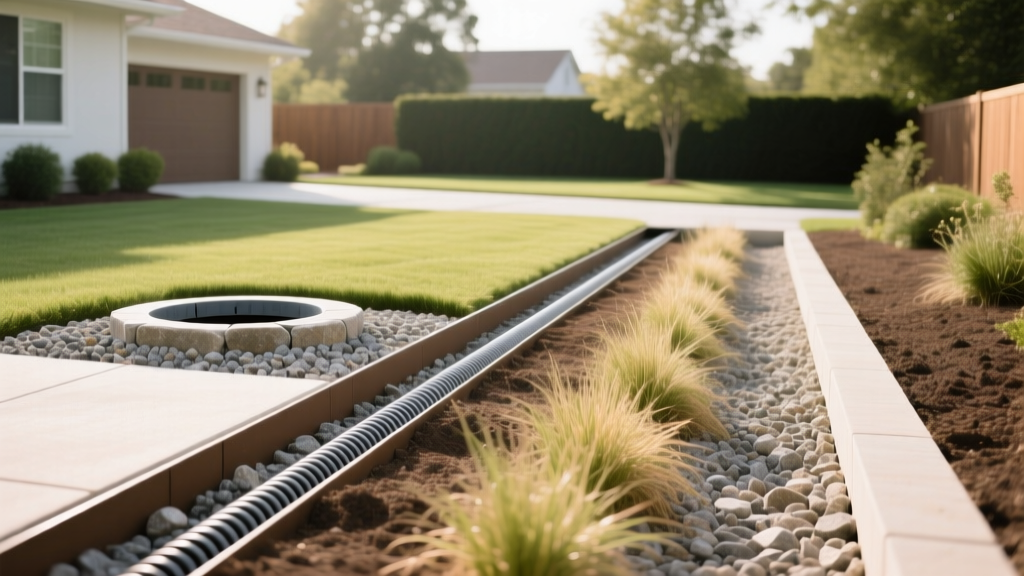
Yard Drainage Solutions Cost Guide: French Drains and Swales
Mike RodriguezPublished
The Hidden Costs of Poor Landscape Drainage
Water management is the unsung hero of landscape design. Whether you are planning a new garden bed, installing an outdoor living space, or simply trying to maintain curb appeal, poor drainage can undo thousands of dollars of hard work and investment. Standing water kills turfgrass, rots plant roots, erodes hardscaping foundations, and can eventually compromise the structural integrity of your home. When evaluating lawn care and landscaping budgets, homeowners often overlook drainage until a major storm exposes the flaw in their yard's grading.
According to the Clemson University Home and Garden Information Center, addressing both surface and subsurface water movement is critical for a healthy landscape. Surface water issues usually stem from poor grading or compacted soil, while subsurface issues often involve high water tables or hardpan clay layers. Understanding the costs associated with fixing these problems is the first step toward a sustainable, resilient outdoor space.
Breakdown of Common Yard Drainage Solutions and Costs
The price of yard drainage varies wildly based on the volume of water you need to move, the distance it must travel, and the materials used. Below is a detailed pricing guide for the most effective landscaping drainage solutions.
French Drains: The Subsurface Workhorse
A French drain is a gravel-filled trench containing a perforated pipe that redirects groundwater and surface runoff away from vulnerable areas. For a permanent, high-capacity solution, professionals recommend using rigid SDR 35 PVC pipe rather than flexible corrugated tubing, as PVC resists crushing under soil pressure and is easier to snake out if it ever clogs. The trench is typically dug 18 to 24 inches deep, lined with a non-woven geotextile fabric (like Typar or Mirafi) to prevent soil infiltration, and backfilled with 3/4-inch washed crushed stone.
Cost Breakdown: Professional installation of a French drain typically ranges from $20 to $35 per linear foot. For a standard 50-foot system to protect a backyard patio or home foundation, expect to pay between $1,000 and $1,750. Material costs alone (pipe, gravel, fabric) run about $5 to $8 per linear foot if you choose the DIY route.
Swales and Dry Creek Beds: Surface Water Management
A swale is a shallow, broad, vegetated ditch designed to slow and direct surface runoff. When integrated into landscape design, swales can be disguised as dry creek beds using decorative river rock, boulders, and moisture-loving marginal plants. This solution is highly sustainable and doubles as an aesthetic garden feature.
Cost Breakdown: Grading a basic grassy swale costs between $5 and $15 per linear foot. However, transforming that swale into a hardscaped dry creek bed with decorative stones, landscape fabric, and boulders increases the price to $25 to $40 per linear foot.
Dry Wells: Underground Storage for Heavy Runoff
When you have nowhere to daylight your drainage pipe (such as a flat yard surrounded by neighbors), a dry well is the answer. A dry well is an underground chamber—often a heavy-duty plastic cistern or a pit filled with crushed stone—that collects stormwater and allows it to slowly percolate into the surrounding soil. Commercial-grade products like the NDS Flo-Well are popular for residential landscaping.
Cost Breakdown: Installing a 50-gallon to 100-gallon dry well system costs between $500 and $1,500. The high end of this spectrum includes the cost of renting a mini-excavator to dig the deep, wide pit required to house the chamber and the surrounding gravel matrix.
Catch Basins and Channel Drains
For hardscaping projects like driveways, patios, and pool decks, surface water must be intercepted before it spreads. Catch basins (like the NDS Pro Series) capture water at low points, while channel drains intercept water across a linear span. These connect to solid PVC pipes that carry the water to a discharge point.
Cost Breakdown: Catch basins cost $200 to $500 per basin installed. Channel drains cost $30 to $70 per linear foot, heavily dependent on whether the concrete or pavers must be cut and repoured to accommodate the trough.
Cost Comparison Chart
| Drainage Solution | Average Cost | Best Use Case | Estimated Lifespan |
|---|---|---|---|
| French Drain (PVC) | $20 - $35 / linear ft | Soggy lawns, foundation protection | 30+ years |
| Grassy Swale | $5 - $15 / linear ft | Surface runoff routing, large yards | Indefinite (with maintenance) |
| Dry Creek Bed | $25 - $40 / linear ft | Aesthetic surface drainage, erosion | 20+ years |
| Dry Well (100 gal) | $800 - $1,500 total | Flat yards, downspout discharge | 20 - 30 years |
| Channel Drain | $30 - $70 / linear ft | Driveways, patios, hardscapes | 25+ years |
Key Factors That Influence Installation Pricing
When budgeting for landscape drainage, the per-foot estimates above are just a starting point. Several site-specific variables will dictate your final invoice.
Soil Composition and Excavation Difficulty
If your yard consists of sandy loam, trenching is fast and cheap. If you are dealing with heavy, compacted clay or soil riddled with large tree roots and glacial rocks, labor costs will spike. Contractors may need to use rock saws or heavy machinery, adding 20% to 40% to the total labor cost.
Utility Line Marking and Permits
Before any digging begins, you must call 811 to have underground utilities marked. While this service is free, hitting an unmarked line or failing to secure a local municipal permit for tying into a city storm drain can result in massive fines. Some municipalities charge $50 to $150 for drainage alteration permits.
Landscape Restoration
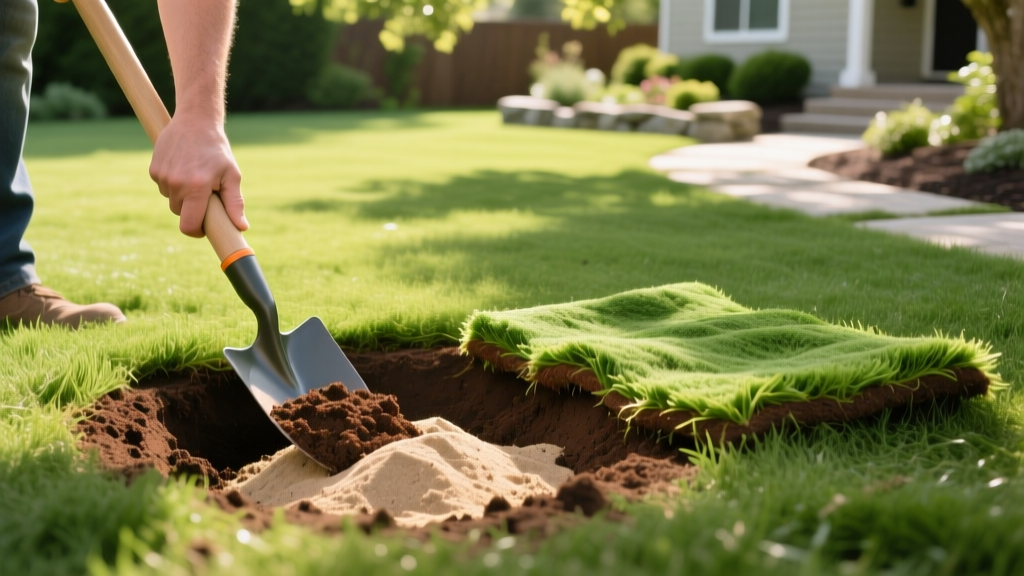
Digging a 50-foot trench destroys the turf above it. Your budget must include the cost of landscape restoration. Re-sodding the trench line with high-quality Kentucky Bluegrass or Bermuda sod costs roughly $1.50 to $3.00 per square foot, including topsoil amendment and labor.
Sustainable Drainage: Rain Gardens and Permeable Surfaces
Modern landscaping is shifting away from simply piping water off the property as fast as possible, and toward sustainable retention. The Environmental Protection Agency (EPA) strongly advocates for green infrastructure techniques, such as rain gardens and permeable pavers, which allow stormwater to infiltrate the soil naturally, filtering out pollutants and recharging local aquifers.
A rain garden is a shallow, planted depression that captures runoff from roofs and driveways. According to research from the University of Minnesota Extension, a properly constructed rain garden can absorb up to 30% more water than a standard lawn patch. The cost to install a residential rain garden ranges from $5 to $25 per square foot, depending on the complexity of the plant palette (using native, deep-rooted species like Swamp Milkweed or Blue Flag Iris) and the amount of soil amendment required to ensure proper percolation.
DIY vs. Professional Installation: Is It Worth the Savings?
Many homeowners attempt to install French drains or swales themselves to save on labor. While digging a shallow swale is a manageable weekend project for a fit homeowner, installing a subsurface French drain is grueling, technical work. You must maintain a strict slope of at least 1/8 inch per foot of pipe run to ensure gravity moves the water. If the slope fails, you simply create an underground puddle.
Renting a mini-excavator (typically $300 to $500 per day) can save your back, but operating one around existing landscaping, sprinkler systems, and home foundations carries immense risk. For complex systems requiring over 100 linear feet of pipe, deep trenching, or integration with municipal storm drains, hiring a licensed landscaping or excavation contractor is highly recommended to ensure the system functions correctly and lasts for decades.
Final Thoughts on Budgeting for Drainage
Investing in proper yard drainage is ultimately an investment in property preservation. While spending $2,500 on a comprehensive French drain and dry well system may seem steep, it pales in comparison to the $10,000+ cost of repairing a flooded basement or replacing a heaving, water-damaged patio. When planning your landscaping budget, always assess the water flow first; a beautiful garden bed or pristine lawn can only thrive if the ground beneath it is properly drained.