Landscaping
Year-Round Landscape and Garden Bed Maintenance Schedule
Sarah ChenPublished
Introduction to Comprehensive Landscape Care
While a pristine turf lawn often steals the show in residential outdoor spaces, a truly stunning property relies on a comprehensive landscape design. This encompasses ornamental garden beds, shrub borders, hardscape patios, retaining walls, and strategic tree placements. Unlike grass, which follows a relatively simple mowing and fertilizing routine, the broader landscape requires a nuanced, multi-season approach to thrive. Without a structured schedule, garden beds can become overrun with weeds, hardscapes can suffer from frost heave and drainage issues, and expensive ornamental shrubs can fail to bloom due to improper pruning. This year-round landscape maintenance schedule provides actionable checklists to keep every element of your outdoor space in peak condition, protecting your investment and maximizing your curb appeal.
Spring Landscape Awakening (March to May)
Spring is the most critical season for setting the foundation of your landscape. As soil temperatures rise, both your desired plants and opportunistic weeds begin to wake up. The goal in spring is cleanup, prevention, and hardscape repair.
Garden Bed Preparation and Weed Prevention
Begin by clearing out winter debris, fallen branches, and matted leaves from your garden beds. Cut back dormant ornamental grasses to about 4 to 6 inches above the crown before new green shoots emerge. Once the beds are clear, apply a granular pre-emergent herbicide designed for ornamental beds, such as those containing trifluralin or isoxaben. Apply this when soil temperatures consistently reach 55°F, which is typically when forsythia bushes finish blooming. Be careful to avoid pre-emergents in areas where you plan to sow seeds or plant bare-root perennials, as these products inhibit all seed germination.
Hardscape Inspection and Repair
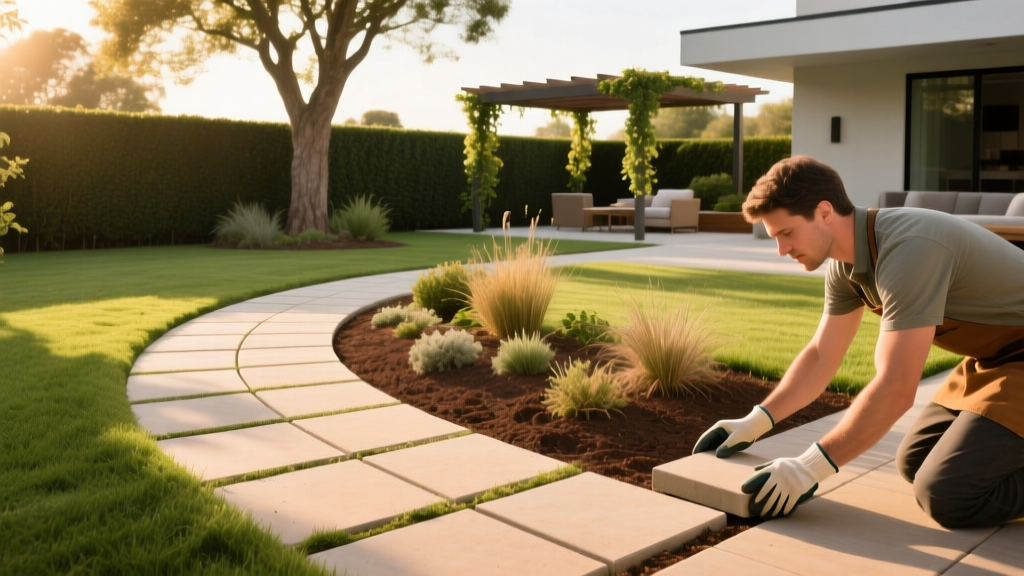
The freeze-thaw cycles of winter wreak havoc on hardscapes. Inspect your paver patios, walkways, and retaining walls for frost heave, settling, or displaced stones. Remove any weeds growing in the joints and replenish the jointing material. For modern paver patios, sweep in new polymeric sand and lightly mist it with a hose to activate the binding polymers. This prevents ants from nesting in the joints and stops weed seeds from taking root.
| Spring Task | Timing | Actionable Details |
|---|---|---|
| Bed Cleanup | Early Spring | Remove leaves, cut back dead perennial foliage to 4-6 inches. |
| Pre-Emergent Application | Soil hits 55°F | Apply granular pre-emergent to ornamental beds; avoid seeding areas. |
| Hardscape Jointing | Mid Spring | Sweep polymeric sand into paver joints and mist to activate. |
| Irrigation Startup | After last frost | Pressurize drip lines, check for blown emitters, and flush filters. |
Summer Landscape Upkeep (June to August)
Summer shifts the focus from preparation to active maintenance, water management, and aesthetic upkeep. Heat stress and aggressive weed growth are the primary challenges during these months.
Irrigation and Water Management
Proper watering is vital for the survival of newly planted shrubs and the sustained health of established garden beds. According to Clemson University Extension, water-efficient landscaping relies on deep, infrequent watering rather than shallow, daily sprinklings. Aim to provide your landscape beds with about 1 inch of water per week, either through rainfall or supplemental drip irrigation. Drip lines are highly recommended for garden beds as they deliver water directly to the root zone, minimizing evaporation and keeping foliage dry, which reduces the risk of fungal diseases like powdery mildew.
Deadheading and Weed Control
Keep your landscape looking manicured by regularly deadheading spent blooms on perennials such as coneflowers, black-eyed Susans, and salvia. This not only improves the aesthetic but also encourages a second flush of flowers in late summer. For weed control, hand-pulling is most effective after a heavy rain when the soil is loose. If you must use a post-emergent herbicide in beds, opt for a targeted, non-selective systemic herbicide applied carefully with a sponge brush to avoid drift onto desirable ornamental plants.
Fall Landscape Preparation (September to November)
Autumn is the season for planting, soil amendment, and preparing the landscape for the harsh realities of winter. The work you do in the fall will directly dictate the vigor of your spring blooms.
Strategic Pruning and Planting
Fall is the ideal time to plant new trees, shrubs, and spring-blooming bulbs. The cool air and warm soil encourage rapid root establishment without the stress of top-growth heat. When planting bulbs like tulips and daffodils, dig holes two to three times as deep as the bulb is tall, and amend the backfill with bone meal or a specialized bulb fertilizer. However, be highly cautious with pruning. As noted by the University of Minnesota Extension, improper pruning timing can destroy next year's flower buds. Avoid pruning spring-blooming shrubs like azaleas, lilacs, and forsythia in the fall, as they have already set their buds for the following year. Limit fall pruning to the removal of dead, diseased, or crossing branches.
Hardscape Winterization
Before the first freeze, winterize your water features and irrigation systems. Blow out drip irrigation lines with compressed air to prevent residual water from freezing and splitting the tubing. Clean out birdbaths and seal porous terracotta pots or store them in a garage to prevent them from cracking during freeze-thaw cycles.
Winter Landscape Protection (December to February)
While the landscape appears dormant, winter requires proactive protection against environmental stressors like heavy snow loads, ice, and desiccating winds.
Snow Management and Salt Protection
When clearing snow from your driveway and walkways, avoid piling heavy, compacted snow onto the edges of your garden beds, as this can crush dormant perennials and compact the soil. More importantly, be highly selective with your ice melt products. Traditional rock salt (sodium chloride) is toxic to plants and degrades soil structure. Instead, use calcium magnesium acetate (CMA) or sand for traction on hardscapes adjacent to sensitive landscape beds. If salt-laden slush is pushed into a bed, flush the area heavily with water as soon as the ground thaws in early spring to leach the salts out of the root zone.
Dormant Season Planning and Protection
Protect vulnerable broadleaf evergreens, such as rhododendrons and boxwoods, from winter desiccation by applying an anti-transpirant spray in late fall or early winter. This creates a thin, waxy coating over the leaves that reduces moisture loss caused by harsh, drying winds. Use the dormant season to review your landscape design, order seeds, and schedule any major hardscape renovations for the upcoming spring.
The Golden Rules of Mulching
Mulch is the unsung hero of the landscape bed, regulating soil temperature, retaining moisture, and suppressing weeds. However, improper mulching can be fatal to trees and shrubs. The Penn State Extension recommends maintaining a mulch layer of 2 to 3 inches deep. Never pile mulch against the trunks of trees or the stems of shrubs—a practice commonly known as creating a 'mulch volcano.' This traps moisture against the bark, leading to rot, and invites burrowing rodents to girdle the root flare. Always leave a 2-inch mulch-free ring around the base of all woody plants. Refresh your mulch annually in the spring, but avoid adding new layers on top of old, compacted mulch without first breaking up the crust to ensure water penetration.
Essential Tools and Budgeting for Landscape Care
Maintaining a diverse landscape requires specific tools beyond the standard lawnmower. Invest in a high-quality pair of bypass pruning shears for clean cuts on live stems, a flat transfer spade for edging beds, and a stiff-bristle broom for hardscape maintenance. Budgeting for annual landscape care should account for consumable materials. Expect to spend approximately $30 to $50 per cubic yard for premium hardwood mulch, $20 to $40 for a quality granular pre-emergent, and around $40 for a 50-pound bag of polymeric sand for hardscape joints. By adhering to this comprehensive schedule, you ensure that every facet of your landscape—from the smallest perennial to the largest retaining wall—remains beautiful, functional, and structurally sound year after year.