Pest Control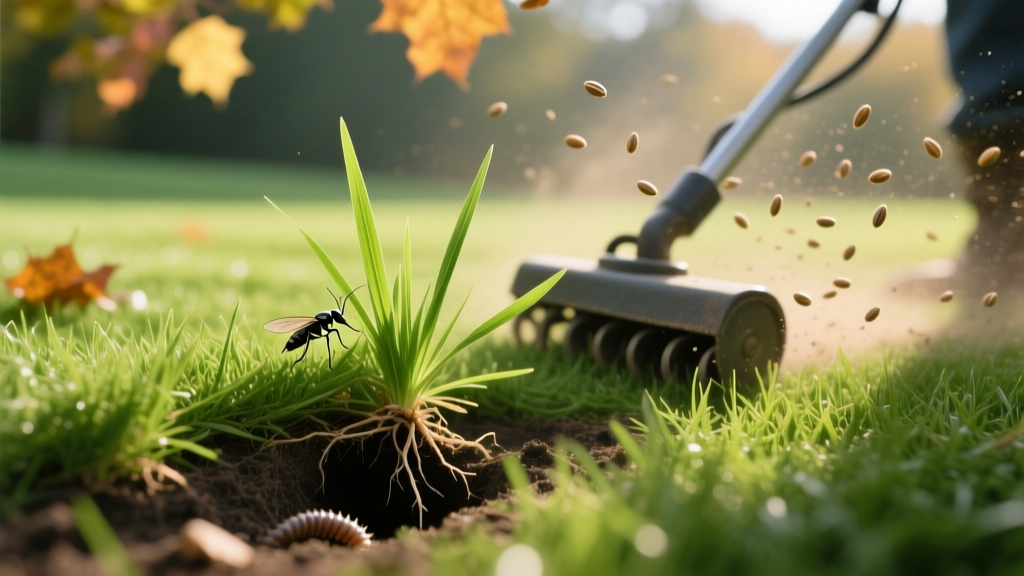
Aeration and Overseeding for Natural Lawn Pest Control
Anna KowalskiPublished
When homeowners think of lawn pest control, they often picture chemical sprays, granular pesticides, and reactive treatments. However, the most effective, long-term strategy for managing destructive insects like white grubs, chinch bugs, and sod webworms does not come from a bottle. It comes from the soil. By integrating core aeration and strategic overseeding into your annual lawn care routine, you can build a biological fortress that naturally repels pests, repairs damage, and eliminates the need for harsh synthetic chemicals.
As a cornerstone of Integrated Pest Management (IPM), cultural controls focus on altering the environment to make it inhospitable to pests while promoting the vigor of your turfgrass. According to the Environmental Protection Agency (EPA), IPM principles emphasize prevention and ecosystem balance over routine chemical applications. In the context of turfgrass management, aeration and overseeding are the ultimate preventative tools.
The Hidden Link Between Soil Health and Pest Vulnerability
To understand why aeration and overseeding deter pests, you must first understand why pests attack lawns in the first place. Insects are opportunistic. They seek out stressed, vulnerable plants and exposed soil to lay their eggs and feed. Soil compaction is one of the primary drivers of turfgrass stress. When soil becomes compacted from foot traffic, mowing, and heavy rains, the pore spaces that hold oxygen and water are crushed.
Without adequate oxygen, grass roots cannot grow deeply. Shallow-rooted turf is highly susceptible to drought stress and heat damage. When grass is stressed, it emits specific volatile organic compounds (VOCs) that act as a beacon to destructive insects. Female Japanese beetles and June bugs, for example, can detect these stress signals and will actively choose to lay their eggs in weak, thinning lawns over thick, healthy ones. Furthermore, compacted soil prevents water infiltration, leading to dry thatch buildup—a perfect nesting ground for surface-feeding pests like the chinch bug.
Core Aeration: Disrupting the Pest Life Cycle
Core aeration involves using a machine to extract small plugs of soil and thatch from the lawn, typically 2 to 3 inches deep and spaced 3 to 4 inches apart. This process provides immediate, multi-layered pest control benefits that go far beyond simple soil health.
Physical Disruption of Larvae
White grubs, the larval stage of scarab beetles, feed on grass roots just below the soil surface in late summer and early fall. The physical tines of a core aerator act as a mechanical control method. As the aerator pulls plugs, it physically damages or destroys a portion of the soft-bodied grub population. More importantly, it exposes the remaining larvae to the surface, where they are subjected to desiccation (drying out) and natural predators such as birds, ground beetles, and parasitic wasps.
Thatch Reduction and Habitat Elimination
Thatch is a layer of dead and living organic matter that accumulates between the soil surface and the green grass blades. While a thin layer (under 0.5 inches) is beneficial, excessive thatch acts as a sponge for pesticides (rendering them useless) and a luxury hotel for pests. Sod webworms and chinch bugs thrive in thick thatch, hiding from predators and avoiding temperature extremes. The University of Minnesota Extension highlights that core aeration introduces soil microorganisms to the surface via the extracted plugs, which accelerates the natural decomposition of thatch, effectively destroying the habitat these pests rely on for survival.
Overseeding: Building a Biological Fortress
If aeration opens the soil and disrupts pests, overseeding fills in the gaps and builds a defensive perimeter. A thick, dense turf canopy shades the soil, making it difficult for weed seeds to germinate and creating a microclimate that deters certain insects from reaching the soil surface to lay eggs.
The Power of Endophyte-Enhanced Grasses
For true pest control, the type of seed you choose matters immensely. Modern turfgrass breeders have developed varieties of tall fescue, fine fescue, and perennial ryegrass that contain beneficial endophytes. Endophytes are naturally occurring fungi that live symbiotically inside the grass plant. They do not harm the grass; instead, they produce alkaloids that are toxic or highly deterrent to surface-feeding insects.
When a chinch bug, bluegrass billbug, or sod webworm bites into an endophyte-enhanced grass blade, it ingests these alkaloids, which disrupt its feeding and reproduction. By overseeding your existing lawn with an endophyte-enhanced seed mix, you are essentially inoculating your turf with a natural, biological pesticide that requires no reapplication and poses zero risk to humans, pets, or beneficial pollinators.
Step-by-Step IPM Aeration and Overseeding Protocol
To maximize the pest-control benefits of these cultural practices, timing and execution are critical. Follow this protocol for cool-season lawns (fescue, bluegrass, ryegrass):
- Timing: Perform this service in early fall (late August to mid-September). This coincides with the peak feeding time of fall grubs and the optimal germination window for cool-season seeds.
- Preparation: Mow your lawn slightly shorter than usual (about 1.5 to 2 inches) and water deeply 24 hours before aerating. Moist soil allows the aerator tines to penetrate deeply and pull intact cores.
- Aeration Pattern: Make two passes over the lawn in perpendicular directions (e.g., North-South, then East-West) to ensure maximum soil fracture and plug extraction. Aim for 20 to 40 holes per square foot.
- Seed Selection & Application: Choose a high-quality, endophyte-enhanced tall fescue or perennial ryegrass blend. Apply seed at a rate of 5 to 8 pounds per 1,000 square feet for overseeding (use 10 to 12 lbs if establishing a new lawn).
- Seed-to-Soil Contact: Drag a piece of chain-link fence or a specialized lawn drag mat over the aerated lawn. This breaks up the soil cores, mixes the soil with the thatch, and pushes the seed deep into the aeration holes where it is protected from birds and retains moisture.
- Irrigation: Water lightly 2 to 3 times a day for the first 14 days to keep the top inch of soil consistently moist until germination occurs.
Cultural vs. Chemical Pest Control: A Comparison
How does this natural approach stack up against traditional chemical preventative treatments? The table below outlines the differences between cultural IPM methods and synthetic chemical controls.
| Feature | Cultural Control (Aeration & Overseeding) | Chemical Control (Preventative Grub Pesticides) |
|---|---|---|
| Primary Mechanism | Ecosystem balance, physical disruption, biological deterrence | Neurotoxin (e.g., Imidacloprid) ingested by feeding larvae |
| Impact on Soil Health | Highly beneficial; relieves compaction, increases microbial activity | Neutral to negative; can harm beneficial soil nematodes and earthworms |
| Target Pests | Broad spectrum (grubs, chinch bugs, webworms, weeds) | Narrow spectrum (primarily soil-dwelling grubs) |
| Environmental Risk | Zero runoff risk, safe for pollinators and aquatic life | Risk of runoff into waterways; toxicity to non-target insects |
| Long-Term Cost | Moderate upfront cost, reduces long-term water and chemical needs | Recurring annual expense ($50-$100+ per application) |
Evaluating the Costs and Long-Term ROI
Investing in aeration and overseeding requires a higher initial effort and cost compared to simply spreading a bag of chemical grub preventer. Professional core aeration and overseeding services typically cost between $150 and $300 for an average 5,000-square-foot lawn, depending on your region and the quality of the seed used. If you choose the DIY route, renting a commercial core aerator costs about $50 to $80 for a half-day, and a premium bag of endophyte-enhed seed will cost between $60 and $90.
However, the return on investment extends far beyond pest control. Aeration and overseeding reduce your lawn's water requirements by promoting deeper root growth, decrease the need for synthetic fertilizers by improving nutrient uptake, and naturally crowd out expensive and difficult-to-treat weed infestations. Over a three-to-five-year period, the cultural IPM approach pays for itself by eliminating the need for curative pest treatments, which often cost upwards of $100 per application when a lawn is actively being destroyed by an infestation.
Conclusion: A Holistic Approach to a Pest-Free Lawn
Pests are rarely the root cause of a failing lawn; they are merely the symptom of an imbalanced ecosystem. By shifting your focus from reactive chemical warfare to proactive cultural management, you can cultivate a lawn that defends itself. Core aeration breaks the physical life cycles of soil-dwelling insects and eliminates thatch habitats, while overseeding with endophyte-enhanced grasses creates a dense, toxic barrier against surface feeders. Embrace the principles of Integrated Pest Management, and you will be rewarded with a vibrant, resilient, and naturally pest-resistant landscape that is safe for your family, your pets, and the local environment.