LawnsGuide
Pest Control

Armyworm Control: How to Identify, Prevent, and Eliminate Lawn Armyworms

Armyworm Control: How to Identify, Prevent, and Eliminate Lawn Armyworms

Armyworm Control: How to Identify, Prevent, and Eliminate Lawn Armyworms

Few pests strike fear into the hearts of homeowners and turf managers quite like the armyworm. True to their name, these voracious caterpillars are known for marching across lawns, golf courses, and agricultural fields in massive, destructive formations. When an armyworm infestation takes hold, the damage can be swift and devastating, turning a lush, green landscape into a brown, barren wasteland in a matter of days. Understanding how to identify, prevent, and treat these surface-feeding insects is critical for maintaining a healthy turf.

Armyworms are the larval stage of various moth species, with the fall armyworm (Spodoptera frugiperda) being the most notorious culprit in turfgrass environments. Unlike subsurface pests that require deep soil penetration for treatment, armyworms feed directly on the grass blades, making them both easier to spot and highly susceptible to targeted surface treatments. In this comprehensive guide, we will explore the biology of armyworms, how to spot an infestation before it is too late, and the most effective cultural, biological, and chemical control methods available to protect your lawn.

How to Identify Armyworms and Their Damage

Early detection is the cornerstone of effective pest management. Because armyworms can consume massive amounts of foliage in a very short period, recognizing the signs of their presence early can save your lawn from total defoliation.

Identifying the Insects

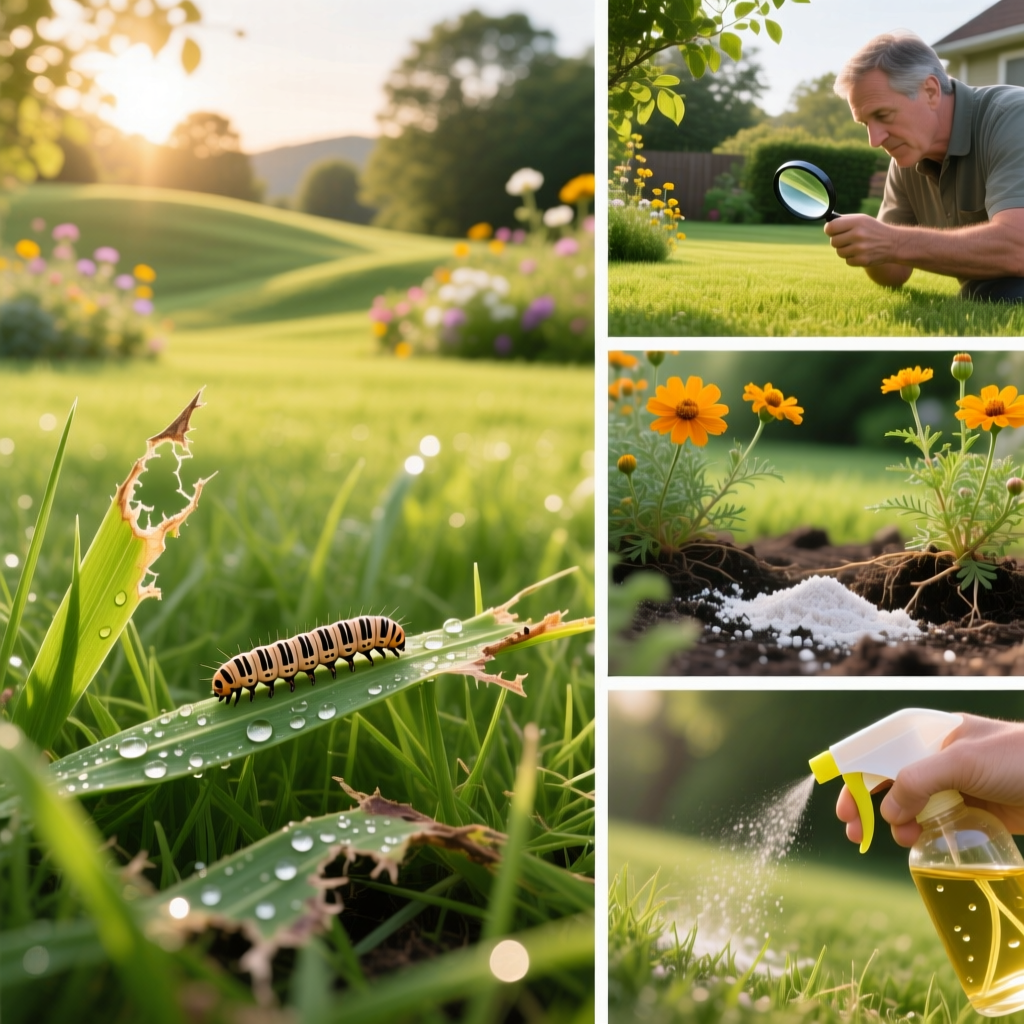
Armyworm caterpillars typically grow to about 1.5 inches in length before they pupate. Their coloration can vary widely depending on their age, diet, and specific species, ranging from pale green and yellowish to dark brown and nearly black. However, there are a few key identifying features that remain consistent across most turf-destroying armyworms:

  • The Inverted Y: The most reliable way to identify a fall armyworm is to look at its head capsule. You will see a distinct, pale, inverted 'Y' shape on the front of the head.
  • Longitudinal Stripes: Most armyworms feature distinct stripes running the length of their bodies. These can be yellow, white, or dark brown, often bordered by lighter edges.
  • Behavioral Clues: When disturbed, armyworms will typically curl up into a tight 'C' shape and drop to the soil surface or thatch layer to hide.

Signs of Lawn Damage

Armyworm damage is often mistaken for drought stress, heat damage, or fungal diseases, but a closer inspection will reveal the truth. The earliest sign of feeding is a phenomenon known as 'window-paning' or skeletonizing. Young, early-instar larvae lack the mandible strength to chew through the entire grass blade, so they eat only the soft green tissue on one side, leaving the transparent epidermis intact. As the larvae mature, they consume the entire blade, leaving behind ragged, chewed edges.

In severe infestations, the lawn will look as though it has been scalped with a dull mower. You may also notice an accumulation of 'frass' (caterpillar droppings), which looks like tiny greenish-brown pellets or sawdust scattered across the soil surface and thatch layer. If your lawn is turning brown overnight, especially during late summer or early fall, armyworms are the prime suspects.

The Soap Flush Test

Because armyworms hide in the thatch and soil during the heat of the day, they can be difficult to spot with a simple visual inspection. The most effective way to confirm an infestation is the soap flush test. Mix two tablespoons of liquid dish soap with two gallons of water in a watering can. Pour this solution evenly over a one-square-yard section of the lawn where you suspect damage. The soap irritates the caterpillars' skin, forcing them to the surface within 5 to 10 minutes. If you see two or more armyworms per square yard, treatment is immediately necessary.

Preventing Armyworm Infestations in Your Lawn

While it is difficult to stop adult moths from flying into your yard and laying eggs, you can make your lawn a less hospitable environment for their offspring. A proactive approach to lawn care and maintenance creates a robust turf that can withstand and recover from pest pressure much more effectively than a neglected lawn.

Proper Lawn Maintenance

Cultural controls form the foundation of any integrated pest management (IPM) strategy. Maintaining proper mowing best practices is essential. Scalping your lawn or cutting it too short stresses the grass and removes the shade that protects the soil, creating an ideal, sun-baked environment for armyworm larvae to thrive. Keep your mower blades sharp to ensure clean cuts, which heal faster and are less susceptible to secondary fungal infections.

Additionally, properly watering your lawn encourages deep, resilient root systems. Deep, infrequent watering is always preferable to shallow, daily sprinkling. If your soil is compacted, consider lawn aeration to improve water infiltration, nutrient uptake, and overall root health. A vigorous, deeply rooted grass plant can survive moderate defoliation and bounce back quickly once the pests are eliminated.

Thatch Management

Thatch is the layer of dead and living organic matter that accumulates between the soil surface and the green grass blades. While a thin layer of thatch (under half an inch) is beneficial, a thick thatch layer acts as a perfect daytime hiding spot for armyworms, protecting them from the sun, predators, and surface-applied insecticides. Regularly dethatching your lawn removes this protective canopy, exposing the larvae to harsh environmental conditions and making your treatment efforts significantly more effective.

Encouraging Natural Predators

Nature has its own pest control mechanisms. Armyworms have a wide variety of natural enemies, including ground beetles, spiders, parasitic wasps, and insectivorous birds. By avoiding the broad-spectrum, preventative use of harsh chemical pesticides, you protect these beneficial populations. Planting diverse flowering borders around your property can attract parasitic wasps, which lay their eggs inside the armyworm larvae, eventually killing them from the inside out.

Effective DIY Solutions for Armyworm Control

When the soap flush test confirms an active infestation, swift action is required. Fortunately, there are several highly effective DIY treatments ranging from organic biological controls to fast-acting synthetic insecticides. The key to success is timing: because armyworms are primarily nocturnal feeders, applications should be made in the late afternoon or early evening to ensure the product is fresh and active when the caterpillars emerge to eat.

Biological Controls: Bt and Nematodes

For homeowners seeking organic and pet-safe solutions, Bacillus thuringiensis var. kurstaki (Bt) is a phenomenal tool. Bt is a naturally occurring soil bacterium that produces proteins toxic to the digestive systems of caterpillars. When the armyworm ingests treated grass, the toxin crystallizes in its alkaline gut, causing it to stop feeding immediately and die within a few days. Bt is entirely safe for humans, pets, earthworms, and beneficial insects, but it must be applied when the larvae are small (early instars) to be fully effective.

Another powerful biological control is the use of beneficial nematodes, specifically Steinernema carpocapsae. These microscopic, soil-dwelling roundworms actively seek out armyworm larvae and pupae in the thatch and upper soil layers. Once they penetrate the host, they release bacteria that kill the pest within 48 hours. Nematodes require moist conditions to survive and move, so it is crucial to water the lawn thoroughly before and after application.

Natural and Organic Sprays

Spinosad and Neem oil are excellent botanical options for armyworm control. Spinosad is derived from a soil-dwelling bacterium and acts as both a contact and ingestion poison. It is highly effective against caterpillars and has a low toxicity profile for mammals, though it can be harmful to bees if applied while they are actively foraging. Always apply Spinosad in the evening when bees have returned to their hives. Neem oil acts as an antifeedant and growth regulator, disrupting the caterpillar's hormonal system and preventing it from molting and feeding.

Chemical Insecticides

In cases of severe, rapidly spreading infestations, synthetic chemical insecticides may be necessary to save the turf. Active ingredients such as Bifenthrin, Cyfluthrin, and Lambda-cyhalothrin (Pyrethroids) offer rapid knockdown and extended residual control. Carbaryl is another highly effective option that has been used for decades in turf management. When using chemical controls, always read and follow the manufacturer's label instructions meticulously. Granular formulations must be watered in lightly to activate the product and move it into the thatch layer where the larvae are hiding, while liquid sprays provide immediate contact kill. Unlike grub control which targets subsurface feeders deep in the soil profile, armyworm treatment focuses strictly on the surface and thatch layer.

When to Call Professional Pest Control Services

While DIY methods are highly effective for standard residential lawns, there are scenarios where enlisting professional pest control services is the most prudent choice. If you are managing a large property, a commercial landscape, or a sports turf facility, the sheer volume of product and the specialized application equipment required may be beyond the scope of a homeowner.

Furthermore, if you have attempted biological and chemical treatments but the armyworms continue to march and defoliate your grass, a professional can provide access to commercial-grade, restricted-use products that offer superior efficacy. Professionals also have the expertise to accurately identify the specific species of armyworm and tailor the treatment plan accordingly. For those dealing with multiple surface-feeding insects concurrently, a professional can design a comprehensive program that addresses armyworms alongside other common threats, much like the strategies used in chinch bug control.

Finally, lawn recovery after a massive infestation can be daunting. Professionals can assess the viability of the grass crowns and recommend aggressive rehabilitation strategies, including specialized nutrient programs and turf replacement, to restore your landscape to its former glory.

Frequently Asked Questions About Armyworms

What time of day do armyworms feed?

Armyworms are primarily nocturnal feeders. During the heat of the day, they retreat deep into the thatch layer, soil cracks, and shaded areas to avoid desiccation and predators. They emerge in the late evening, throughout the night, and into the early morning hours to consume grass blades. This behavioral pattern is exactly why pest control experts recommend applying liquid insecticides and biological controls like Bt in the late afternoon or early evening, ensuring the product is on the grass blades right when the caterpillars begin their nightly feast.

Will my grass grow back after an armyworm infestation?

In most cases, yes. Grass plants store energy in their roots and crowns. As long as the armyworms have only eaten the grass blades and have not destroyed the crown (the growing point located at the soil surface), the turf will recover. Once the pests are eradicated, focus on fertilizing your lawn with a nitrogen-rich fertilizer to push rapid, new vegetative growth. Keep the soil consistently moist to support the recovery process. If the crowns were destroyed or the lawn was completely scalped down to bare dirt, you may need to consider overseeding or laying new sod to repair the damaged areas.

How fast can armyworms destroy a lawn?

The speed of destruction is alarming. A heavy infestation of mature, late-instar armyworms can completely defoliate a healthy, established lawn in just two to three days. Because they feed in massive, synchronized groups, the damage often appears to spread across the yard like a moving shadow. This rapid rate of consumption is why daily monitoring during peak armyworm seasons (late summer and early fall) is so critical for turf managers and vigilant homeowners.

Do armyworms bite humans or pets?

No, armyworms do not bite or sting. They lack the mouthparts necessary to break human or animal skin, and they do not possess stingers or venom. They are entirely harmless to humans and pets from a physical standpoint. However, it is always wise to keep pets off the lawn immediately after applying any chemical or biological pest control treatments until the product has fully dried or been watered into the soil, as directed by the product label.

What is the difference between armyworms and cutworms?

While both are the larval stages of moths and belong to the same broader family (Noctuidae), their feeding behaviors and physical reactions differ significantly. Cutworms are notorious for severing grass blades and young plant stems right at the soil line, effectively 'cutting' them down, and they almost always curl into a tight, rigid 'C' shape when disturbed. Armyworms, on the other hand, chew along the length of the grass blade, skeletonizing it or eating it entirely, and while they may curl up slightly when dropped, they do not form the rigid 'C' shape characteristic of cutworms. Furthermore, cutworms tend to be solitary feeders, whereas armyworms are famous for their gregarious, mass-marching behavior.