Pest Control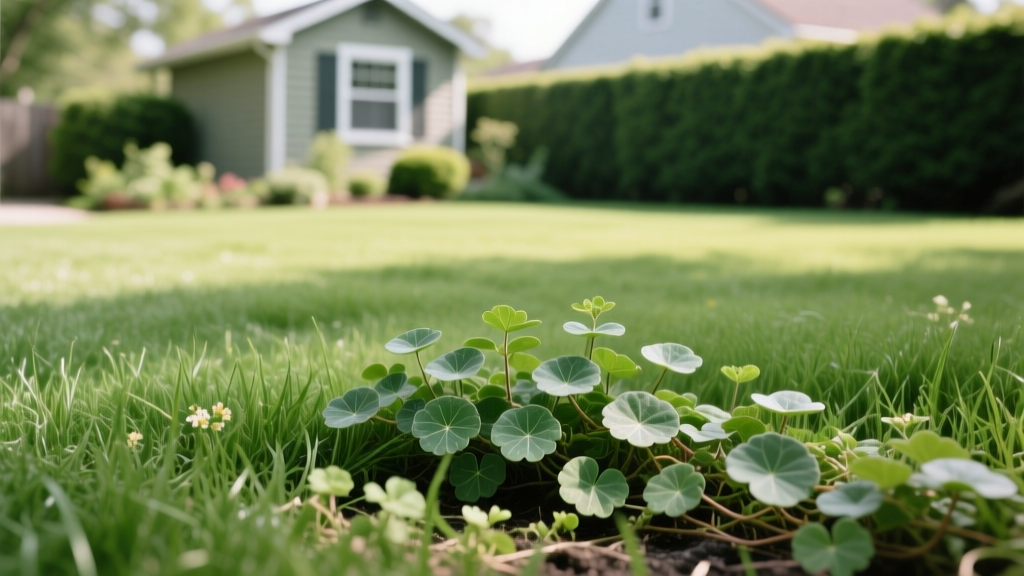
How to Identify and Eliminate Creeping Charlie From Your Lawn
Emily WatsonPublished
What is Creeping Charlie?
Creeping Charlie (Glechoma hederacea), also known as ground ivy, creeping Jenny, or gill-over-the-ground, is one of the most notorious and aggressive broadleaf weeds found in North American lawns. Originally introduced to North America by European settlers as a medicinal herb and ground cover, it has since become a massive headache for homeowners and turfgrass managers alike. As a perennial member of the mint family, it thrives in moist, shaded areas but is highly adaptable and will readily invade sunny, thin lawns if given the opportunity.
Unlike annual weeds that die off with the first frost, Creeping Charlie persists year after year. It spreads aggressively through two primary mechanisms: seeds and creeping above-ground stems known as stolons. These stolons root at the nodes (the points where leaves attach to the stem), allowing a single plant to form a dense, impenetrable mat that chokes out desirable turfgrass. According to the University of Minnesota Extension, its aggressive growth habit and ability to thrive in poor soil conditions make it a top priority for integrated pest management (IPM) programs.
Creeping Charlie Identification Guide
Proper identification is the first critical step in any successful weed control strategy. Misidentifying Creeping Charlie can lead to the wrong herbicide selection and wasted time and money. Here are the key identifying features:
- Leaves: Round to kidney-shaped with scalloped (crenate) edges. They are typically dark green but can take on a purple hue in cooler weather or high sunlight.
- Stems: Square-shaped (a hallmark of the mint family) and creeping. They root at the nodes wherever they touch the soil.
- Flowers: Small, funnel-shaped, and bluish-purple to lavender. They appear in clusters in the leaf axils during mid-to-late spring.
- Aroma: When crushed, the leaves emit a strong, distinct minty or earthy odor.
Weed Comparison Chart
Creeping Charlie is frequently confused with other common lawn weeds. Use the table below to confirm your identification before applying treatments.
| Weed Species | Leaf Shape | Stem Type | Flower Color | Rooting Habit |
|---|---|---|---|---|
| Creeping Charlie | Round, scalloped edges | Square, creeping | Bluish-purple | Roots at nodes |
| Wild Violet | Heart-shaped, smooth | Short, upright | Purple/White | Deep rhizomes |
| Henbit | Round, deeply veined | Square, upright | Pink/Purple | Fibrous taproot |
| Speedwell | Oval, toothed edges | Round, creeping | Bright blue | Roots at nodes |
Why is Creeping Charlie So Hard to Kill?
Homeowners often report that Creeping Charlie seems "immune" to standard weed killers. There are three main biological reasons for this resilience:
- The Waxy Cuticle: The leaves are covered in a thick, waxy layer that repels water-based herbicide sprays, causing the chemical to bead up and roll off before it can be absorbed.
- Extensive Node Network: Because the plant roots at every single node along its sprawling stems, pulling the weed usually leaves behind fragments that quickly regenerate into new plants.
- Shade Tolerance: Creeping Charlie thrives in the exact conditions where turfgrass struggles (shade and moisture), giving it a competitive advantage in stressed areas of the lawn.
Organic and Cultural Removal Methods
For homeowners seeking to avoid synthetic chemicals, managing Creeping Charlie requires patience and a multi-pronged organic approach.
1. Hand-Pulling and Smothering
Hand-pulling is only viable for very small, isolated patches. You must pull the weed when the soil is heavily saturated (such as after a deep rain) to ensure you extract the rooted nodes. If a patch is too large, consider smothering it. Cover the infested area with thick, overlapping layers of wet cardboard, top it with 3 inches of mulch or compost, and leave it for an entire growing season. Note that this will also kill the underlying grass.
2. Iron-Based Herbicides (FeHEDTA)
The most effective organic chemical control is Chelated Iron (FeHEDTA). Broadleaf weeds like Creeping Charlie absorb iron in toxic amounts, causing their cellular walls to collapse and the leaves to turn black and necrotic within hours. Turfgrass, however, can tolerate the iron and will recover quickly.
- Product Example: Natria Lawn Weed Control or Fiesta Turf Weed Killer.
- Application Rate: Typically 6 to 9 fl oz per gallon of water.
- Cost: Approximately $25 to $35 per quart of concentrate.
- Strategy: Iron-based herbicides are contact killers, meaning they only burn back the foliage. You must apply 2 to 3 treatments spaced 3 to 4 weeks apart to exhaust the root system's energy reserves.
Chemical Control: The Most Effective Herbicides
For severe infestations, synthetic post-emergent broadleaf herbicides are the most reliable solution. However, standard 2,4-D formulas often fail against Creeping Charlie. You must use products containing Triclopyr, often combined with 2,4-D, Dicamba, and MCPP in a "3-way" or "4-way" herbicide blend.
Top Herbicide Products for Creeping Charlie
- Gordon's Trimec Classic Broadleaf Lawn Weed Killer: A professional-grade concentrate containing 2,4-D, MCPP, and Dicamba. Highly effective when mixed with a non-ionic surfactant.
- Ortho WeedClear Lawn Weed Killer Ready-to-Spray: A consumer-friendly hose-end sprayer that includes Triclopyr, making it specifically formulated for tough weeds like ground ivy and wild violet.
- Hi-Yield Triclopyr Ester: A potent concentrate favored by turf managers for spot-treating severe broadleaf outbreaks.
Application Timing and Technique
Timing is everything. The University of Wisconsin-Madison Extension emphasizes that the absolute best time to treat Creeping Charlie is in the early fall (mid-September to mid-October). During this window, the weed is actively pulling carbohydrates down into its root system to prepare for winter. It will pull the systemic herbicide down into the roots along with the nutrients, resulting in a complete kill.
Spring applications (April to May) are secondary and should only be done when the plant is in the flowering stage, as it is actively moving nutrients at this time. Avoid spraying during the heat of summer (above 85°F), as herbicides can volatilize and damage surrounding desirable plants and trees.
The Importance of Surfactants
Because of the weed's waxy leaf cuticle, adding a non-ionic surfactant (like methylated seed oil or a dedicated liquid dish soap alternative designed for agriculture) to your tank mix is crucial. The surfactant breaks the surface tension of the water, allowing the herbicide to spread evenly across the leaf and penetrate the waxy barrier. Use roughly 1 teaspoon of surfactant per gallon of mixed herbicide.
Safety and Environmental Precautions
When handling synthetic herbicides, always prioritize safety and environmental stewardship. The Environmental Protection Agency (EPA) mandates that the label is the law. Always read the product label thoroughly before mixing or applying any chemical.
- Personal Protective Equipment (PPE): Wear long sleeves, long pants, chemical-resistant gloves, and closed-toe shoes when mixing and spraying concentrates.
- Protect Non-Target Plants: Triclopyr and 2,4-D can severely damage or kill ornamental shrubs, flowers, and trees through root uptake or spray drift. Use a low-pressure sprayer with a coarse nozzle to minimize drift, and avoid spraying near the drip line of desirable trees.
- Waterways and Runoff: Never apply herbicides if heavy rain is forecasted within 24 hours, and maintain a buffer zone around storm drains, ponds, and streams to prevent aquatic toxicity.
Prevention Strategies for a Weed-Free Lawn
Eradicating Creeping Charlie is only half the battle. If you do not fix the underlying environmental conditions that allowed it to thrive, it will inevitably return. Creeping Charlie is an indicator weed; it tells you that your lawn is thin, shaded, and potentially over-watered.
1. Improve Turf Density
A thick, healthy lawn is the best natural defense against weeds. Overseed your lawn in the early fall using a shade-tolerant turfgrass blend (such as Fine Fescues or advanced Kentucky Bluegrass cultivars) if your yard suffers from tree canopy cover.
2. Adjust Mowing and Watering Practices
Raise your mower deck to cut the grass at 3 to 4 inches tall. Taller grass develops deeper roots and creates a dense canopy that shades the soil, preventing weed seeds from germinating. Water deeply and infrequently (about 1 to 1.5 inches per week) rather than giving the lawn light, daily sprinklings, which favor the shallow-rooted Creeping Charlie.
3. Manage Shade and Soil Compaction
Consider hiring an arborist to prune and elevate the lower branches of your trees to allow more sunlight to reach the turf. Additionally, perform core aeration annually to relieve soil compaction, improving drainage and giving your grass the oxygen it needs to outcompete ground ivy.
By combining accurate identification, strategic fall herbicide applications, and long-term cultural lawn care practices, you can successfully banish Creeping Charlie and reclaim a thick, vibrant, and weed-free lawn.