Pest Control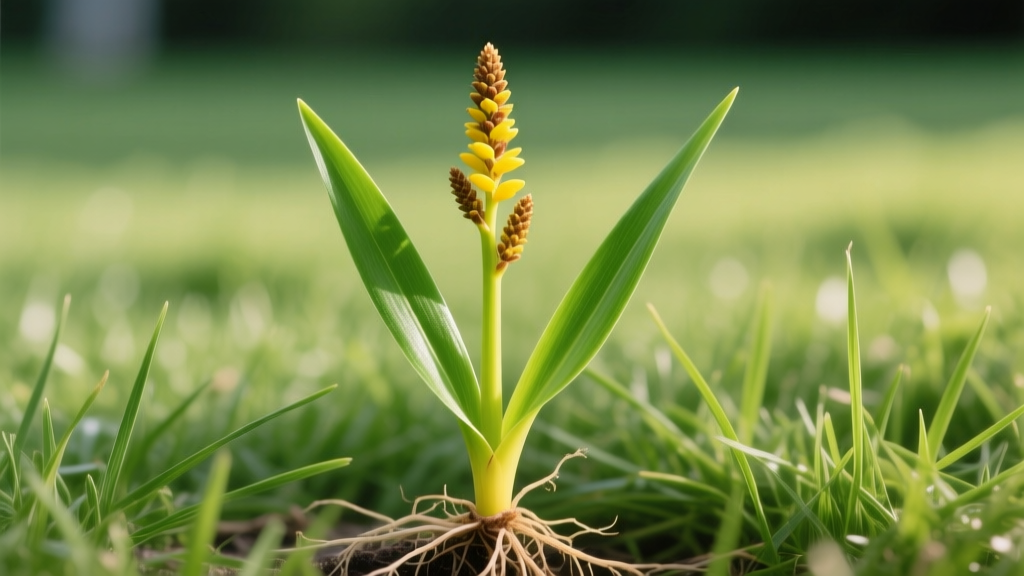
How to Identify and Eliminate Yellow Nutsedge in Your Lawn
Sarah ChenPublished
What is Yellow Nutsedge?
If you have ever noticed a patch of bright green, fast-growing weeds shooting up in your lawn just days after mowing, you are likely dealing with yellow nutsedge (Cyperus esculentus). Despite its grass-like appearance, nutsedge is not a grass at all; it is a sedge. This distinction is critical because standard grassy weed killers and broadleaf herbicides will not harm it. Yellow nutsedge is a perennial pest that thrives in moist, poorly drained soils and can quickly overtake a healthy turfgrass canopy if left unchecked.
According to the University of California Statewide Integrated Pest Management Program, yellow nutsedge is one of the most difficult weeds to control in agricultural and residential settings due to its aggressive reproductive system. It spreads primarily through an extensive underground network of rhizomes and tubers (often called nutlets), making surface-level removal entirely ineffective. To successfully eradicate this pest, homeowners must adopt a comprehensive Integrated Pest Management (IPM) approach that combines cultural, mechanical, and targeted chemical controls.
How to Identify Yellow Nutsedge
Proper identification is the first step in any successful pest control strategy. The old gardener's adage, 'sedges have edges,' is the most reliable way to distinguish nutsedge from standard turfgrass. If you roll the stem of the weed between your thumb and forefinger, a sedge will feel distinctly triangular, whereas grass stems are round or flat.
Visually, yellow nutsedge exhibits a lighter, more vibrant green color than most warm-season and cool-season turfgrasses. It grows vertically at a much faster rate than surrounding grass, often sticking up an inch or two above the canopy just two days after a fresh mow. In late summer, if left unmowed, the plant produces a distinctive, golden-brown seedhead that branches out in a star-like pattern.
Nutsedge vs. Turfgrass: A Quick Comparison
| Characteristic | Yellow Nutsedge | Standard Turfgrass |
|---|---|---|
| Stem Shape | Triangular (Solid) | Round or Flat (Often Hollow) |
| Leaf Arrangement | 3 ranks (Base of leaf in groups of 3) | 2 ranks (Alternate sides) |
| Growth Rate | Extremely fast, outpaces mowing | Moderate, consistent |
| Root System | Rhizomes with tubers (nutlets) | Fibrous roots, stolons, or rhizomes (no tubers) |
| Color | Light, yellowish-green | Varies, usually darker green |
The Life Cycle and the 'Nutlet' Problem
Understanding the life cycle of yellow nutsedge is vital for timing your herbicide applications. The plant emerges in late spring when soil temperatures consistently reach 60°F. Throughout the summer, it focuses on vegetative growth and photosynthesis. However, as the days begin to shorten in late summer and early fall, the plant shifts its energy downward, forming small, brown, marble-sized tubers known as nutlets along its rhizomes.
The University of Minnesota Extension notes that a single yellow nutsedge plant can produce hundreds of these tubers in a single season. These nutlets can remain dormant in the soil for up to three years, surviving freezing winter temperatures and extreme summer droughts. When you pull a mature nutsedge plant by hand, the stem usually snaps, leaving the rhizomes and dormant tubers behind. Within weeks, those remaining tubers will activate and send up multiple new shoots, effectively multiplying your weed problem.
Integrated Pest Management (IPM) for Nutsedge
Because of its resilient tuber system, relying solely on one method of control will result in frustration. An IPM approach combines cultural practices to make the environment less hospitable to nutsedge, alongside targeted chemical interventions.
Cultural and Preventative Controls
Nutsedge is an indicator weed; its presence usually tells you something about your soil conditions. It thrives in compacted, waterlogged, and poorly drained soils. Modifying your lawn care practices can naturally suppress its growth:
- Fix Drainage Issues: Identify low spots where water pools after rainstorms. Regrade these areas or install a French drain to remove excess moisture. Nutsedge will struggle to establish in well-draining, dry soil profiles.
- Adjust Irrigation Schedules: Transition from frequent, shallow watering to deep, infrequent irrigation. Watering your lawn deeply 1 to 2 times a week encourages deep turfgrass roots while allowing the top few inches of soil to dry out between waterings, which stresses shallow-rooted nutsedge.
- Core Aeration: Compacted soil restricts oxygen and water movement, favoring weeds over turf. Perform core aeration annually in the fall (for cool-season grasses) or late spring (for warm-season grasses) to relieve compaction and improve soil structure.
- Mow High: Raising your mower deck to 3 or 4 inches allows your desirable turfgrass to develop a dense, thick canopy. This canopy shades the soil surface, depriving emerging nutsedge seedlings of the sunlight they need to photosynthesize and establish.
Mechanical Removal: Why Pulling Fails
Hand-pulling yellow nutsedge is generally discouraged unless the infestation is limited to just one or two very young plants. If the plant has been growing for more than a few weeks, it has likely already developed a network of rhizomes and nutlets. Pulling the weed will almost always leave these tubers in the ground. If you must dig it out, you will need to use a trowel to excavate the soil to a depth of at least 8 to 14 inches to ensure you remove the entire rhizome network, which is highly impractical for a lawn setting.
Chemical Control Strategies
When cultural controls are not enough, targeted herbicides are required. Standard glyphosate or 2,4-D formulations will burn the top growth but will not translocate effectively to the tubers. You must use herbicides specifically labeled for sedge control.
Post-Emergent Herbicides
Post-emergent herbicides are applied when the nutsedge is actively growing and visible. The best time to apply is in late spring or early summer when the plant is young (3 to 8 leaf stage) and has not yet begun forming nutlets.
- Halosulfuron-methyl (e.g., SedgeHammer): This is widely considered the gold standard for residential nutsedge control. It is a systemic herbicide that is absorbed through the leaves and translocated down to the tubers, halting cell division. Application Rate: One 0.9 oz packet mixed with 1 gallon of water and a non-ionic surfactant covers roughly 1,000 square feet. Cost: $15 to $25 per box. Expect to see yellowing in 1-2 weeks and complete death in 3-4 weeks.
- Sulfentrazone (e.g., Dismiss): This active ingredient offers a much faster 'burn-down' effect than halosulfuron, often showing results in 24 to 48 hours. It is highly effective but can cause temporary discoloration on sensitive warm-season grasses like St. Augustine or Centipede if applied during high heat. Cost: $50 to $80 for a concentrated bottle that treats up to half an acre.
- Imazaquin (e.g., Image Kills Nutsedge): A slower-acting systemic herbicide primarily used on warm-season southern lawns (Bermuda, Zoysia, St. Augustine). It requires multiple applications spaced 6 weeks apart and takes longer to show results, but it provides excellent long-term suppression of the tuber bank.
Pre-Emergent Herbicides
While pre-emergents will not kill existing nutlets deep in the soil, they can prevent the germination of seeds and the emergence of new shoots from shallow tubers. Products containing Dimethenamid-P (e.g., FreeHand) or Metolachlor (e.g., Pennant Magnum) applied in early spring before soil temperatures reach 60°F can significantly reduce the initial flush of nutsedge in late spring.
Frequently Asked Questions
Will horticultural vinegar kill yellow nutsedge?
No. Horticultural vinegar (20% acetic acid) is a contact burn-down herbicide. It will destroy the visible leaves of the nutsedge, giving the illusion of control. However, because it lacks systemic properties, it will not reach the underground rhizomes or tubers. The plant will simply regenerate from the tubers within a week, making vinegar an ineffective and wasteful treatment for sedges.
How many herbicide applications are needed to fully eradicate it?
Because the tubers can remain dormant in the soil for years, a 'one-and-done' treatment is a myth. You should expect to spot-treat emerging nutsedge with a systemic herbicide like halosulfuron-methyl at least two to three times per growing season. Consistent treatment over a 2 to 3 year period is usually required to fully deplete the tuber bank in heavily infested lawns.
Is nutsedge harmful to pets or children?
Yellow nutsedge itself is not toxic to dogs, cats, or humans. In fact, the tubers (often called earth almonds) are edible and are cultivated as a crop (tigernuts) in some parts of the world. However, if you are treating the weed with chemical herbicides, you must keep pets and children off the lawn until the liquid application has completely dried, as per the manufacturer's safety label instructions.