Gardening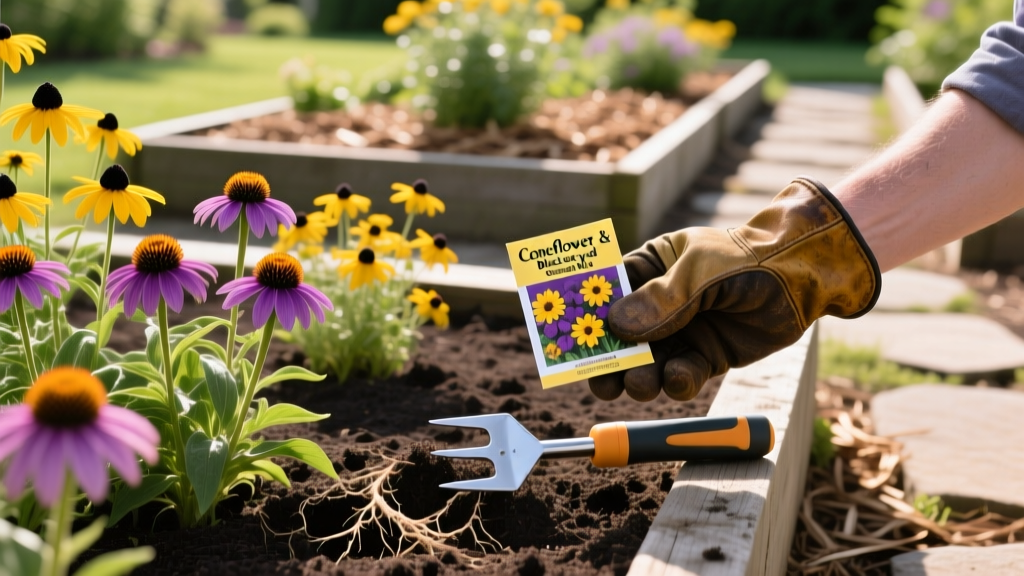
Aerating and Seeding Coneflower & Black-Eyed Susan Gardens in 2026
Sarah ChenPublished
The Intersection of Lawn Care and Perennial Garden Design
When most gardeners hear the terms 'aeration and seeding,' they immediately picture lawn care: heavy core aerators pulling plugs from a grassy yard and broadcast spreaders tossing turf seed. However, as we move through the 2026 growing season, one of the most prominent trends in sustainable landscaping is applying these fundamental turf-management principles to perennial flower garden design. Specifically, integrating deep-soil aeration and strategic direct-seeding techniques is revolutionizing how we establish native prairie plants like Coneflowers (Echinacea purpurea) and Black-eyed Susans (Rudbeckia hirta).
Unlike shallow-rooted annuals, these perennial powerhouses are deep-rooted natives that demand excellent soil drainage, high oxygen levels in the root zone, and loose soil structures to establish their extensive taproots and fibrous networks. If you are designing a new perennial bed or revitalizing an existing one in 2026, treating your garden soil with the same aeration and seeding rigor as a premium lawn will result in a vastly superior, drought-tolerant, and vibrant flower display.
Why Coneflowers and Black-Eyed Susans Demand Aerated Soil
Soil compaction is the silent killer of perennial gardens. Over time, foot traffic, heavy rains, and the natural settling of soil particles destroy the pore space required for water infiltration and gas exchange. According to the USDA Natural Resources Conservation Service, soil health is fundamentally dependent on maintaining adequate pore space for microbial life and root respiration. When soil becomes compacted, it turns anaerobic, leading to stunted growth and root rot.
Coneflowers and Black-eyed Susans are particularly sensitive to 'wet feet.' While they are famously drought-tolerant once established, their deep root systems will quickly succumb to phytophthora root rot if planted in heavy, compacted clay that retains standing water. The Old Farmer's Almanac notes that Echinacea requires well-draining soil to thrive, and poor drainage is the primary cause of winter kill in these perennials. By aerating the garden bed before seeding or planting plugs, you artificially recreate the loose, friable soil structure of their native prairie habitats, allowing taproots to plunge deeply into the earth to access subterranean moisture during the heat of summer.
Step-by-Step Soil Aeration for Perennial Flower Beds
You cannot use a heavy, gas-powered lawn core aerator in a flower bed without destroying soil structure and creating a mess. Instead, 2026's best practices for perennial bed aeration focus on low-impact, high-reward methods that preserve the soil food web.
1. The Broadfork Method (Mechanical Aeration)
For new garden beds or established beds that have become hard-packed, the broadfork is the ultimate tool. Unlike a rototiller—which violently chops up soil, destroys earthworm tunnels, and brings dormant weed seeds to the surface—a broadfork gently lifts and fractures the soil deep down without turning it over.
- Step 1: Wait until the soil is slightly moist but not soggy. If it sticks to your boots like putty, it is too wet to aerate.
- Step 2: Drive the tines of the broadfork 8 to 12 inches into the soil.
- Step 3: Pull back on the handles to gently lift and crack the soil, allowing air and water to penetrate. Step back six inches and repeat across the entire planting zone.
2. Liquid Aeration (Chemical/Biological Aeration)
For established perennial beds where you cannot use a broadfork without damaging existing root crowns, liquid aeration has become the gold standard in 2026. Liquid aerators utilize humic acids, fulvic acids, and yucca extract (a natural surfactant) to break the ionic bonds that cause clay particles to lock together. By spraying a liquid aeration solution over your perennial beds in early spring, you encourage soil flocculation—the clumping of soil particles that naturally creates macro-pores for water and oxygen.
Seeding Techniques for Echinacea and Rudbeckia
Once the soil is properly aerated and amended with a thin layer of compost, it is time to seed. Both Coneflowers and Black-eyed Susans can be grown from seed directly in the garden, but they require specific biological triggers to germinate successfully.
Cold Stratification: Mimicking Winter
Prairie native seeds have evolved to survive harsh winters, meaning they possess a built-in dormancy mechanism that prevents them from sprouting prematurely during a warm winter spell. To break this dormancy, seeds require cold stratification. Expert growing guides recommend exposing these seeds to cold, moist conditions for 30 to 60 days prior to germination.
Winter Sowing (The Easiest Method): In late fall or early winter, broadcast the seeds directly onto the aerated, prepared soil surface. The natural freeze-thaw cycles of winter will stratify the seeds, and they will naturally germinate as the soil warms in spring.
Spring Sowing (The Refrigerator Method): If you are seeding in the spring of 2026, mix your seeds with slightly damp sand or vermiculite in a sealed plastic bag and store them in the refrigerator for 4 to 6 weeks before sowing them outdoors.
Direct Seeding and Seed-to-Soil Contact
Neither Coneflower nor Black-eyed Susan seeds should be buried deeply. In fact, Echinacea seeds require some light to trigger germination. After broadcasting the seeds over your aerated bed, use a lawn roller or simply walk over the area to press the seeds firmly into the soil crevices. This ensures vital seed-to-soil contact, allowing the seed to draw up moisture from the freshly aerated earth without being buried so deep that the emerging shoot exhausts its energy reserves.
Garden Design: Spacing and Companion Data
When designing a perennial border, understanding the mature footprint and root architecture of your plants is crucial. Overcrowding leads to poor air circulation, which invites powdery mildew—a common fungal issue in humid climates. Below is a comparative design chart to help you space your 2026 garden layout effectively.
| Feature | Echinacea purpurea (Coneflower) | Rudbeckia hirta (Black-Eyed Susan) |
|---|---|---|
| Mature Height | 2 to 4 feet | 1 to 3 feet |
| Seed Sowing Depth | Surface to 1/8 inch (needs light) | Surface to 1/16 inch |
| Optimal Spacing | 18 to 24 inches | 12 to 18 inches |
| Germination Time | 10 to 21 days (post-stratification) | 5 to 14 days (post-stratification) |
| Cold Stratification | 30 to 60 days required | 30 days recommended |
| Root Architecture | Deep, woody taproot | Fibrous with shallow runners |
| Bloom Period | Mid-summer to early fall | Early summer to mid-fall |
Design Tip for 2026: Use the 'drift planting' technique. Instead of planting in rigid rows, scatter seeds in organic, sweeping curves. Because Black-eyed Susans spread via fibrous runners and self-seed readily, they make an excellent, aggressive groundcover layer, while the deep taproots of Coneflowers provide vertical architectural interest without competing for the same shallow soil nutrients.
Post-Seeding Care and Maintenance
After seeding your aerated beds, the immediate goal is to maintain consistent surface moisture without washing the seeds away. Use a hose equipped with a fine misting nozzle or a soaker hose to water the bed gently. Keep the top inch of soil consistently moist for the first three weeks. Once the seedlings develop their second set of true leaves, you can begin to taper off watering, encouraging those newly formed roots to plunge deep into the aerated soil channels you created earlier.
When the seedlings reach about 4 inches tall, thin them to the recommended spacing noted in the table above. Do not pull the unwanted seedlings, as this can disturb the delicate roots of the neighboring plants you wish to keep. Instead, snip the excess seedlings at the soil line with a pair of sterilized micro-snips. Finally, apply a very thin layer (no more than half an inch) of fine compost or leaf mold around the base of the plants. Avoid heavy wood mulch directly over newly seeded areas, as it can block the light required for late-germinating seeds and harbor slugs that will devour young perennial shoots.
Conclusion
By bridging the gap between turf management and perennial garden design, you can create a resilient, breathtaking landscape. Aerating your soil to eliminate compaction and employing biologically accurate seeding strategies for Coneflowers and Black-eyed Susans ensures that your 2026 garden will not just survive, but actively thrive. These native prairie giants will reward your soil preparation efforts with years of drought-tolerant beauty, vital pollen for local pollinators, and a vibrant display of gold and purple that defines the modern, eco-conscious garden.
