Pest Control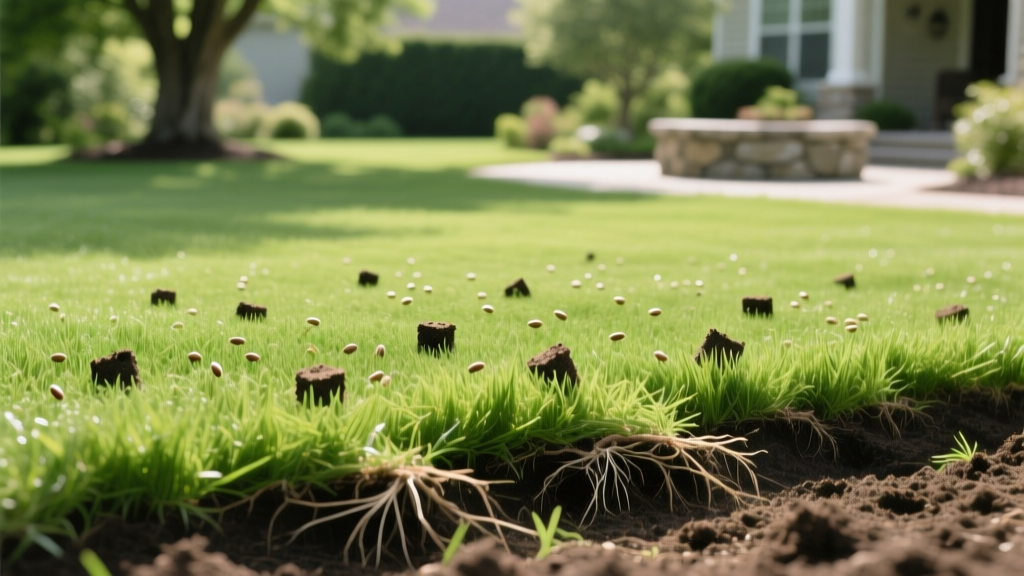
Core Aeration and Overseeding for Natural Lawn Pest Control
Lisa ThompsonPublished
The Hidden Pest Control Power of Cultural Lawn Care
When homeowners think of pest control, they often picture chemical sprays, granular insecticides, and reactive treatments. However, the most effective long-term strategy for a pest-free lawn lies in Integrated Pest Management (IPM), specifically through cultural practices. Core aeration and overseeding are traditionally viewed as turf-thickening techniques, but they are actually formidable weapons against destructive lawn insects. By altering the physical environment of your soil and turf canopy, you can make your lawn inherently hostile to pests like chinch bugs, sod webworms, and white grubs.
At LawnsGuide, we advocate for proactive lawn renovation. When you combine the soil-decompacting power of core aeration with the genetic resilience of modern, endophyte-enhanced grass seeds, you create a biological fortress. This guide explores the exact techniques, measurements, and timing required to use aeration and overseeding as a primary pest control mechanism.
Thatch Reduction: Evicting Chinch Bugs and Sod Webworms
Thatch is a layer of living and dead organic matter that accumulates between the green vegetation and the soil surface. While a thin layer (less than 0.5 inches) is beneficial, excessive thatch acts as a luxury hotel for surface-feeding insects. Chinch bugs and sod webworms thrive in thick thatch because it provides insulation from temperature extremes, protection from predators, and a dry canopy to lay their eggs.
According to Penn State Extension, chinch bugs inject toxins into grass blades while feeding, causing yellowing and dead patches that are often mistaken for drought stress. When thatch exceeds half an inch, insecticides fail to reach the soil level, rendering chemical treatments useless. Core aeration physically fractures the thatch layer and brings soil microorganisms to the surface. These microbes accelerate the decomposition of organic matter, effectively destroying the habitat that surface pests rely on for survival and reproduction.
Deep Root Architecture: Outlasting White Grub Feeding
White grubs—the larval stage of Japanese beetles, June bugs, and European chafers—feed aggressively on turfgrass roots in late summer and early fall. A lawn with a shallow, compacted root system will collapse under even a minor grub infestation because it lacks the root mass to sustain the plant and draw moisture from the soil.
Core aeration alleviates soil compaction, allowing oxygen, water, and nutrients to penetrate deeply. This encourages turfgrass to develop extensive, deep root systems. The University of Kentucky Entomology department notes that healthy, vigorously growing turf with deep roots can tolerate significantly higher grub populations (often up to 10-15 grubs per square foot) without showing visible damage. By aerating, you are not necessarily killing the grubs, but you are building a root system so robust that the feeding damage becomes agronomically insignificant.
The Secret Weapon: Endophyte-Enhanced Grass Seed
Overseeding is your opportunity to introduce pest-resistant genetics into your lawn. When selecting seed for overseeding, look for varieties of tall fescue (Festuca arundinacea) and perennial ryegrass (Lolium perenne) that are 'endophyte-enhanced.' Endophytes are naturally occurring, beneficial fungi that live symbiotically within the grass plant. They do not harm the grass; instead, they produce alkaloids that are highly toxic or unpalatable to surface-feeding insects like chinch bugs, billbugs, and sod webworms.
By overseeding an aerated lawn with endophyte-enhanced seed, you are essentially planting a natural insect repellent. The newly germinated grass will possess built-in biological defenses, drastically reducing the need for synthetic surface insecticides in subsequent seasons.
Step-by-Step Aeration and Overseeding Protocol for Pest Prevention
To maximize the pest-deterrent benefits of these cultural practices, precision is required. Follow this actionable protocol:
1. Timing and Soil Preparation
- Cool-Season Grasses: Perform aeration and overseeding in early fall (late August to mid-September). This disrupts the late-summer life cycle of grubs and allows seed to establish before winter.
- Warm-Season Grasses: Perform in late spring to early summer (May to June) when the grass is actively growing and can rapidly recover.
- Moisture Prep: Water your lawn deeply (approx. 1 inch) 24 to 48 hours before aerating. The soil must be moist enough for the aerator tines to penetrate 2 to 3 inches deep, but not so wet that it causes severe clumping.
2. Core Aeration Specifications
Never use a spike aerator for pest control; spikes merely push soil outward, worsening compaction. Rent a walk-behind core aerator.
- Depth: Set tines to extract cores 2 to 3 inches deep.
- Pattern: Make two passes over the lawn. The first pass in one direction, and the second pass perpendicular to the first. This ensures plug holes are spaced roughly 2 to 3 inches apart.
- Plug Management: Leave the extracted soil cores on the lawn. As they break down over the next few weeks, they will topdress the thatch layer with microbe-rich soil, accelerating thatch decomposition.
3. Overseeding Rates and Application
- Seed Selection: Choose a high-quality, weed-free mix containing endophyte-enhanced tall fescue or perennial ryegrass.
- Application Rate: Apply seed at a rate of 5 to 8 pounds per 1,000 square feet for overseeding existing turf.
- Technique: Use a rotary broadcast spreader. Split your seed in half; apply the first half walking north-south, and the second half walking east-west to ensure even coverage into the aeration holes.
4. Topdressing and Fertilization
Apply a thin layer (1/4 inch) of screened compost over the seeded area. Compost introduces beneficial nematodes and fungi that naturally prey on soil-dwelling pests. Follow up with a starter fertilizer high in phosphorus (e.g., 10-18-10) at a rate of 1 pound of nitrogen per 1,000 square feet to fuel rapid root development.
Pest Vulnerability Comparison Chart
Understanding how lawn conditions dictate pest survival is crucial for IPM. The table below illustrates the difference in pest vulnerability between a neglected lawn and one maintained with aeration and overseeding.
| Lawn Condition | Thatch Depth | Root Depth | Primary Pest Threat | Vulnerability Level |
|---|---|---|---|---|
| Compacted, Unseeded | > 0.75 inches | 1 - 2 inches | Chinch Bugs, Sod Webworms, Grubs | High (Severe damage likely) |
| Spike Aerated Only | 0.5 - 0.75 inches | 2 - 3 inches | Surface Feeders, Fungus Gnats | Moderate (Thatch remains) |
| Core Aerated & Overseeded | < 0.5 inches | 4 - 6+ inches | Minimal (Endophytes deter surface pests) | Low (High tolerance to grubs) |
Cost and Equipment Breakdown
Investing in cultural pest control yields long-term savings on chemical treatments. Here is a typical cost breakdown for a 5,000 square foot lawn:
- Core Aerator Rental: $80 - $120 per day (often shared with neighbors to split costs).
- Endophyte-Enhanced Seed (25-40 lbs): $75 - $150 depending on cultivar quality.
- Starter Fertilizer & Compost: $50 - $100.
- Total Estimated Cost: $205 - $370.
Compare this to the recurring annual cost of preventative grub control ($150-$250) and curative chinch bug treatments ($100-$200 per application), and the ROI of aeration and overseeding becomes immediately apparent.
Post-Service Watering Without Inviting Pests
After overseeding, keeping the seed moist is mandatory, but overwatering can invite fungus gnats and encourage fungal diseases that weaken the turf, making it susceptible to secondary pest invasions. Water the lawn lightly 2 to 3 times a day for just 5-10 minutes to keep the top inch of soil damp. Once the new grass reaches 2 inches in height, transition immediately to deep, infrequent watering (1 to 1.5 inches per week). Deep watering forces the new endophyte-enhanced roots to chase moisture downward, further fortifying the lawn against future grub feeding.
Conclusion
True pest control begins in the soil. By utilizing core aeration to eliminate thatch and relieve compaction, and overseeding with endophyte-enhanced cultivars, you transform your lawn from a vulnerable target into a resilient ecosystem. For more insights on sustainable turf management, consult your local cooperative extension or refer to resources like the University of Minnesota Extension on proper lawn renovation techniques. Embrace these cultural techniques, and you will spend less time fighting pests and more time enjoying a thick, vibrant, and naturally defended lawn.