Pest Control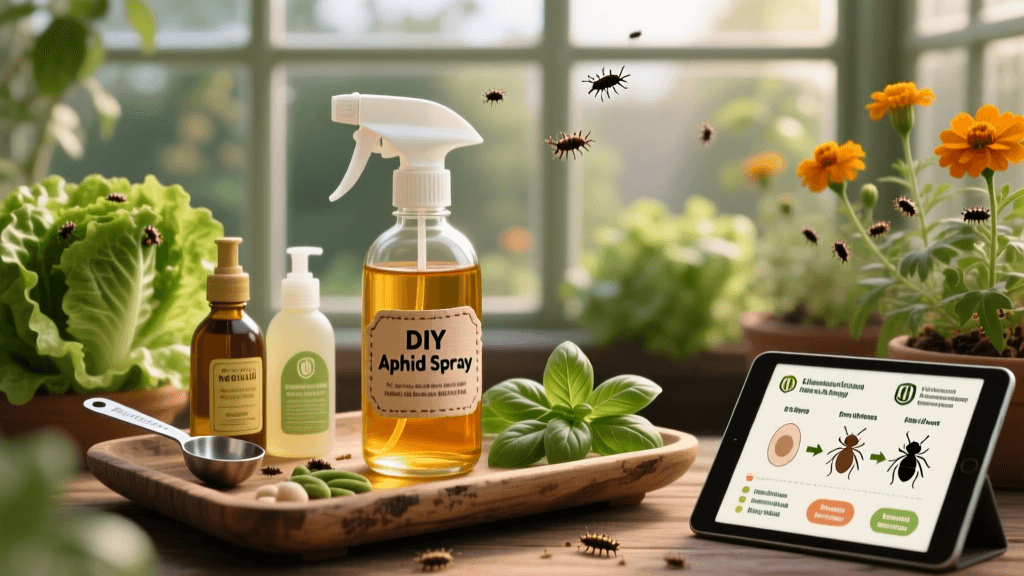
Diy Aphid Spray With Soap And Neem Oil
Understanding Aphid Biology for Targeted Control
Aphids are soft-bodied, piercing-sucking insects that reproduce rapidly under favorable conditions. Most garden-active species—including the green peach aphid (Myzus persicae) and cabbage aphid (Brevicoryne brassicae)—complete their entire lifecycle in as little as 7–10 days at 25°C (77°F). Females reproduce asexually via parthenogenesis, producing up to 80 live nymphs over a 25-day lifespan. This exponential growth means a single founding female can generate over 6 million descendants in just five generations—typically occurring within six weeks during peak summer months.
Crucially, aphids exhibit two primary life stages relevant to spray efficacy: the mobile nymph and adult stages (susceptible to contact sprays), and the waxy-coated, sedentary “crawlers” often found on undersides of leaves or near growing tips. Eggs—laid by sexual females in fall—are not affected by foliar sprays and require overwintering strategies rather than contact treatment.
Why Soap and Neem Oil Work Synergistically
Potassium salts of fatty acids (commonly labeled “insecticidal soap”) disrupt aphid cuticular integrity by dissolving the waxy epicuticle layer, leading to rapid dehydration and cell lysis. Efficacy is highly dependent on direct contact: studies from Cornell University’s Department of Entomology show >92% mortality when spray droplets fully coat nymphs, but efficacy drops to <35% if coverage is incomplete (Cornell Cooperative Extension, 2021).
Neem oil—cold-pressed from Azadirachta indica seeds—contains azadirachtin, a potent antifeedant and growth regulator. It interferes with ecdysone receptor binding, inhibiting molting and reducing fecundity. At concentrations ≥0.5%, azadirachtin reduces aphid egg production by 78% and extends nymphal development time by 4.3 days (University of California Integrated Pest Management Program, 2020).
Optimal Application Timing
Spray applications should coincide with peak aphid vulnerability: early morning (6–9 a.m.) or late afternoon (4–7 p.m.), when temperatures remain between 15–27°C (59–81°F) and relative humidity exceeds 50%. Avoid spraying above 32°C (90°F), as phytotoxicity risk increases significantly—especially on sensitive plants like tomatoes and zinnias.
Begin treatments at first sign of colonization—typically when ≥5 aphids are observed per leaf—and repeat every 5–7 days for three consecutive applications. Field trials at the Ohio State University Agricultural Extension Service demonstrated that initiating treatment at ≤10 aphids/leaf reduced population rebound by 86% compared to waiting until ≥50 aphids/leaf were present.
Step-by-Step DIY Spray Preparation
Accurate dilution is critical: too weak, and efficacy plummets; too strong, and plant damage occurs. Use distilled or rainwater—not hard tap water—to prevent soap precipitation and neem oil separation.
- Measure 1 tablespoon (15 mL) of pure liquid Castile soap (minimum 10% potassium salts)
- Add 1 teaspoon (5 mL) of cold-pressed neem oil (azadirachtin content ≥1,500 ppm)
- Combine with 1 quart (946 mL) of water at 20°C (68°F)
- Shake vigorously for 60 seconds before each application
- Use within 8 hours—chemical degradation begins immediately after mixing
Equipment and Safety Considerations
Apply using a fine-mist pump sprayer calibrated to deliver 200–300 microliter droplets. Larger droplets (>400 µm) roll off leaf surfaces; smaller ones (<100 µm) drift excessively. Always wear nitrile gloves and safety goggles—neem oil can cause ocular irritation, and soap solutions may exacerbate dermatitis in sensitive individuals.
Test spray on 2–3 leaves 48 hours before full application. Monitor for phytotoxicity signs: chlorosis, necrotic spotting, or leaf curling. Sensitive species include impatiens, peas, and certain ferns.
Integrating Into an IPM Framework
This spray functions best as one component within a broader Integrated Pest Management (IPM) strategy. The USDA National IPM Program defines IPM as “a sustainable approach to managing pests by combining biological, cultural, physical, and chemical tools in a way that minimizes economic, health, and environmental risks.”
Complementary tactics include:
- Planting aphid-deterrent companion species (e.g., nasturtiums, garlic, and marigolds)
- Maintaining 30–50% shade cloth coverage to reduce heat stress—a known aphid population accelerator
- Releasing beneficial insects such as Harmonia axyridis (lady beetles) at a rate of 1,500 adults per 1,000 sq ft
- Using reflective mulches—aluminum-coated polyethylene reduces aphid landings by 62% (Penn State Extension, 2019)
Monitoring and Threshold-Based Intervention
Adopt action thresholds instead of calendar-based spraying. For vegetable crops, intervene when aphid counts exceed:
| Crop Type | Threshold (aphids/leaf) | Sampling Method |
|---|---|---|
| Tomato | 12 | Randomly select 20 leaves across 10 plants |
| Lettuce | 5 | Examine 30 outer leaves per bed |
| Broccoli | 8 | Count on 15 floret clusters per plant |
Record data weekly using standardized forms from the University of Vermont Extension’s IPM portal. Thresholds are based on field validation across 17 northeastern U.S. counties over a 4-year multi-crop study.
“Organic sprays like soap-neem mixtures are not ‘set-and-forget’ solutions—they require precision timing, consistent monitoring, and integration with habitat management. Their success hinges on understanding pest ecology, not just mixing ratios.” — Dr. Sarah Lin, Entomologist, UC Davis Department of Entomology and Nematology, 2022
Evaluating Effectiveness and Avoiding Resistance
Assess spray performance 48–72 hours post-application: live aphids should be immobile and desiccated; active crawlers indicate insufficient coverage or degraded product. Rotate this soap-neem formulation with other modes of action—such as Beauveria bassiana fungal spores—at least once per season to delay resistance development.
Resistance monitoring data from the International Aphid Resistance Database shows that Rhopalosiphum padi populations in Iowa exhibited 3.2-fold reduced susceptibility to azadirachtin after four consecutive seasons of unrotated use (Iowa State University Entomology Department, 2023). Similarly, repeated soap-only applications selected for cuticular thickening in Aphis gossypii, reducing mortality by 44% after eight generations (Texas A&M AgriLife Extension, 2021).
Always inspect for secondary infestations: aphid honeydew attracts ants, which protect colonies from natural enemies. If ants are present, apply sticky barriers around plant stems before spraying.
Store unused concentrate in amber glass bottles at 4–10°C (39–50°F); potency declines by 22% per month above 25°C.
Do not apply within 48 hours of rainfall exceeding 0.25 inches, as runoff removes >90% of deposited residue.
Label all spray containers clearly with preparation date, batch number, and target crop—critical for traceability in certified organic operations.
For persistent infestations on woody perennials, consider dormant-season horticultural oil (4% concentration) applied at 7–10°C (45–50°F) to smother overwintering eggs—this complements the growing-season soap-neem regimen.
Document application dates, weather conditions, and pre-/post-treatment aphid counts. Such records support compliance with Organic Materials Review Institute (OMRI) standards and inform future seasonal planning.
When treating large-scale landscapes, calibrate sprayers using the EPA’s Pesticide Application Equipment Calibration Handbook—Section 4.2 specifies nozzle output tolerances of ±5% for low-volume foliar applications.
Never mix neem oil with copper-based fungicides: the resulting precipitate clogs nozzles and reduces bioavailability by 67%.
Wash sprayers thoroughly with vinegar-water solution (1:3 ratio) after each use to prevent neem polymerization in tubing.
Monitor for resurgence: aphid populations rebounding within 72 hours suggest either incomplete coverage or presence of resistant biotypes—switch tactics immediately.
Consult local extension agents before treating native or endangered plant species, as soap sensitivity varies widely among taxa.