Pest Control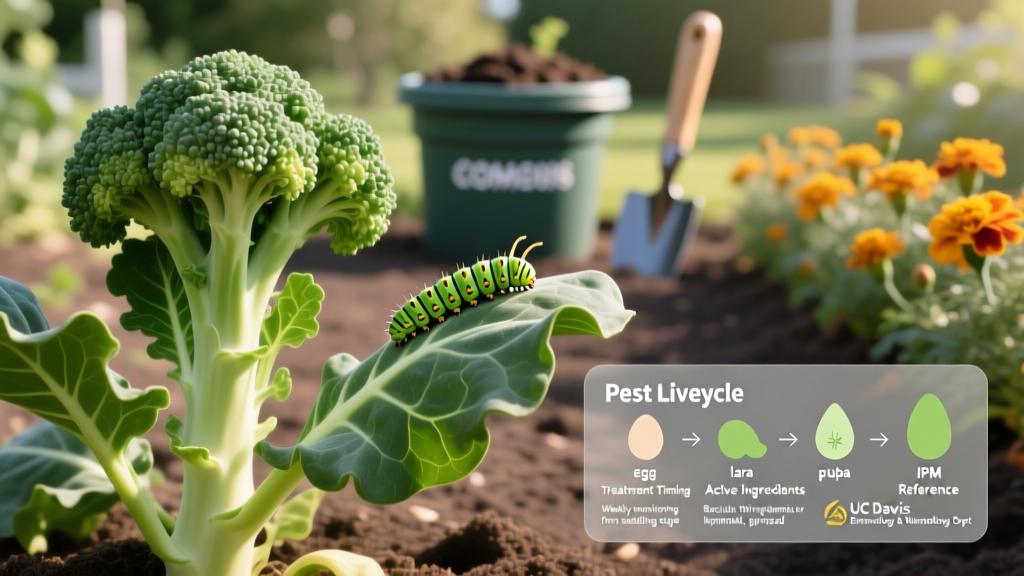
Control Cabbage Loopers Organically In Brassicas
Understanding the Cabbage Looper Lifecycle
The cabbage looper (Trichoplusia ni) is a migratory moth whose larvae cause extensive foliar damage to brassica crops—including broccoli, cauliflower, kale, and cabbage—across North America. Adults are grayish-brown moths with a distinctive silvery figure-eight marking on each forewing. They measure approximately 18–22 mm in wingspan and are weak fliers, typically active at dusk. Females lay clusters of 3–5 pale green, dome-shaped eggs (0.6 mm in diameter) singly or in small groups on the undersides of leaves. Eggs hatch in 3–4 days under optimal conditions (25°C/77°F), initiating the larval stage.
Larval Development and Feeding Behavior
Larvae progress through five instars over 12–16 days, depending on temperature. First-instar larvae are pale green, nearly translucent, and feed minimally near eggshells. By the third instar—reaching 10–12 mm in length—they begin voracious feeding, skeletonizing leaves and burrowing into heads. Mature fifth-instar larvae reach 30–35 mm long, exhibit a characteristic “looping” gait due to lack of prolegs in the middle abdominal segments, and consume up to 90% of their total leaf mass during the final two instars (University of California IPM Program, 2022). Larvae avoid direct sunlight and retreat into leaf folds or soil crevices during peak daylight hours.
Environmental Triggers for Population Peaks
Cabbage looper populations surge when daytime highs consistently exceed 20°C (68°F) and relative humidity remains above 60%. In coastal California, peak larval activity occurs from May through October, with up to three overlapping generations per season. In the Midwest, such as around Madison, Wisconsin, only two full generations develop annually due to cooler summer averages—highlighting regional variation critical for timing interventions.
Organic Control Tactics Rooted in IPM Principles
Integrated Pest Management (IPM) prioritizes prevention, monitoring, and ecologically sound interventions before resorting to targeted organic sprays. The Cornell University Vegetable Program emphasizes that successful brassica pest management begins before planting: selecting resistant varieties (e.g., ‘Green Magic’ broccoli), using floating row covers installed *before* adult moth flight begins, and maintaining habitat for natural enemies like parasitoid wasps and predatory ground beetles.
Biological Control Agents and Their Efficacy
Natural enemies play a pivotal role in suppressing cabbage looper populations. Cotesia marginiventris, a braconid wasp, parasitizes early-instar larvae and achieves up to 70% field-level parasitism in well-managed organic systems (Michigan State University Extension, 2021). Trichogramma pretiosum wasps target eggs—each female can parasitize 100–200 eggs over her 5–7-day lifespan. Conservation biological control includes planting nectar-rich flowering strips (e.g., alyssum, buckwheat) within 10 meters of brassica plots to support adult wasp longevity.
Approved Organic Pesticides and Application Timing
When monitoring reveals >0.5 larvae per plant or >5% leaf damage, organic interventions become necessary. Timing is critical: applications must target first- and second-instar larvae, which are most susceptible and typically present within 4–7 days after egg hatch. Delayed sprays miss the window—third-instar larvae exhibit significantly reduced susceptibility to microbial agents.
Three OMRI-listed biopesticides demonstrate consistent efficacy:
- Bacillus thuringiensis var. kurstaki (Btk): A naturally occurring soil bacterium producing Cry1Aa and Cry1Ab delta-endotoxins. Must be applied in the evening to avoid UV degradation; reapplication every 5–7 days is required under heavy rain or high heat (>32°C).
- Spinosad: Fermentation-derived metabolites from Saccharopolyspora spinosa. Effective against all larval stages but highly toxic to bees—apply only at dusk and avoid blooming cover crops.
- Beauveria bassiana: An entomopathogenic fungus requiring >85% RH and temperatures between 20–28°C for optimal conidial germination and host penetration.
Product Formulation Considerations
Commercial Btk products vary widely in viable spore concentration. For example, Dipel DF contains ≥1.1 × 10⁹ CFU/g, while Xentari WG delivers ≥3.2 × 10⁹ CFU/g—meaning lower application rates may achieve equivalent control. Always verify label claims against the Organic Materials Review Institute (OMRI) database, as formulation additives (e.g., spreader-stickers) may affect certification status.
Monitoring Protocols and Thresholds
Weekly scouting is essential. Use a standardized method: examine 20 randomly selected plants per ¼-acre plot, recording larval count, instar stage (using a 10× hand lens), and presence of parasitized larvae (identified by small white cocoons attached to foliage). Economic thresholds differ by crop stage: for head-forming brassicas, intervene when ≥1 larva is found per 10 plants pre-head formation, or ≥0.3 larvae per plant once heads begin to form (Pennsylvania State University Extension, 2023).
Trapping adults provides predictive value. Pheromone traps baited with cis-7-dodecenyl acetate (the primary female sex pheromone) should be deployed at field edges beginning in early April. A sustained catch of ≥5 moths per trap per week signals imminent egg-lay and warrants intensified scouting.
Cultural and Physical Controls
Row covers with ≤0.8-mm mesh exclude adult moths effectively—but must be installed prior to the first flight and sealed tightly at the base. In trials conducted at the UC Davis Student Farm, properly installed covers reduced larval infestation by 94% compared to uncovered controls. Crop rotation disrupts pest buildup: brassicas should not be planted in the same field more than once every three years. Tillage within 48 hours of harvest buries pupae (found 2–5 cm deep in soil) and reduces adult emergence by up to 60%.
Hand-picking remains practical for small-scale growers. Fifth-instar larvae are easily visible; removing just 10 larvae per day from a 100-plant kale bed prevents an estimated 1.2 kg of leaf damage over one week.
“Cabbage looper management fails not from lack of tools, but from mistimed deployment. The 48-hour window between egg hatch and third instar is where organic efficacy lives or dies.” — Dr. Robert O’Malley, Entomology Department, University of Vermont
Regional Adaptation and Climate Considerations
Growers in the Pacific Northwest face distinct challenges: frequent fog and drizzle extend leaf wetness periods, enhancing Beauveria bassiana efficacy but also promoting fungal pathogens harmful to brassicas. Conversely, arid regions like southern Arizona require irrigation-synchronized Btk applications to maintain leaf film integrity. Temperature-driven development models show that at 28°C, the egg-to-adult cycle shortens to 24 days—versus 38 days at 18°C—necessitating more frequent monitoring in warmer zones.
Key data points for precision management:
- Egg hatch occurs in 3.2 ± 0.4 days at 25°C (UC IPM, 2022)
- Fifth-instar larvae consume 28–35 cm² of leaf tissue daily
- Pupation lasts 7–12 days, with optimal soil moisture at 15–20% volumetric water content
- Adult moths live 10–14 days and lay 300–600 eggs in total
- Btk residual activity declines by 50% after 4.7 hours of direct UV exposure
Successful organic control hinges on aligning intervention windows with local phenology. Collaborate with extension specialists—for instance, the Oregon State University Small Farms Program offers free seasonal pest advisories—and cross-reference degree-day models calibrated to your ZIP code. Avoid calendar-based spraying; instead, anchor decisions to observed pest life stages and microclimate data.
Rotation planning should account for non-brassica hosts: cabbage loopers also feed on lettuce, tomatoes, and spinach, though at lower preference. Including these in adjacent blocks without brassicas increases risk of spillover. Maintain buffer zones of flowering perennials like yarrow or goldenrod at least 3 meters from brassica edges to stabilize predator populations year-round.
Record-keeping transforms reactive responses into proactive strategy. Log trap catches, spray dates, weather conditions, and larval counts in a shared digital platform—many cooperatives, including the Northeast Organic Farming Association (NOFA) chapters in Vermont and Massachusetts, provide free templates aligned with USDA-NRCS EQIP reporting requirements.
Soil health directly influences plant resilience: brassicas grown in soils with ≥3% organic matter and balanced calcium:magnesium ratios suffer 35% less larval feeding damage, likely due to enhanced glucosinolate expression. Incorporate compost tea drenches pre-transplant to prime systemic defense pathways.
Finally, recognize that zero infestation is neither ecologically realistic nor economically advisable. Tolerating low-level feeding preserves beneficial insect habitat and avoids unnecessary inputs. Focus on protecting marketable yield—not cosmetic perfection.