Gardening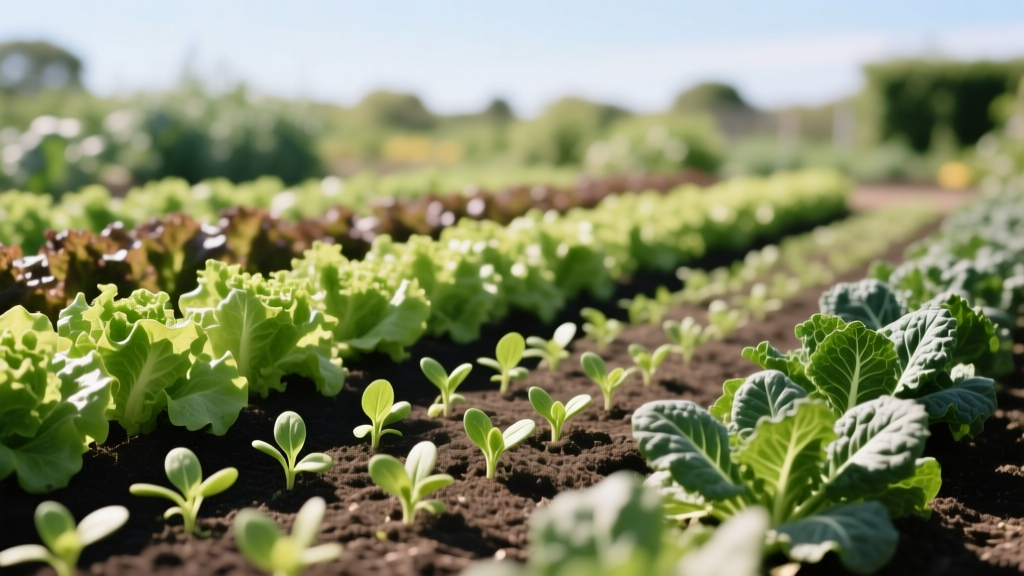
Succession Planting Leafy Greens For Aesthetic Patterns 2026
James MillerPublished
The Intersection of Lawn Striping and Edible Landscaping
When most homeowners think of lawn striping and aesthetic patterns, they picture the pristine, alternating light-and-dark bands of a freshly mowed turf lawn. However, in 2026, the most innovative outdoor designers are translating these striking visual techniques into the edible landscape. By mastering the succession planting of leafy greens—specifically lettuce, spinach, and kale—you can cultivate a potager garden that rivals the geometric precision of a championship golf course while providing a continuous, bountiful harvest.
The secret to maintaining a flawless visual pattern in a vegetable garden is avoiding the 'harvest gap.' Traditional planting methods result in a massive yield all at once, followed by bare dirt when the crops are pulled. Succession planting solves this aesthetic dilemma by staggering seed sowing and transplanting. This ensures that as one row of vibrant red lettuce is harvested, a younger, equally vibrant row is already maturing to take its visual and physical place, keeping your garden's living mosaic unbroken.
The Art of Edible Lawn Striping
Lawn striping works by bending grass blades in opposite directions to reflect light differently. In the edible garden, we achieve this high-contrast striping effect by alternating rows of varying foliage colors and textures. Imagine a 4-foot-wide raised bed: the outer edges are lined with the dark, deeply lobed leaves of 'Lacinato' kale, creating a sharp border. Inside, you alternate rows of bright green 'Buttercrunch' lettuce with deep burgundy 'Red Sails' lettuce. As the plants mature, the contrasting colors create a striking, striped visual corridor that draws the eye down the length of the garden.
Selecting Your 2026 Color Palette
To execute these patterns, you need reliable, visually distinct varieties that perform well in the shifting climate zones of 2026. According to the latest horticultural extensions, such as the University of Minnesota Extension's vegetable resources, selecting bolt-resistant varieties is more critical than ever due to increasingly erratic spring heatwaves.
Lettuce (Lactuca sativa)
- Red Sails: A classic, deeply ruffled oakleaf variety that provides a massive pop of burgundy. It is slow to bolt and holds its shape beautifully in geometric plantings.
- Buttercrunch: Forms tight, pale-green rosettes that contrast perfectly with darker foliage. Its uniform growth habit makes it ideal for creating clean, predictable lines.
- Merlot: A deep, almost black-red romaine that adds dramatic, dark striping to your garden beds.
Spinach (Spinacia oleracea)
- Red Kitten: Features striking red veins and petioles against dark green leaves, perfect for intricate, fine-textured pattern work.
- Bloomsdale Long Standing: A heavily savoyed (crinkled), dark green heirloom that catches the morning dew and light, adding textural contrast to smooth-leaved lettuces.
Kale (Brassica oleracea)
- Red Russian: Features flat, slate-green leaves with vivid purple stems and veins. It grows slightly larger, making it an excellent mid-ground or border plant for large-scale patterns.
- Dwarf Blue Curled: A compact, tightly ruffled blue-green kale that acts as a dense, low-growing filler for checkerboard designs.
The 2026 Succession Planting Schedule
Maintaining a crisp aesthetic requires strict adherence to a sowing schedule. You must sow new seeds or start plugs indoors every 14 to 21 days. Below is a structured succession schedule tailored for a temperate climate (USDA Zones 5-7) in 2026. For comprehensive regional adjustments, consult the USDA's official gardening guidelines.
| Sowing Wave | Date (Spring 2026) | Crop Focus | Aesthetic Role |
|---|---|---|---|
| Wave 1 | March 15 | Spinach & Kale (Plugs) | Structural Borders & Dark Base |
| Wave 2 | April 5 | Lettuce (Red Sails) | Primary Red Striping |
| Wave 3 | April 25 | Lettuce (Buttercrunch) | Primary Green Striping |
| Wave 4 | May 15 | Spinach (Red Kitten) | Fine-Textured Infill & Accents |
| Wave 5 | August 20 | Kale & Fall Lettuce | Autumn Pattern Renewal |
Designing the Patterns: Step-by-Step
Creating living art requires a blueprint. Before touching the soil, map out your raised beds or in-ground rows on graph paper.
1. The Chevron Stripe
Instead of parallel rows, plant your alternating red and green lettuce in V-shaped chevrons. This mimics the dynamic, angled striping patterns seen on modern athletic fields. Use a string line and a carpenter's square to mark your soil. Sow your 'Merlot' romaine in the left-facing V, and your 'Buttercrunch' in the right-facing V. The sharp angles create a sense of movement and modernity in the garden space.
2. The Concentric Mosaic
For circular or square raised beds, plant 'Dwarf Blue Curled' kale in the center. Surround it with a ring of 'Red Kitten' spinach, followed by an outer ring of 'Red Sails' lettuce. As you harvest the outer rings, the inner rings expand visually, creating a shifting, dynamic pattern that evolves throughout the season.
Soil Preparation and Precision Maintenance
Aesthetic patterns demand pristine conditions. Bare soil between rows should be dark, weed-free, and uniform to act as the 'negative space' that makes the foliage colors pop. Many top-tier landscape designers in 2026 are utilizing dark, organic mulches or biodegradable black paper mulch between rows to enhance the striping effect, much like how dark soil makes green turfgrass look richer.
Soil Amendment: In early 2026, amend your beds with a 2-inch layer of screened compost and a balanced organic fertilizer like Espoma Garden-tone. Leafy greens are heavy nitrogen feeders; without adequate nutrition, the plants will grow unevenly, ruining the symmetry of your design.
Precision Irrigation: Overhead watering can splash mud onto the lower leaves of your spinach and kale, muddying the visual contrast. Furthermore, wet foliage invites downy mildew, which causes ugly yellow spotting. Install a 2026-model smart drip irrigation system with inline emitters spaced exactly 6 inches apart. Lay the drip tape precisely between your patterned rows. This delivers water directly to the root zone, keeping the foliage immaculate and the colors vibrant.
Troubleshooting Aesthetic Gaps
Even with perfect succession planning, pests or unexpected bolting can leave holes in your living tapestry. According to Cornell University's College of Agriculture and Life Sciences, integrated pest management (IPM) is essential for maintaining crop integrity without resorting to harsh chemicals that might damage the delicate visual balance of a mixed planting.
Keep a 'nursery flat' of backup lettuce and kale plugs growing in a shaded cold frame. If a pest destroys a section of your 'Red Sails' row, or if an early heatwave causes a patch of spinach to bolt, simply pull the offending plants, amend the small pocket of soil with fresh compost, and drop in a mature plug. This 'patching' technique ensures your garden's aesthetic stripes remain unbroken and visually continuous from early spring until the first hard frost of late autumn.
'The intersection of horticulture and landscape design reaches its peak when the vegetable garden is treated with the same geometric rigor as a formal estate lawn. Succession planting is the engine that keeps that design alive and visually striking.'
Conclusion
By treating your leafy greens not just as food, but as a living palette of textures and colors, you elevate the humble vegetable patch into a masterpiece of landscape design. The disciplined approach of succession planting ensures that your edible lawn striping remains lush, vibrant, and perfectly patterned all season long in 2026 and beyond. Whether you are designing a small urban raised bed or a sprawling suburban potager, the principles of contrast, timing, and precision will yield a garden that is as beautiful to look at as it is delicious to eat.
