
Landscaping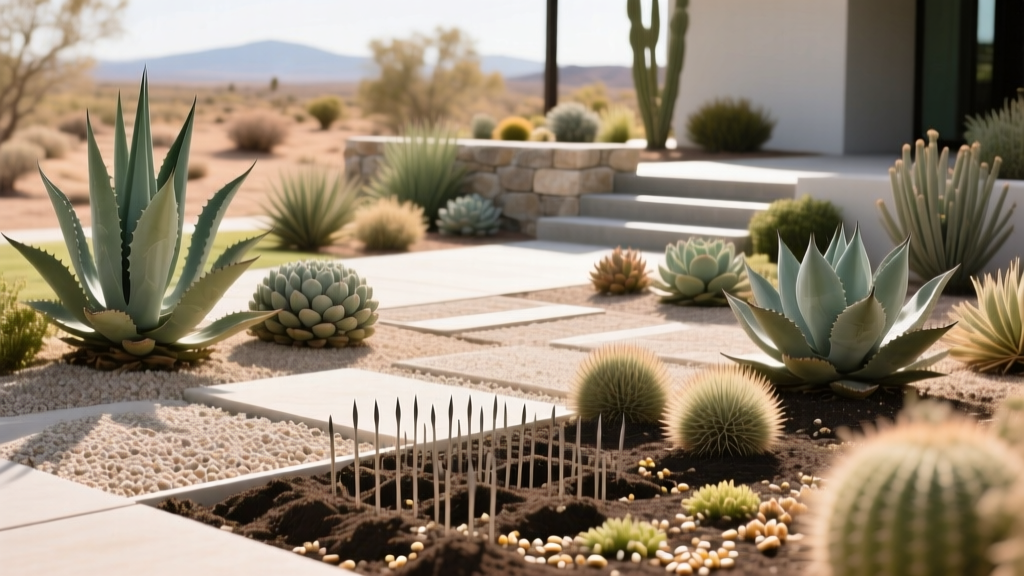
Xeriscape Front Yard 2026: Aeration and Seeding for
The 2026 Xeriscape Paradigm Shift: Beyond Sterile Rock Gardens
As municipal water conservation regulations tighten and landscape design trends evolve in 2026, the xeriscape front yard featuring decomposed granite (DG) and architectural agave has become the gold standard for curb appeal, sustainability, and low-water landscaping. However, homeowners and landscaping professionals often overlook the most critical phase of this conversion: soil aeration and strategic native seeding. Transitioning from a traditional turf lawn to a DG and agave landscape is not simply about killing the grass, laying down a weed barrier, and dumping rock. It requires a fundamental shift in how we approach soil biology, deep drainage, and ecological seeding.
In the modern landscaping industry, the phrase 'aeration and seeding' is no longer exclusive to Kentucky Bluegrass or Tall Fescue lawns. In a xeriscape context, aeration is the vital soil preparation step that ensures your agave specimens survive their first winter, while seeding refers to the integration of native, drought-tolerant wildflowers and micro-groundcovers into the permeable borders of your hardscape. Here is your comprehensive guide to mastering these techniques for a thriving xeriscape front yard in 2026.
Why Deep Aeration is Non-Negotiable for Agave Health
The most common cause of agave failure in residential xeriscapes is not drought; it is crown rot caused by poor drainage. Agaves, particularly popular 2026 varieties like Agave americana (Century Plant), Agave parryi, and the smooth-tentacled Agave vilmoriniana, possess fleshy, shallow root systems that are highly susceptible to anaerobic, waterlogged soils. When you remove an old turf lawn, the soil left behind is typically heavily compacted from years of mowing, foot traffic, and thatch buildup. This compaction creates a 'hardpan' layer that prevents water from percolating downward.
If you lay decomposed granite directly over compacted clay or loam, the DG acts as a sponge, trapping moisture against the agave's root zone. According to Colorado State University Extension, proper soil preparation and drainage are the foundational pillars of xeriscaping, and without addressing soil compaction, even the most drought-tolerant plants will fail.
To prevent this, deep mechanical aeration is mandatory before any base rock or DG is applied. For large front yards, renting a stand-on core aerator to pull 3-inch to 4-inch soil plugs is highly effective. For smaller urban lots or tight garden beds where heavy machinery cannot reach, using a manual broadfork to fracture the soil down to 12 inches is the preferred 2026 method. After aerating, it is crucial to top-dress the exposed soil with expanded shale or pumice, which permanently improves soil porosity and ensures the rapid drainage that agaves demand.
Redefining 'Seeding' in a Decomposed Granite Landscape
When we talk about 'seeding' in a xeriscape front yard, we are abandoning the idea of a monolithic green carpet. Instead, modern xeriscaping embraces 'living borders' and ecological planting pockets. While the central pathways and primary focal points are dominated by DG and large agave specimens, the margins of the yard, the parkway (the strip between the sidewalk and the street), and the spaces between stepping stones are prime candidates for native seeding.
In 2026, the trend is to seed native wildflowers and drought-tolerant groundcovers that support local pollinators while requiring a fraction of the water of traditional turf. Excellent seed choices for the borders of a DG xeriscape include:
- Buffalograss (Bouteloua dactyloides): A native prairie grass that requires minimal mowing and thrives in low-water conditions, perfect for parkways.
- California Poppy (Eschscholzia californica): Provides brilliant orange blooms and thrives in the poor, well-drained soils typically found near DG borders.
- Native Yarrow (Achillea millefolium): Offers fern-like foliage and acts as an excellent, low-water groundcover that stabilizes soil edges.
- Desert Marigold (Baileya multiradiata): A hardy, long-blooming annual that reseeds itself naturally in the crevices of hardscaping.
Seeding these natives requires excellent seed-to-soil contact. Because you are working in the margins of the hardscape, a walk-behind slit seeder or a manual hand-broadcasting method followed by a light raking and a top-dressing of compost is the most effective approach. The EPA WaterSense program emphasizes that efficient landscaping relies on matching the right plants to the specific microclimates and soil conditions of your yard, making native seeding a perfect complement to the arid conditions created by DG.
Step-by-Step Soil Prep, Aeration, and Seeding Protocol
To achieve a professional-grade xeriscape front yard, follow this sequential protocol designed for the 2026 landscaping season:
- Turf Removal and Grading: Remove the existing lawn using a sod cutter or solarization. Regrade the yard to ensure a minimum 2% slope away from your home's foundation to protect against water intrusion.
- Deep Core Aeration: Aerate the entire exposed soil area. Make at least two passes in perpendicular directions to maximize soil fracturing. Leave the cores on the surface to break down naturally, returning organic matter to the soil.
- Amendment and Tilling: Spread a 2-inch layer of expanded shale or crushed pumice over the aerated soil. Lightly rototill or rake this into the top 4 inches of the soil profile to lock in the drainage benefits.
- Agave Planting: Dig planting holes for your agave specimens that are twice as wide as the root ball but no deeper. Plant them slightly elevated (1-2 inches above grade) to ensure water runs away from the crown. Backfill with a mix of native soil and coarse sand.
- DG Installation: Lay down a permeable, non-woven geotextile weed barrier. Install a 3-inch layer of 3/8-inch minus decomposed granite. For high-traffic areas, use a DG stabilizer binder (such as TerraKoat) to lock the surface in place and prevent erosion.
- Strategic Native Seeding: In the designated soil border zones (left bare of DG and weed barrier), broadcast your native wildflower or buffalograss seed mix. Press the seeds into the soil using a lawn roller and apply a thin layer of straw mulch to retain moisture during germination.
2026 Cost Breakdown: Xeriscape Conversion vs. Traditional Lawn Care
Investing in proper aeration and native seeding upfront pays dividends in long-term water savings and reduced maintenance. Here is a snapshot of average 2026 material and service costs for a standard 1,000-square-foot front yard conversion:
- Stand-on Core Aeration Rental: $150 - $220 per day.
- Expanded Shale / Pumice Amendment: $80 - $120 per cubic yard.
- Decomposed Granite (3/8 minus): $65 - $95 per ton (approx. 5-7 tons needed for 1,000 sq ft at 3 inches deep).
- Mature Agave Specimens (15-gallon): $120 - $250 each, depending on the species and variegation.
- Native Wildflower Seed Mix: $30 - $60 per pound (1 pound easily covers border areas).
While the initial installation cost is higher than simply reseeding a traditional lawn, the elimination of weekly mowing, synthetic fertilizers, and heavy irrigation results in a return on investment typically realized within 2.5 to 3 years in most arid and semi-arid climates.
Comparison Chart: Traditional Turf vs. DG & Agave Xeriscape Maintenance
| Maintenance Feature | Traditional Turf Lawn | DG & Agave Xeriscape (2026 Standard) |
|---|---|---|
| Annual Aeration | Required yearly to manage thatch and compaction. | Not required post-installation; initial deep aeration is permanent due to shale amendments. |
| Seeding / Overseeding | Required annually or bi-annually to repair brown spots. | Native wildflowers reseed naturally; buffalograss borders require minimal overseeding every 3-5 years. |
| Irrigation Needs | High; requires 1 to 1.5 inches of water per week. | Low; agaves require deep watering only once a month in peak summer; borders rely on seasonal rainfall. |
| Weed ControlRequires pre-emergent and post-emergent herbicides. | Managed via geotextile fabric and occasional hand-pulling or organic vinegar sprays in DG crevices. | |
| Mowing / Edging | Weekly mowing and edging during the growing season. | Zero mowing; occasional trimming of dead agave leaves and border grass edging once a month. |
Expert Tips for Long-Term Drainage and Seed Germination
One of the most frequent mistakes DIYers make when installing a xeriscape front yard is using a solid plastic weed barrier instead of a permeable geotextile fabric. Plastic traps water beneath the DG, creating a swampy sub-layer that will eventually rot your agave roots and cause the DG to sink and shift. Always invest in high-quality, woven geotextile fabric that allows water to pass through into your beautifully aerated, shale-amended soil below.
Furthermore, when seeding your native borders, timing is everything. In most regions, fall seeding is vastly superior to spring seeding for native wildflowers and buffalograss. Fall planting allows the seeds to undergo natural cold stratification over the winter, mimicking their natural life cycle and resulting in significantly higher germination rates when the soil warms in the spring. By combining rigorous soil aeration, intelligent drainage design, and ecologically mindful seeding, your 2026 xeriscape front yard will not only survive but thrive, setting a new benchmark for neighborhood curb appeal.

