
Landscaping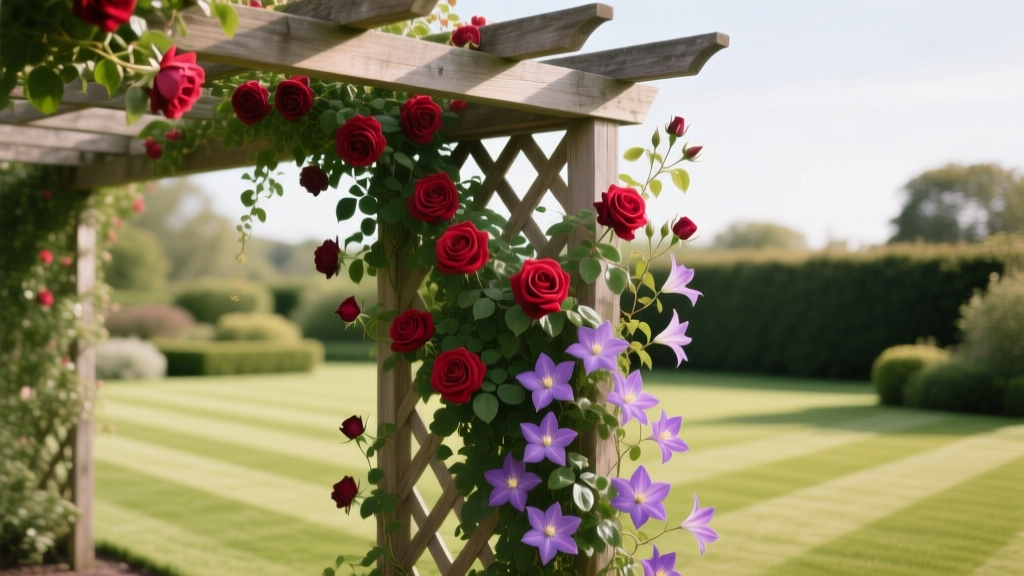
2026 Garden Trellises for Roses & Clematis: Aesthetic Lawn Patterns
David ParkPublished
The Intersection of Lawn Striping and Vertical Gardening
When you invest hours into creating intricate lawn striping patterns—whether it is a classic checkerboard, dynamic diagonals, or concentric circles—the resulting horizontal precision demands a visual destination. In 2026, the most celebrated landscape designs do not just focus on the turf; they utilize vertical architectural elements to anchor the eye and provide a sense of scale. This is where the garden trellis, specifically designed for heavy climbing roses and delicate clematis vines, becomes an indispensable tool in the aesthetic landscaper's arsenal.
Integrating a blooming vertical structure at the terminus of a striped lawn avenue or as the central pillar of a circular turf pattern elevates a simple mowing technique into a masterclass of landscape geometry. By combining the structured, manicured lines of your lawn with the organic, cascading beauty of climbing roses and clematis, you achieve the highly sought-after 'structured wildness' trend dominating 2026 garden design.
The Geometry of Lawns and the Need for Focal Points
Every leading line created by your mower's striping kit serves a purpose: to guide the viewer's eye across the landscape. However, without a strong focal point to terminate these lines, the eye simply wanders off the property, making the space feel disjointed or visually exhausting. A robust garden trellis covered in vibrant blooms acts as a living exclamation point at the end of your striped avenues.
According to modern landscape architecture principles, placing a vertical element at the intersection of diagonal lawn stripes creates a powerful cross-axis symmetry. When this vertical element is a trellis supporting the dual-textured foliage and contrasting blooms of roses and clematis, it softens the rigid geometry of the turf while maintaining the structural integrity required to anchor the design. The trellis must be substantial enough to command attention from a distance, ensuring the lawn's aesthetic patterns feel intentional and complete.
Choosing the Right Trellis for Heavy Climbers
Not all trellises are created equal, and the combined weight of mature climbing roses and vigorous clematis vines requires serious structural support. Climbing roses do not naturally twine; they produce long, stiff canes that must be tied to a support structure. As these canes thicken and produce heavy lateral blooming shoots, a flimsy wooden lattice will bow and eventually snap. Clematis, on the other hand, climbs by wrapping its leaf petioles around narrow structures, requiring a grid or wire system with openings no larger than 2 to 4 inches.
To accommodate both plants on a single structure in 2026, landscape professionals recommend heavy-duty obelisks, thick-gauge steel panels, or reinforced cedar frames with integrated wire meshes. The support must be anchored deeply into the ground, well below the frost line, to prevent heaving that could disrupt the precise grading and edging of your adjacent striped lawn.
2026 Trellis Material Comparison Chart
| Material | Aesthetic Profile | Weight Capacity | Maintenance Level | 2026 Avg. Cost (6ft Panel) |
|---|---|---|---|---|
| Corten Steel | Rustic, modern, industrial | Extreme (300+ lbs) | Very Low | $280 - $450 |
| Powder-Coated Aluminum | Sleek, contemporary, clean | High (150-200 lbs) | Low | $150 - $250 |
| Western Red Cedar | Traditional, organic, classic | Moderate (100-150 lbs) | Moderate (Annual sealing) | $120 - $200 |
| Vinyl (PVC) | Bright, uniform, suburban | Low to Moderate | Very Low | $80 - $140 |
Note: For supporting the combined mass of mature roses and clematis, Corten steel and heavy-gauge aluminum are the top recommendations for 2026, offering longevity without the rot risks associated with wood placed near irrigated lawn edges.
Designing Aesthetic Patterns with Trellis Focal Points
How you position your trellis relative to your lawn's mowing patterns dictates the success of the overall design. Here are three highly effective configurations for integrating trellises into striped landscapes:
1. The Striped Avenue Terminus
If your lawn features parallel stripes leading away from the patio or home, place a pair of matching trellises at the far boundary, flanking a central pathway or garden gate. The vertical lines of the trellises will draw the eye down the striped corridor, making the lawn appear significantly longer and more expansive. Plant a vigorous climbing rose like 'New Dawn' on the outer edges of the trellis, and weave a Group 3 clematis like 'Etoile Violette' through the center for a dramatic late-summer color contrast.
2. The Circular Labyrinth Anchor
For lawns featuring concentric circular stripes or a spiral mowing pattern, a single, massive central obelisk trellis serves as the perfect anchor. The eye is naturally drawn from the outer rings inward to the towering bloom-covered structure. Ensure the garden bed surrounding the trellis is perfectly edged and mulched, creating a sharp, clean boundary where the manicured circular turf meets the wildness of the climbing vines.
3. Diagonal Cross-Axis Symmetry
Diagonal striping creates a dynamic, energetic feel. To ground this energy, place square or diamond-grid trellises at the acute corners of the lawn. The geometric grid of the trellis will echo the angles of the mowing lines, creating a cohesive, mathematically pleasing landscape that feels both highly designed and naturally lush.
The Classic Rose and Clematis Pairing
Pairing climbing roses with clematis is a time-honored horticultural technique that maximizes vertical space and extends the blooming season. The rose provides the sturdy, thorny framework, while the clematis uses the rose canes as a natural trellis, weaving through the foliage to emerge at the top. The Royal Horticultural Society (RHS) highly recommends this companion planting strategy, as the clematis benefits from the shade provided by the rose's canopy, keeping its roots cool while its flowers reach the sun.
'When designing for aesthetic lawn patterns, the color contrast between your turf and your vertical focal points is paramount. Pairing a deep red climbing rose with a pale, starry clematis creates a visual beacon that makes the green stripes of the lawn appear even more vibrant and saturated by comparison.'
For 2026, a trending combination is the deep crimson Rosa 'Darcey Bussell' (trained as a climber) intertwined with the icy blue Clematis 'Perle d'Azur'. This high-contrast pairing ensures the focal point remains visible and striking even from the furthest vantage points of your property.
Installation, Training, and Pruning for Symmetry
To maintain the clean, aesthetic lines of your landscape, the trellis must be installed with precision. Position the trellis at least 18 to 24 inches away from the lawn's edge. This buffer zone is critical; it prevents the base of the trellis from casting dense shade on the turf (which ruins striping contrast by causing grass to thin and yellow) and provides ample room for edging tools and string trimmers.
Training the plants requires an eye for symmetry. As the rose canes grow, tie them horizontally or at a 45-degree angle using soft, expandable silicone ties. Horizontal training encourages lateral blooming shoots, creating a wide, lush wall of flowers rather than a sparse, top-heavy pillar. The clematis will naturally twine through the rose canes and the trellis grid.
Pruning is essential to keep the focal point from becoming an overgrown eyesore that obscures your lawn's patterns. Always consult the specific RHS pruning guidelines for your clematis variety, as Group 1, 2, and 3 clematis require drastically different pruning schedules. Generally, the rose should be pruned in late winter to remove dead wood and shape the framework, while the clematis is pruned according to its flowering group to ensure it does not smother the rose's spring blooms.
Maintenance and Robotic Mower Boundaries
In 2026, the widespread adoption of advanced robotic mowers has changed how we maintain the edges of aesthetic lawn patterns. Robotic mowers rely on boundary wires or RTK GPS mapping to navigate. When installing a trellis as a focal point, ensure that the garden bed is clearly defined with physical edging (such as steel or stone borders) that the mower's bump sensors or GPS can recognize. This prevents the mower from encroaching on the mulch bed, damaging the shallow roots of the clematis, or getting trapped against the trellis base.
Furthermore, keep the base of the trellis heavily mulched and planted with low-growing, shade-tolerant groundcovers like creeping thyme or sweet woodruff. This not only keeps the clematis roots cool and moist but also creates a clean, finished transition between the wild vertical garden and the immaculate, striped horizontal lawn. By treating your trellis not just as a plant support, but as a vital piece of landscape architecture, you transform a simple mowing pattern into a breathtaking, multi-dimensional work of art.

