
Landscaping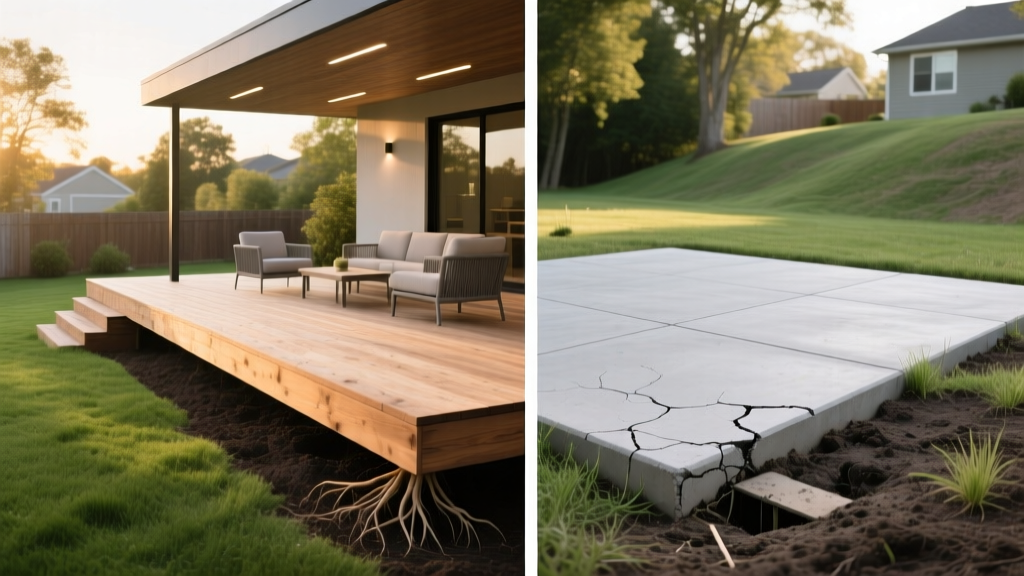
Deck Vs Patio Cost Comparison 2026: Core Aeration Guide
Robert HayesPublished
The Hardscape vs. Turf Health Dilemma in 2026
When homeowners envision the ultimate outdoor entertaining space for 2026, the debate almost always boils down to two primary hardscaping contenders: the raised deck or the ground-level patio. While most landscaping guides focus purely on aesthetics, material durability, and upfront pricing, there is a hidden factor that drastically affects the long-term health of your property's turfgrass: soil compaction and core aeration. As outdoor living spaces expand, the footprint they leave on your lawn's root zone becomes a critical consideration.
From a turf management and core aeration perspective, installing a hardscape is a traumatic event for your soil profile. Whether you are pouring concrete, laying pavers, or digging sonotubes for deck footings, the surrounding and underlying soil structure is altered. In this comprehensive 2026 guide, we will break down the exact costs of decks versus patios, while analyzing the profound impact each has on soil compaction, drainage, and your future core aeration maintenance schedules.
2026 Cost Breakdown: Decks vs. Patios
Before we dig into the soil science, we must establish the financial baseline for outdoor entertaining spaces in 2026. Material costs have stabilized compared to the early 2020s, but specialized labor and engineered base materials for patios have seen a slight uptick due to stricter municipal drainage codes.
Deck Costs (2026 Estimates)
Decks are elevated structures, typically built with wood or composite materials. Because they are supported by localized footings (piers), the overall surface area of disturbed soil is relatively small.
- Pressure-Treated Wood: $30 to $45 per square foot (installed). Requires annual sealing and has a shorter lifespan.
- Composite Decking (e.g., Trex Transcend Lineage, TimberTech Landmarks): $55 to $85 per square foot (installed). Dominating the 2026 market due to zero-splinter guarantees and fade resistance.
- Footings & Labor: Digging below the frost line for concrete piers is labor-intensive but localized.
Patio Costs (2026 Estimates)
Patios sit directly on the earth. They require extensive excavation, grading, and the installation of a compacted aggregate base to prevent shifting and frost heave.
- Poured Concrete: $18 to $28 per square foot. Prone to cracking if the subgrade is not properly prepared.
- Paver Patios (e.g., Belgard, Techo-Bloc): $30 to $55 per square foot. Highly desirable for entertaining due to modular repairability and permeable jointing options.
- Base Preparation: Requires 6 to 12 inches of excavated soil, replaced with crushed stone and heavily tamped with vibratory plate compactors.
2026 Cost & Turf Impact Matrix
The table below illustrates not just the financial investment, but the 'turf tax'—the hidden long-term lawn care and aeration costs associated with each option.
| Feature | Composite Deck (Raised) | Paver Patio (Ground-Level) |
|---|---|---|
| Average 2026 Cost (per sq. ft.) | $55 - $85 | $30 - $55 |
| Soil Compaction Severity | Low (Localized to piers) | Extreme (Entire footprint + heavy machinery paths) |
| Subsurface Drainage Impact | Minimal (Water passes through deck boards) | High (Alters natural runoff, requires edge drainage) |
| Core Aeration Accessibility | Difficult (Low clearance under deck) | Perimeter Only (Surface is sealed) |
| Estimated Annual Turf Recovery Cost | $150 (Manual aeration/under-deck care) | $250+ (Heavy perimeter aeration, edge drainage fixes) |
The Core Aeration Perspective: How Hardscapes Affect Soil
To understand why the choice between a deck and a patio matters to a lawn care professional, we must look at the soil profile. According to the University of Minnesota Extension, soil compaction increases bulk density, restricts root growth, and severely limits water infiltration. When you build an entertaining space, you are fundamentally changing how the soil breathes.
Patios: Soil Compaction and Edge Aeration
Installing a paver or concrete patio is an act of massive soil compression. To ensure a patio does not sink or heave during freeze-thaw cycles, contractors excavate the topsoil and use heavy vibratory plate compactors to crush the aggregate base. This process generates immense downward force, compacting the subgrade far beyond the depth of the base itself.
The soil directly beneath a patio is effectively sealed off from oxygen and organic matter exchange. However, the real turf nightmare occurs at the perimeter. The transition zone where the hardscape meets the lawn becomes a magnet for foot traffic, furniture dragging, and water runoff. This creates a heavily compacted 'halo' around your patio. According to NC State TurfFiles, core aeration is essential to pull physical soil plugs (typically 2 to 3 inches deep) to relieve this compaction, allowing oxygen and water to reach the root zone. With a patio, you must aggressively core aerate a 5-to-10-foot buffer zone around the entire perimeter every single fall to prevent water from pooling against the patio edge, which can lead to base washout and frost damage.
Decks: Airflow, Drainage, and Under-Canopy Aeration
Decks present a completely different scenario. Because a deck is elevated, rain and sunlight can still reach the soil beneath it (provided the deck is at least 3 to 4 feet off the ground and the boards have proper spacing). The soil under a deck is not compacted by a stone base, meaning the turfgrass or shade-tolerant groundcover growing underneath still requires maintenance.
The challenge here is mechanical access. Standard walk-behind core aerators weigh between 200 and 300 pounds and feature handlebars that extend upward. You cannot fit a standard aerator under a deck. Therefore, maintaining the soil health under your entertaining space requires either manual foot-press core aerators (which are incredibly labor-intensive) or hiring a landscaping crew that utilizes specialized low-clearance, remote-controlled aeration machinery. If you neglect the soil under the deck, it becomes a compacted, muddy breeding ground for pests and fungi.
Pre-Installation Aeration: Setting the Foundation
One of the most overlooked landscaping strategies in 2026 is pre-installation deep-tine aeration. If you are opting for a patio, the soil is going to be buried under gravel and sand. However, if your property suffers from heavy clay soil or poor percolation, water will trap itself beneath the patio base, leading to hydrostatic pressure and heaving.
Before the excavator arrives, we recommend performing a deep-tine aeration (using a tractor-mounted aerator that pulls 6-to-8-inch cores) across the entire footprint. Filling these deep holes with coarse sand or compost before laying the geotextile fabric and aggregate base creates vertical drainage columns. This allows subsurface water to migrate downward rather than pooling laterally against your home's foundation or the patio's edge.
Post-Installation Maintenance: Navigating Equipment
Once your outdoor entertaining space is built, your core aeration strategy must adapt to the new layout.
- For Patio Owners: Invest in a high-quality stand-on or walk-behind core aerator with sharp, hollow tines. Avoid spike aerators at all costs, as they merely push soil sideways, worsening the compaction caused by patio installation machinery. Focus heavily on the 'runoff zones' where the patio gutters or natural slope deposits water onto the lawn.
- For Deck Owners: If your deck is low to the ground (under 24 inches), the soil underneath will likely become too shaded for turfgrass anyway. In this case, skip aeration under the deck and instead apply a 3-inch layer of organic mulch to preserve soil moisture and prevent weed growth. If your deck is high enough for grass to grow, schedule a manual core aeration every other spring, followed by a light top-dressing of compost to maintain soil biology in the shaded microclimate.
Conclusion: Balancing Entertaining Budgets with Lawn Health
When comparing the costs of decks versus patios in 2026, patios generally win on upfront affordability, while composite decks offer superior longevity and lower structural maintenance. However, from a core aeration and turf health perspective, patios inflict significantly more trauma on the soil ecosystem. The intense compaction required for a patio base permanently alters the drainage dynamics of your yard, necessitating rigorous, ongoing perimeter aeration to protect your lawn and the hardscape investment itself.
Decks, while more expensive, preserve the natural soil profile and allow for continued environmental exchange. Whichever route you choose for your outdoor entertaining space, remember that the true foundation of any great landscape is the soil beneath it. Plan your hardscape not just for the party above, but for the roots below.

