
Landscaping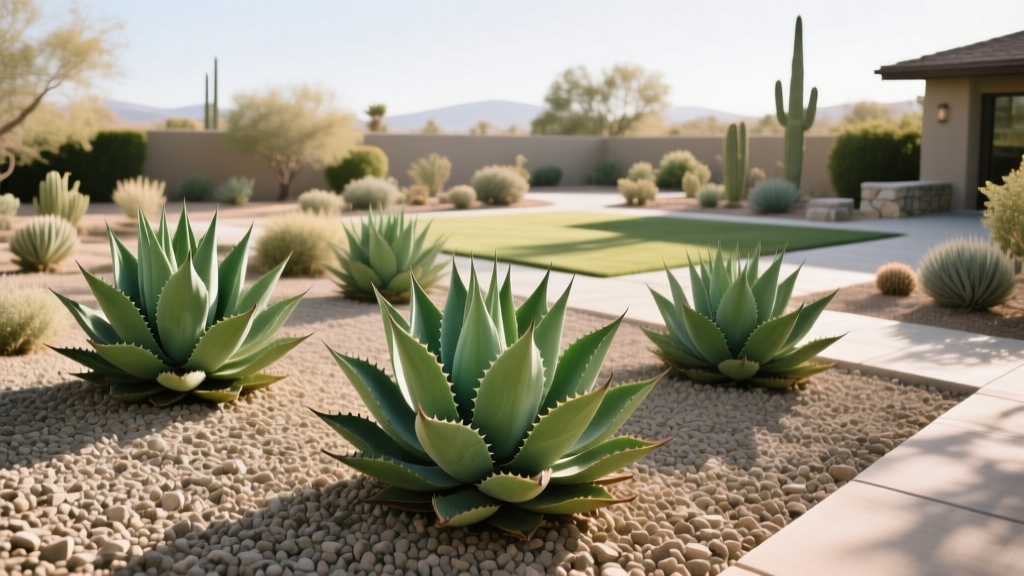
Xeriscape Agave & Decomposed Granite Fertilizer Guide 2026
Emily WatsonPublished
The Xeriscape Paradox: Fertilizing Agaves in 2026
As we navigate the 2026 landscaping season, the modern xeriscape front yard has evolved into a masterpiece of architectural beauty and water conservation. The combination of striking, structural agaves and the satisfying crunch of decomposed granite (DG) pathways remains the gold standard for sustainable curb appeal. However, merging the "Fertilizer Types & Schedules" angle with a xeriscape environment presents a unique paradox: the very act of trying to "feed" your agaves can actually destroy them.
Unlike traditional turf grass or blooming perennials that demand heavy nitrogen schedules, agaves are survivors. They evolved in harsh, nutrient-poor, rocky environments. When homeowners apply standard landscape fertilizers to a decomposed granite xeriscape, the results are often catastrophic. Over-fertilization leads to rapid, weak cellular growth, making the agave's leaves soft, floppy, and highly susceptible to cold damage and pests. Most notably, excessive nitrogen is a primary attractant for the devastating Agave Snout Weevil, a pest that continues to plague southwestern landscapes in 2026.
This comprehensive guide will walk you through the exact, minimalist fertilizer types and precise schedules required to maintain a thriving agave and decomposed granite xeriscape front yard this year, ensuring your plants remain rigid, vibrant, and pest-resistant.
Understanding Decomposed Granite (DG) as a Growing Medium
Before applying any nutrients, you must understand the medium your agaves are rooted in. Decomposed granite is essentially weathered granite that has broken down into a mixture of gravel, sand, and fine silt. It is prized in xeriscaping for its exceptional drainage, natural aesthetic, and permeability, which aligns perfectly with the water-wise principles championed by organizations like Water Use It Wisely.
However, from a nutritional standpoint, DG is virtually sterile. It contains almost zero organic matter, lacks the cation exchange capacity (CEC) to hold onto synthetic fertilizers, and drains so rapidly that liquid feeds wash straight past the root zone into the water table. Furthermore, DG tends to be highly alkaline (pH 7.5 to 8.5), which locks up essential micronutrients like iron and manganese, making them unavailable to the agave's roots. Therefore, fertilizing a DG xeriscape isn't about dumping nitrogen; it is about strategic soil biology and targeted micronutrient delivery.
Best Fertilizer Types for Agaves in DG Xeriscapes
To succeed in 2026, you must abandon high-nitrogen synthetic blends (like 16-4-8 or 10-10-10). Instead, focus on the following specialized amendments and organic fertilizers designed for lean, alkaline environments.
1. Mycorrhizal Fungi Inoculants
In a sterile DG environment, mycorrhizal fungi are your most powerful tool. These beneficial fungi form a symbiotic relationship with the agave's root system, effectively extending the roots' reach by hundreds of times. The fungi mine the rocky DG for trace minerals and water, exchanging them for sugars from the agave. Applying a granular mycorrhizal inoculant at planting or via deep-root injection in early spring is more beneficial than any NPK fertilizer.
2. Slow-Release Organic Blends (Low NPK)
If you must use an NPK fertilizer, opt for organic, slow-release blends specifically formulated for cacti and succulents. Products like Espoma Organic Cactus! (with an NPK of 1-1-1 or 2-2-2) utilize feather meal, bone meal, and kelp. These break down slowly via microbial action, ensuring the agave receives a microscopic, steady trickle of nutrients that mimics natural desert decomposition, preventing the rapid, weevil-attracting growth spurts.
3. Chelated Iron and Micronutrient Drenches
Because the high pH of decomposed granite causes iron chlorosis (yellowing of leaves while veins remain green), standard fertilizers won't fix the issue. You need a liquid chelated iron drench (specifically EDDHA chelate, which remains stable in high-pH alkaline soils) applied directly to the root zone in the spring.
4. Liquid Kelp / Seaweed Extract
Kelp extract provides a massive dose of trace minerals, cytokinins, and auxins (natural plant growth hormones) without adding unwanted nitrogen. It helps agaves recover from transplant shock, heat stress, and minor root damage caused by shifting DG pathways.
Fertilizer & Amendment Comparison Chart
| Amendment / Fertilizer Type | NPK Ratio | Primary Benefit for DG Xeriscapes | Application Frequency |
|---|---|---|---|
| Mycorrhizal Inoculant | 0-0-0 | Expands root absorption in sterile DG | Once at planting / Year 1 |
| Organic Cactus/Succulent Blend | 1-1-1 or 2-2-2 | Gentle, slow-release baseline nutrition | Once in early Spring |
| EDDHA Chelated Iron | 0-0-0 (Fe 6%) | Cures alkaline-induced chlorosis | As needed (Spring/Early Summer) |
| Liquid Kelp Extract | 0-0-1 | Stress tolerance & trace minerals | Spring & Late Summer |
| Synthetic High-Nitrogen | 16-4-8+ | AVOID: Causes weevil vulnerability | NEVER |
The 2026 Agave Fertilizer Schedule
Timing is everything. According to desert horticulture experts at the University of Arizona Cooperative Extension, agaves have a distinct growth cycle tied to soil temperature, not just air temperature. In a DG xeriscape, the rocks absorb and radiate heat, which can slightly alter this timeline. Here is your exact schedule for the 2026 growing season.
Phase 1: Early Spring Awakening (March - April)
This is the only time of year you should apply granular nutrients to an established agave in a xeriscape.
- Step 1: Gently pull back the top layer of decomposed granite from the base of the agave, exposing the soil line. Ensure the DG is not piled against the agave's crown, as this traps moisture and invites crown rot.
- Step 2: Apply 1 to 2 tablespoons of a low-NPK organic cactus fertilizer (like a 2-2-2 blend) per square foot of the plant's canopy width. Sprinkle it in a ring around the drip line, not directly against the trunk.
- Step 3: If your agave shows signs of yellowing (chlorosis), mix the recommended dose of EDDHA chelated iron into a watering can and drench the soil ring.
- Step 4: Water the area deeply to activate the organic fertilizers and wash the nutrients into the root zone. Replace the DG mulch, keeping it 2 inches away from the agave's base.
Phase 2: Summer Stress Management (June - August)
Do not apply nitrogen during the peak heat of summer. High heat combined with nitrogen forces the plant to push soft growth that will scorch in the sun. Instead, use a liquid kelp extract as a foliar spray or a light soil drench in the early morning. This provides osmoprotectants that help the agave retain moisture and survive extreme 2026 summer heatwaves without forcing unnecessary growth.
Phase 3: Fall & Winter Dormancy (September - February)
Cease all fertilization. As days shorten, the agave begins to harden off its cellular structure to prepare for winter cold snaps. Applying fertilizer in the fall keeps the plant in an active, tender growth state, making it highly vulnerable to frost damage. Furthermore, Texas A&M AgriLife Extension notes that keeping succulents lean and dry in the winter is the best cultural defense against root rot and overwintering pests.
Signs of Over-Fertilization vs. Nutrient Deficiency
Because DG is such a unique medium, learning to read your agave's leaves is crucial for adjusting your 2026 schedule.
The Danger of Nitrogen Toxicity
If your agave's normally rigid, spine-tipped leaves begin to bend, droop, or feel soft to the touch, you have over-fertilized. The plant has taken up too much nitrogen and water, causing the cells to elongate rapidly without developing thick, supportive lignin walls. A soft agave is a prime target for the Agave Snout Weevil, which can detect stressed, nitrogen-heavy sap from miles away. If you notice this, cease all feeding immediately, increase drainage, and consider applying a systemic weevil preventative as a precaution.
Identifying True Deficiencies in Alkaline DG
Conversely, if the newest leaves at the center of the rosette are emerging pale yellow or stark white, while the older leaves remain green, you are likely dealing with an iron or magnesium deficiency caused by the alkaline pH of the decomposed granite. In this scenario, adding more general fertilizer will only worsen the problem by increasing soil salt levels. Instead, apply a sulfur-based soil acidifier or the aforementioned EDDHA chelated iron to unlock the existing minerals trapped in the granite particles.
Final Thoughts for a Thriving 2026 Xeriscape
Designing a front yard with decomposed granite and agaves is an exercise in embracing the beauty of the harsh, natural desert environment. As you manage your landscape this year, remember that in a xeriscape, restraint is the ultimate fertilizer. By relying on soil biology (mycorrhizae), utilizing low-impact organic amendments, and strictly adhering to a spring-only schedule, you will cultivate agaves that are structurally magnificent, deeply rooted, and resilient against the environmental stresses of 2026 and beyond. Treat your DG not as a traditional garden bed, but as a specialized, low-nutrient ecosystem, and your xeriscape will reward you with effortless, year-round curb appeal.

