Pest Control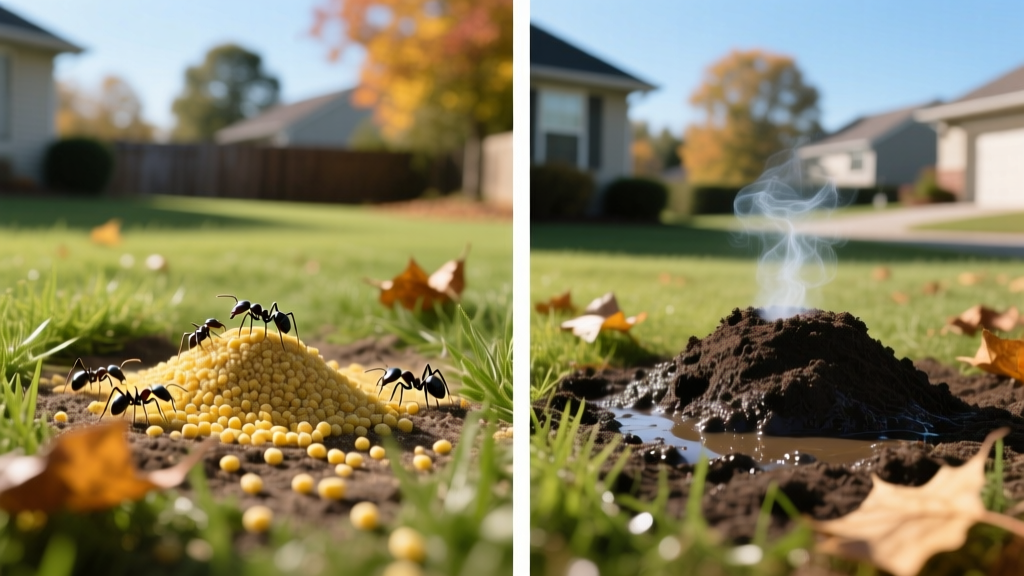
Fall Fire Ant Control 2026: Amdro Bait vs Orthene Drench
Emily WatsonPublished
Why Fall is the Critical Window for Fire Ant Control
As autumn leaves begin to fall and daytime temperatures drop, most homeowners shift their focus to leaf removal, core aeration, and winterizing their irrigation systems. However, comprehensive fall lawn care in 2026 demands equal attention to what lies beneath the soil surface. Fall is arguably the most critical season for managing the Red Imported Fire Ant (Solenopsis invicta), and choosing the right treatment methodology can dictate the health of your turf for the following spring.
Unlike many lawn pests that enter deep diapause as soon as the first frost hits, fire ants remain surprisingly active well into the autumn months. In fact, as soil temperatures begin to cool from the extreme heat of summer, fire ant colonies enter a period of aggressive foraging. They are desperately seeking proteins and lipids to build fat reserves for the queen and the brood to survive the winter. This biological imperative makes fall the absolute best time to deploy slow-acting baits, as the worker ants will eagerly carry the toxicants deep into the mound and feed it directly to the colony's reproductive center.
When formulating an Integrated Pest Management (IPM) strategy for fall 2026, two chemical heavyweights consistently dominate the conversation: Amdro Fire Ant Bait and Orthene Fire Ant Killer. While both are highly effective, they operate on entirely different mechanisms, timelines, and application methods. Understanding the nuances between an Amdro bait application and an Orthene mound drench is essential for achieving total colony elimination before winter sets in.
Understanding the Contenders: Amdro vs. Orthene
Amdro Fire Ant Bait (Hydramethylnon)
Amdro Pro Fire Ant Bait utilizes the active ingredient hydramethylnon, a slow-acting stomach poison combined with an attractive corn grit and soybean oil carrier. The genius of Amdro lies in its delayed toxicity. When foraging worker ants discover the bait granules, they do not die immediately. Instead, they carry the granules back to the mound, process the oils, and distribute the toxicant throughout the colony via trophallaxis (food sharing).
Because hydramethylnon takes anywhere from one to three weeks to eliminate the colony, it ensures that the poison reaches the deepest chambers of the nest, ultimately killing the queen. In the fall, when ants are pulling resources deep underground to prepare for winter dormancy, Amdro's slow-kill mechanism is exceptionally effective. By the time the colony realizes the food source is lethal, the queen has already been compromised, preventing the colony from rebounding in the spring of 2027.
Orthene Fire Ant Killer (Acephate Drench)
On the other side of the spectrum is Orthene Fire Ant Killer, which relies on acephate, a broad-spectrum organophosphate insecticide. Orthene is typically applied as a mound drench (mixed with water and poured directly over the mound) or as a surface dust. Unlike Amdro, acephate is a fast-acting contact and systemic poison. It disrupts the insect's nervous system, leading to rapid knockdown and death within hours to a few days.
The primary advantage of an Orthene drench in the fall is immediate eradication of nuisance mounds. If a massive fire ant mound has established itself dangerously close to your patio, vegetable garden, or children's play area, you cannot afford to wait two weeks for a bait to work. Furthermore, fall rains can quickly turn mounds into muddy, inaccessible hazards; a liquid drench penetrates the soil matrix rapidly, flushing out and killing the ants before they can relocate deeper into the water table.
Head-to-Head Comparison Chart
To help you decide which product fits your specific fall lawn care needs, refer to the comparison table below detailing the core differences between Amdro bait and Orthene drenches as of the 2026 season.
| Feature | Amdro Fire Ant Bait | Orthene Fire Ant Killer (Drench) |
|---|---|---|
| Active Ingredient | Hydramethylnon (0.73%) | Acephate (99%) |
| Action Type | Slow-acting stomach poison | Fast-acting contact & systemic poison |
| Time to Kill Colony | 1 to 3 weeks | 1 to 3 days |
| Application Method | Broadcast spreader or hand scatter | Water drench or dry dust |
| Best Fall Use Case | Whole-yard prevention & deep colony kill | Targeted nuisance mound elimination |
| 2026 Avg. Cost | ~$25 per 5 lb bag (covers 1 acre) | ~$15 per 1 lb container (treats 50+ mounds) |
| Environmental Impact | Low risk to non-targets when used as directed | Highly toxic to bees; requires careful spot treatment |
The Ultimate Fall IPM Strategy: The Two-Step Method
Rather than viewing Amdro and Orthene as mutually exclusive competitors, leading entomologists advocate using them in tandem. According to the Texas A&M Fire Ant Project, the most scientifically sound approach to fire ant management is the "Two-Step Method." This strategy leverages the strengths of both products while mitigating their individual weaknesses, making it the gold standard for fall 2026 lawn care.
The Two-Step Fall Protocol: By combining a yard-wide bait application with targeted mound drenches, you achieve both immediate relief and long-term population suppression before the first hard freeze.
- Step 1: Broadcast the Bait (Early to Mid-Fall). When soil temperatures are consistently between 70°F and 85°F, apply Amdro bait across the entire lawn using a rotary spreader. Do this in the late afternoon when ants are actively foraging. The soybean oil carrier will attract the ants, and the slow-acting hydramethylnon will begin dismantling colonies yard-wide.
- Step 2: Treat Nuisance Mounds (Late Fall). Wait 7 to 10 days after the bait application. During this window, identify any remaining active mounds, particularly those in high-traffic areas or near the foundation of your home. Mix Orthene acephate with water according to the 2026 label instructions and apply it as a drench directly to these specific mounds. The fast-acting contact poison will eliminate the immediate threat without disrupting the baiting process occurring in the rest of the yard.
Application Tips for Fall 2026
Weather patterns in the autumn months can be highly unpredictable, making timing everything when dealing with fire ant treatments. To ensure maximum efficacy, adhere to the following application guidelines:
Moisture and Rainfall
Never apply Amdro bait if rain is in the forecast within the next 24 hours. The corn grit carrier will absorb moisture, turning the bait into a mushy, unappealing mess that foraging ants will ignore. Conversely, an Orthene drench requires a moist soil profile to penetrate effectively. If the fall has been exceptionally dry, water your lawn lightly a day before applying the Orthene drench to soften the thatch layer and allow the acephate to reach the deep subterranean galleries.
Temperature Thresholds
Fire ant foraging drops off significantly when soil temperatures fall below 60°F. In northern regions of the fire ant belt (such as Oklahoma or northern Georgia), this threshold may be reached by late October. In the Deep South (Texas, Florida, Louisiana), foraging can continue well into December. Monitor your local soil temperature probes; once the soil consistently drops below 60°F, chemical treatments become largely ineffective as the ants seal off the mound and enter winter stasis.
Environmental and Safety Considerations
While both products are EPA-registered for residential use, they carry distinct safety profiles that must be respected, especially in the context of a holistic IPM approach. As outlined by NC State Extension, preserving beneficial insects and protecting local watersheds is a core tenet of modern pest management.
Acephate (Orthene) and Pollinators: Acephate is highly toxic to bees and other beneficial pollinators. When using Orthene as a drench, apply it in the early morning or late evening when pollinator activity is at its lowest. Avoid dusting Orthene on the surface of the mound, as wind drift can carry the toxic powder onto nearby fall-blooming flowers, such as asters and goldenrod, which are critical late-season food sources for native bees.
Hydramethylnon (Amdro) and Pets: Amdro bait granules are generally safe for pets and wildlife once they have been distributed and worked slightly into the turf. However, keep dogs and cats off the lawn immediately after broadcasting until the granules settle. The soybean oil scent can be attractive to curious canines, and while the concentration of hydramethylnon is low, ingestion of large quantities of the carrier oils can cause gastrointestinal upset.
Runoff Prevention: Fall is often characterized by heavy, driving rainstorms. To prevent acephate from washing into storm drains and local waterways, never drench mounds located within 10 feet of a paved driveway, sidewalk, or drainage ditch. In these perimeter zones, rely exclusively on targeted bait placements.
Conclusion
Effective fall lawn care requires looking beyond the grass blades and addressing the subterranean threats that can ruin your turf's root system. By understanding the biological drivers of fire ants in the autumn months, you can strategically deploy Amdro bait for sweeping, long-term colony elimination, while utilizing Orthene drenches for rapid, targeted knockdown of hazardous mounds. Implementing this Two-Step IPM strategy in the fall of 2026 will ensure your lawn remains healthy, safe, and virtually ant-free when the vibrant green shoots of spring finally emerge.