Pest Control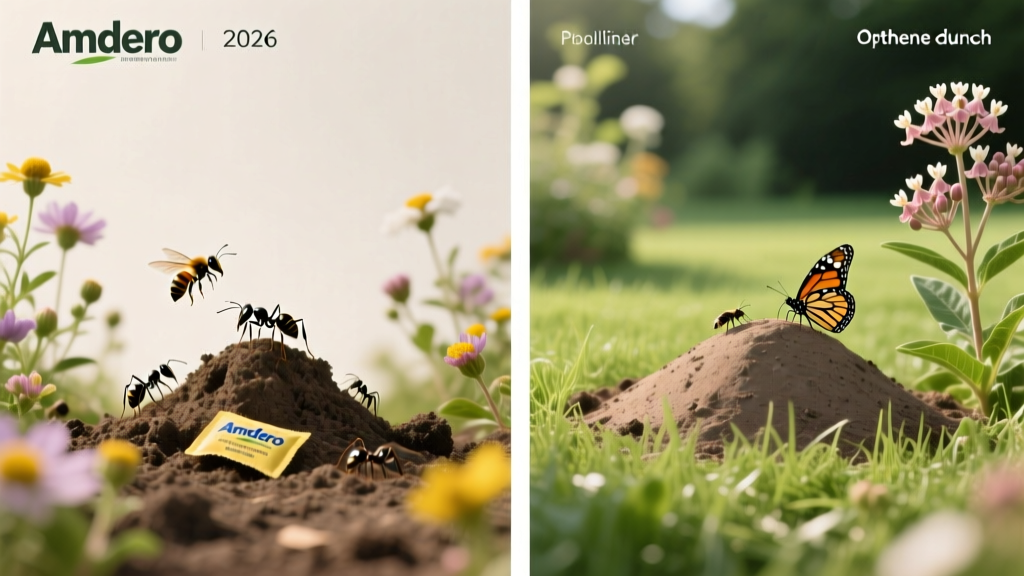
Fire Ant Control 2026: Amdro Bait vs Orthene Drench for Pollinators
David ParkPublished
The 2026 Pollinator Garden Challenge: Managing Fire Ants
As we navigate the 2026 gardening season, the emphasis on pollinator-friendly landscape design has never been stronger. Homeowners and horticulturists alike are prioritizing the health of native bees, butterflies, and beneficial insects. However, cultivating a vibrant, bloom-heavy ecosystem often invites unwanted guests. The red imported fire ant (Solenopsis invicta) remains one of the most aggressive and destructive pests in southern and coastal lawns. For gardeners dedicated to pollinator conservation, choosing the right fire ant treatment is a high-stakes decision. The wrong chemical application can decimate the very bee populations your garden was designed to support.
Two of the most common treatment strategies debated in integrated pest management (IPM) circles are Amdro fire ant bait and Orthene mound drench. While both are effective at eliminating ant colonies, their mechanisms of action, environmental footprints, and risks to non-target pollinators are vastly different. In this comprehensive 2026 guide, we break down the science, safety, and application methods of Amdro bait versus Orthene drench to help you protect your pollinator paradise.
The Hidden Threat: Fire Ants vs. Pollinators
Before comparing treatments, it is crucial to understand why fire ants are a specific threat to pollinator gardens. While we often think of honeybees living in elevated hives, a significant percentage of native bee species—including sweat bees, mining bees, and bumblebees—are ground-nesters. These crucial pollinators excavate small burrows in bare soil or sparse turf to lay their eggs and store pollen.
Fire ants are opportunistic omnivores and aggressive predators. When foraging workers discover a ground-nesting bee colony, they will quickly overwhelm the burrow, consuming the bee larvae and destroying the nest. Furthermore, fire ants are known to patrol blooming plants, attacking adult butterflies and caterpillars (such as monarch larvae on milkweed) that are feeding on the foliage. Eradicating fire ant mounds is therefore a necessary step in pollinator garden maintenance, but the eradication method must not introduce secondary toxicity to the environment.
Amdro Fire Ant Bait: The Slow but Safe Approach
Active Ingredient and Mechanism
Amdro Pro Fire Ant Bait utilizes hydramethylnon as its active ingredient. Hydramethylnon is a slow-acting stomach poison that disrupts cellular energy (ATP) production in insects. The bait is formulated using a matrix of defatted corn grit coated with soybean oil, which acts as a powerful attractant for foraging fire ants.
The Pollinator Safety Profile
From a pollinator-friendly design perspective, Amdro bait is widely considered the superior choice for garden beds. The safety lies in the foraging biology of bees versus ants. Bees and butterflies forage for nectar (carbohydrates) and pollen (proteins). They do not forage for oils, fats, or heavy grits. Because the Amdro matrix is entirely lipid and starch-based, pollinators simply ignore the granules. Even if a bee were to land on a treated mound, the granules are too heavy and unappealing to be carried back to a hive or nest.
Additionally, hydramethylnon has very low toxicity to bees upon incidental contact. Because the bait is applied directly to the soil surface or around the base of the mound, and not sprayed onto blooming flowers, the risk of pollinator exposure is virtually eliminated when used according to label directions.
Orthene Drench: The Fast but Hazardous Approach
Active Ingredient and Mechanism
Orthene Fire Ant Killer relies on acephate, a broad-spectrum organophosphate insecticide. The drench method involves mixing the soluble powder or liquid concentrate with water and pouring it directly over and into the fire ant mound. This provides rapid, knock-down contact toxicity, often killing the colony and the queen within hours.
The Severe Pollinator Risk
Despite its speed, Orthene drench poses a catastrophic risk to pollinator gardens for two primary reasons: systemic uptake and broad-spectrum toxicity. Acephate is highly toxic to bees and butterflies on contact. If a drench application splashes onto nearby low-growing blooms, or if wind drifts the aerosolized droplets onto foliage, any pollinator visiting those plants will likely suffer lethal consequences.
More insidiously, acephate possesses systemic properties. When poured into the soil in a garden bed, the chemical can be absorbed by the root systems of your prized pollinator plants—such as echinacea, bee balm, salvia, and milkweed. The plant then translocates the toxin into its stems, leaves, and eventually its nectar and pollen. According to the EPA Pollinator Protection guidelines, systemic organophosphates can create 'toxic flowers' that continue to harm pollinators weeks after the initial soil application. For this reason, Orthene drenches should never be used within the root zone of a pollinator garden.
Head-to-Head Comparison: Amdro vs. Orthene
| Feature | Amdro Fire Ant Bait | Orthene Mound Drench |
|---|---|---|
| Active Ingredient | Hydramethylnon | Acephate |
| Action Speed | Slow (1 to 4 weeks) | Fast (Hours to 1 day) |
| Application Method | Surface broadcast or mound perimeter | Liquid soil drench |
| Systemic Plant Uptake | No | Yes (High Risk) |
| Pollinator Toxicity | Very Low (Ignored by bees) | Extremely High (Contact & Systemic) |
| Best Use Case | Pollinator beds, lawns, gardens | Driveways, non-blooming paved areas |
| 2026 Average Cost | ~$22 per 1.5 lb bag | ~$12 per 1 lb soluble powder |
Step-by-Step: Applying Amdro in a Pollinator-Safe Manner
To maximize colony elimination while maintaining a zero-harm environment for your beneficial insects, follow these IPM best practices for baiting in 2026:
- Timing is Everything: Apply Amdro bait in the early evening when fire ants are actively foraging, but pollinators have returned to their nests or hives for the night. This also prevents the bait from degrading in the hot midday sun.
- Do Not Disturb the Mound: Never kick or poke the mound before applying bait. Disturbing the ants triggers a defensive response, causing them to retreat deep underground and ignore the surface bait.
- The Perimeter Method: Instead of dumping the bait directly on top of the mound, sprinkle it in a 3-foot circle around the base of the mound. Foraging workers will pick it up naturally as they travel their established pheromone trails.
- Keep it Dry: Hydramethylnon baits lose their attractiveness if they absorb moisture. Check the 2026 weather forecast and ensure no rain is expected for at least 24 hours post-application.
Integrated Pest Management (IPM) and Organic Alternatives
The gold standard for fire ant management, heavily promoted by the Texas A&M Fire Ant Project, is the Two-Step Method. This involves broadcasting a bait across the entire yard to suppress overall populations, followed by targeted treatment of nuisance mounds. In a pollinator garden, you should absolutely avoid the Orthene drench for the second step. Instead, stick to baits.
If you are seeking an even more natural approach for your organic pollinator sanctuary, consider baits formulated with Spinosad (such as Fertilome Come and Get It or Monterey Garden Insect Spray used as a bait matrix). Spinosad is derived from soil-dwelling bacteria and is OMRI-listed for organic gardening. While Spinosad is highly toxic to bees when wet, once the bait granules dry and are carried underground by the ants, the risk to surface-foraging pollinators is negligible. As noted by The Xerces Society, minimizing broad-spectrum and systemic insecticides is the single most impactful choice a gardener can make to protect native bee populations and ensure long-term ecological balance.
Conclusion
Designing and maintaining a pollinator-friendly garden in 2026 requires a delicate balance between fostering beneficial life and managing aggressive pests. When confronting fire ant mounds in your bloom-heavy landscape beds, the choice is clear. Orthene drenches, with their rapid contact kill and dangerous systemic plant uptake, pose an unacceptable risk to the bees and butterflies you are trying to protect. Amdro fire ant bait, leveraging the slow-acting, non-systemic properties of hydramethylnon, offers a highly effective, ecologically responsible solution. By choosing targeted baits and applying them with mindful timing, you can eradicate destructive fire ant colonies while keeping your pollinator garden safe, vibrant, and buzzing with life.