Pest Control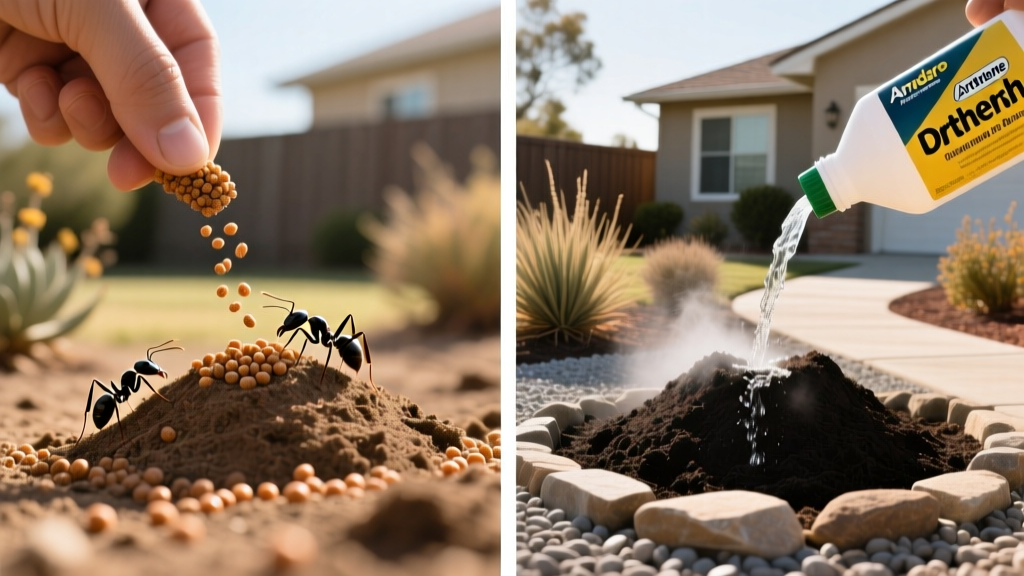
Amdro vs Orthene Fire Ant Mound Treatment: 2026 Guide
Sarah ChenPublished
The Intersection of Pest Control and Fire-Resistant Landscaping
As we navigate the extended dry seasons and heightened wildfire risks of 2026, homeowners in the South and West are increasingly turning to fire-resistant landscaping to protect their properties. Also known as 'Firewise' landscaping, this approach focuses on creating defensible space through the strategic use of high-moisture plants, non-combustible hardscaping, and efficient irrigation systems. However, there is a hidden underground threat that can severely compromise your fire-resistant landscape: the imported red fire ant (Solenopsis invicta). Fire ant mounds are not just a painful nuisance; they are structural and ecological disruptors that can ruin your carefully planned defensible zones.
When it comes to eliminating these pests, homeowners are often caught between two dominant chemical strategies: Amdro bait and Orthene mound drenches. Understanding how these treatments interact with your fire-safe landscape is critical for effective, eco-conscious pest management in 2026. According to the NFPA Firewise USA program, maintaining a healthy, well-irrigated landscape is a primary defense against wildfires, making pest control an unexpected but vital component of your overall fire safety strategy.
The Threat of Fire Ants in Fire-Resistant Landscapes
To understand why fire ants are a specific threat to fire-resistant landscaping, we must look at how they interact with the soil and irrigation infrastructure. Firewise landscaping relies heavily on drip irrigation to keep plants hydrated without wasting water or creating excessive surface moisture. Fire ants are naturally drawn to the consistent warmth and moisture provided by drip lines and emitter valves. They will frequently build massive, hardened soil mounds directly over these components.
Over time, the acidic nature of their nesting material and the physical pressure of the mound can crush polyethylene drip tubing, clog emitters, and cause localized irrigation failures. When a drip line fails in a fire-resistant zone, your drought-tolerant, high-moisture succulents and shrubs quickly dry out, transforming from fire-retardant assets into highly flammable fuel sources. Furthermore, the mounds themselves are composed of dry, loose soil and thatch that can act as kindling in a ground fire, bridging the gap between mulch beds and your home's structure. Eliminating these mounds safely and effectively is paramount to maintaining your defensible space.
Amdro Fire Ant Bait: The Slow but Sure Colony Eliminator
Amdro Fire Ant Bait remains a cornerstone of integrated pest management in 2026, particularly for large-scale landscape preservation. The active ingredient, hydramethylnon, is a slow-acting stomach poison that disrupts the ant's ability to produce ATP, essentially starving the colony at a cellular level. Because it is slow-acting, foraging worker ants carry the granular bait deep into the mound and share it with the queen and the brood, ensuring total colony collapse within one to two weeks.
From a fire-safe landscaping perspective, Amdro is highly advantageous. It is a dry, corn-grit-based granule that contains no flammable petroleum solvents or volatile organic compounds (VOCs). You can safely broadcast it across your defensible space, including near dry river rock, pavers, and drought-tolerant groundcovers, without risking chemical burn or increasing the flammability of your landscape. For individual mound treatment, the 2026 recommendation is to apply 2 to 3 tablespoons of Amdro in a 3-foot circle around the base of the mound. Do not disturb the mound before application, as agitated fire ants will simply relocate their queen deeper into the soil or move the entire colony to a new location near your irrigation valves.
Orthene Mound Drench: The Rapid Contact Killer
On the other hand, Orthene (active ingredient: acephate) is a fast-acting contact insecticide that provides rapid knockdown of fire ant populations. Acephate is an organophosphate that inhibits acetylcholinesterase, causing rapid nervous system failure in the insects. Orthene is typically applied as a mound drench, meaning you mix the powder with water and pour it directly into the center of the mound.
For 2026 applications, the standard mixing ratio is 1 ounce of Orthene per gallon of water, pouring 1 to 2 gallons of the solution over each mound depending on its size. The primary advantage of Orthene is speed; it can eliminate a visible mound within hours, making it ideal for mounds that pose an immediate threat to high-traffic areas, pets, or critical irrigation control boxes. However, from a fire-resistant landscaping standpoint, Orthene has drawbacks. The drenching process requires significant water usage, which can disrupt the carefully calibrated moisture levels of your xeriscaped zones. Additionally, acephate is non-selective and can harm beneficial soil organisms, earthworms, and native pollinators that are essential for maintaining the health of your firewise native plantings.
2026 Head-to-Head Comparison Chart
| Feature | Amdro Fire Ant Bait | Orthene Mound Drench |
|---|---|---|
| Active Ingredient | Hydramethylnon (1.0%) | Acephate (50.0%) |
| Action Speed | Slow (7-14 days for colony death) | Fast (Hours for visible knockdown) |
| Application Method | Dry granular broadcast or mound perimeter | Liquid drench poured into mound center |
| Impact on Irrigation | None (Safe around drip lines) | High (Water volume can flood xeriscape beds) |
| Fire-Safe Rating | Excellent (No flammable solvents) | Good (Water-based, but chemical odor) |
| 2026 Avg. Cost | ~$16.00 per 3 lb bag | ~$14.00 per 1 lb bag |
The Two-Step Method: Best Practice for 2026
Leading entomologists, including those at the Texas A&M Fire Ant Project, strongly advocate for the 'Two-Step Method' to achieve long-term control without constantly disturbing your landscape. This method is perfectly suited for fire-resistant zones where minimizing soil disruption is key to preventing weed growth and maintaining mulch integrity.
- Step 1: Broadcast Bait (Spring/Fall). Apply a hydramethylnon bait like Amdro across your entire yard at a rate of 1 to 1.5 pounds per acre. This targets the unseen, smaller mounds that often hide beneath the wide, fleshy leaves of firewise plants like Agave and Aloe.
- Step 2: Targeted Drench (3-7 Days Later). After the bait has had time to work its way into the colonies, use an Orthene drench only on the largest, most problematic mounds that threaten high-traffic areas or critical infrastructure. Because the colony is already weakened by the bait, you can often use a slightly lighter drench, minimizing water waste and chemical runoff.
Protecting Your Fire-Resistant Plants During Treatment
Fire-resistant landscapes often feature succulents, cacti, and native shrubs with sensitive root systems or waxy leaf coatings. Plants like Yucca, Ice Plant (Delosperma), and California Lilac (Ceanothus) are prized for their high water content and low flammability. However, they can be sensitive to chemical burns and excessive soil moisture.
When applying Orthene drenches near these plants, be careful not to let the chemical-laden water pool around the root crowns. The combination of acephate and waterlogged soil can lead to root rot, which will kill the plant and leave behind dry, dead biomass that defeats the purpose of your firewise planting. Conversely, when applying Amdro granules, ensure they do not get trapped in the rosettes of succulents like Hens-and-Chicks or Agave, as the decomposing corn grit can invite fungal pathogens. Always apply granular baits to the bare soil or hardscape perimeter surrounding the plant base.
Conclusion
Managing fire ants in a fire-resistant landscape requires a delicate balance between rapid pest elimination and the preservation of your carefully designed defensible space. While Orthene offers the immediate satisfaction of a dead mound, its heavy water requirements and potential impact on soil biology make it a secondary tool in the eco-conscious landscaper's arsenal. Amdro bait, with its dry formulation and colony-killing efficacy, aligns perfectly with the low-moisture, low-disturbance ethos of Firewise landscaping. By utilizing the Two-Step Method in 2026, you can protect your family from painful stings while ensuring your landscape remains a lush, hydrated, and fire-resistant barrier against the elements.