Pest Control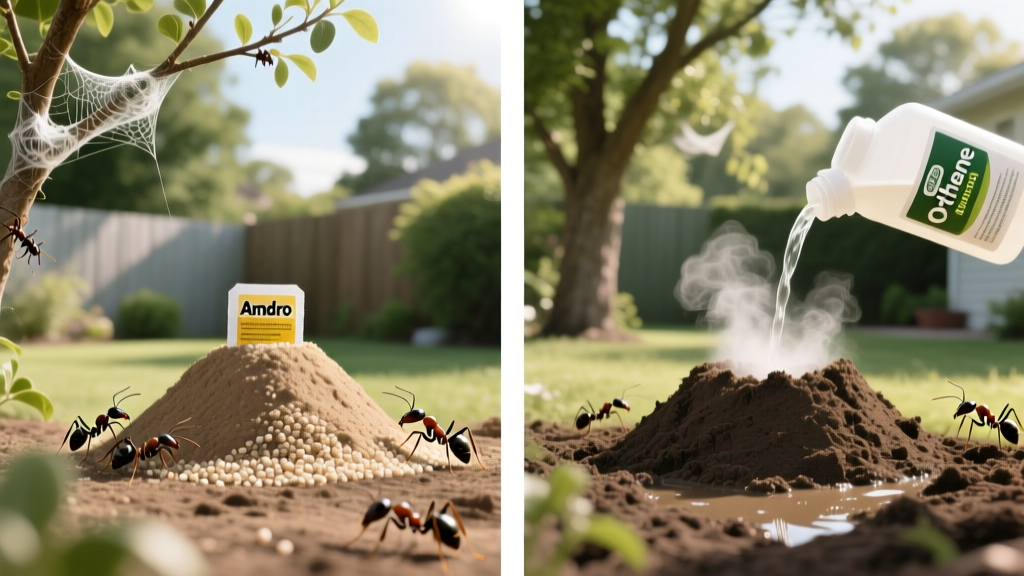
Amdro vs Orthene Fire Ant Treatment 2026: Webworm Yard Guide
Lisa ThompsonPublished
The Dual Threat: Fire Ants and Tree Webworms in 2026
As a specialist in tree webworm control, I frequently consult with homeowners in 2026 who are fighting a multi-front war in their landscapes. While my primary focus is protecting the canopy from the destructive defoliation caused by fall webworms (Hyphantria cunea), the reality of integrated pest management (IPM) is that what happens in the soil directly impacts the health of the tree above. One of the most common secondary infestations I encounter at the base of webworm-infested trees is the aggressive red imported fire ant. When homeowners attempt to treat fire ant mounds near the root zones of their trees, they often unknowingly sabotage their webworm control efforts. In this comprehensive 2026 guide, we will compare the two most popular fire ant mound treatments—Amdro bait and Orthene drench—specifically through the lens of preserving tree health and maintaining the delicate canopy ecosystem required to manage tree webworms naturally.
The Intersection of Soil Pests and Canopy Pests
Why does a tree webworm expert care about fire ant mound treatments? Fire ants are notorious for farming sap-sucking insects like aphids and scales on tree trunks and lower branches. These ants protect these pests from natural predators in exchange for honeydew, which weakens the tree and makes it more susceptible to secondary canopy pests like webworms. Furthermore, fire ant mounds are frequently built directly against the root flares of mature shade trees. When you apply a chemical drench to a mound in this sensitive area, the tree's root system can absorb the active ingredients. This systemic translocation can have devastating, unintended consequences on the beneficial parasitoid wasps and predatory beetles that live in the canopy and serve as your primary biological defense against tree webworms. Choosing the right fire ant treatment is not just about killing the mound; it is about protecting the tree's biological support system.
Understanding Amdro Bait for Fire Ant Mounds
Amdro Pro Fire Ant Bait remains a cornerstone of the Texas A&M AgriLife Extension Fire Ant Project recommendations in 2026. The active ingredient, hydramethylnon, is a slow-acting metabolic inhibitor. When worker ants forage, they carry the bait granules back to the colony, eventually feeding it to the queen. Because it takes several days to kill the colony, the ants do not associate the bait with the death of their nestmates, preventing them from budding or relocating.
Application and Tree Safety
For individual mound treatment, the standard 2026 protocol involves sprinkling about 3 tablespoons of Amdro in a 4-foot circle around the perimeter of the mound, rather than directly on top. From a tree webworm management perspective, Amdro is exceptionally safe. Hydramethylnon does not translocate through the tree's vascular system. It remains localized in the soil and is broken down by UV light and soil microbes within a few weeks. This means the canopy remains entirely unaffected, preserving the parasitic wasps (such as Trichogramma species) that lay their eggs inside webworm caterpillars, keeping the canopy pest population in check naturally.
Understanding Orthene Drench for Fire Ant Mounds
Orthene, which contains the active ingredient acephate, is a fast-acting organophosphate insecticide. When used as a mound drench, it provides rapid knockdown, often eliminating the visible fire ant population within hours. The standard application involves mixing 1 ounce of Orthene powder per gallon of water and slowly pouring 1 to 2 gallons of the solution directly onto and around the mound to penetrate the deep galleries.
The Systemic Risk to the Canopy
While Orthene is highly effective at killing fire ants on contact, it possesses strong systemic properties. When drenched into the soil near a tree's root flare, the acephate can be absorbed by the fine root hairs and translocated upward into the trunk, branches, and leaves. While this might sound beneficial for killing canopy pests, it is a disaster for IPM. According to the Clemson University Home & Garden Information Center, preserving natural predators is the most sustainable way to manage fall webworms. A systemic drench of Orthene will indiscriminately kill the beneficial insects feeding on the tree's foliage, including the very parasitoid wasps and predatory stink bugs required to control webworm outbreaks. Once the beneficials are wiped out, any surviving webworm eggs will hatch into a canopy with zero natural resistance, leading to severe defoliation.
Head-to-Head Comparison: Amdro vs. Orthene (2026 Specs)
| Feature | Amdro Pro Bait | Orthene Mound Drench |
|---|---|---|
| Active Ingredient | Hydramethylnon (1.0%) | Acephate (97.4%) |
| Speed of Control | Slow (7 to 14 days) | Fast (1 to 3 days) |
| 2026 Avg. Cost | $28.00 per 3 lb bag | $18.00 per 1 lb bag |
| Systemic Uptake | No (Localized) | Yes (Translocates to canopy) |
| Impact on Beneficials | Minimal (Canopy safe) | Severe (Kills canopy predators) |
| Best Use Case | Within tree drip lines & root zones | Open lawn areas far from trees |
The Tree Webworm Perspective: Why Your Ground Treatment Matters
When managing a landscape plagued by both soil-borne fire ants and canopy-dwelling tree webworms, timing and chemical selection are everything. Fall webworms typically construct their unsightly silken tents in the late summer and early fall. During this exact window, fire ant populations are also reaching their peak biomass, often pushing their mounds closer to the surface and closer to the moisture-retaining root flares of large trees.
If you choose to use an Orthene drench at the base of a pecan, oak, or fruit tree in July to control fire ants, you are effectively sterilizing the tree's biological defense system just weeks before the webworms emerge. The Clemson HGIC Fire Ant Management guidelines emphasize that broad-spectrum and systemic insecticides should be avoided near sensitive root zones when biological control is desired. By the time August arrives, the parasitic wasps that would normally keep the webworm population below the damage threshold will be dead. The result is a massive, uncontrolled webworm outbreak that forces you to resort to harsh canopy sprays later in the season.
Conversely, utilizing Amdro bait around the tree base eliminates the fire ant threat without introducing systemic toxins into the tree's vascular system. The canopy remains a safe haven for beneficial insects, allowing nature to do the heavy lifting regarding webworm control.
Step-by-Step 2026 Integrated Pest Management Plan
To successfully manage fire ants without compromising your tree webworm control strategy, follow this IPM protocol:
- Map the Drip Line: Identify the drip line (the outer edge of the tree canopy) of all trees currently showing early signs of webworm activity or historical vulnerability.
- Zone the Treatments: For fire ant mounds located inside the drip line or near the root flare, exclusively use Amdro bait. Apply 3 tablespoons around the mound perimeter in the early evening when ants are actively foraging and UV degradation is minimized.
- Reserve Drenches for Open Areas: For fire ant mounds located in the open lawn, far beyond the drip line of any trees, you may use an Orthene drench if immediate knockdown is required for human safety reasons. Mix 1 oz per gallon and apply 1.5 gallons per mound.
- Monitor Canopy Beneficials: After treating the soil, monitor the tree canopy for the presence of paper wasps and parasitoid flies. If webworm tents begin to form, use a high-pressure water spray or a targeted application of Bacillus thuringiensis (Bt) to preserve the beneficial insect population.
- Maintain Soil Health: Fire ants prefer compacted, disturbed soil. Apply a 2-inch layer of organic mulch around the tree base (keeping it 3 inches away from the trunk bark) to improve soil biology, discourage mound building near the root flare, and promote overall tree vigor to withstand minor webworm feeding.
Final Thoughts on 2026 Pest Control
Effective pest control in 2026 requires looking beyond the immediate nuisance and understanding the interconnected web of your landscape's ecosystem. While Orthene drench offers the satisfaction of rapid fire ant elimination, its systemic nature makes it a liability when managing trees vulnerable to webworms. Amdro bait requires a bit more patience, but its localized action ensures that your tree's canopy remains a fortress for the beneficial insects that keep defoliating pests at bay. By aligning your soil treatments with your canopy management goals, you can achieve a healthier, more resilient landscape this season.