Pest Control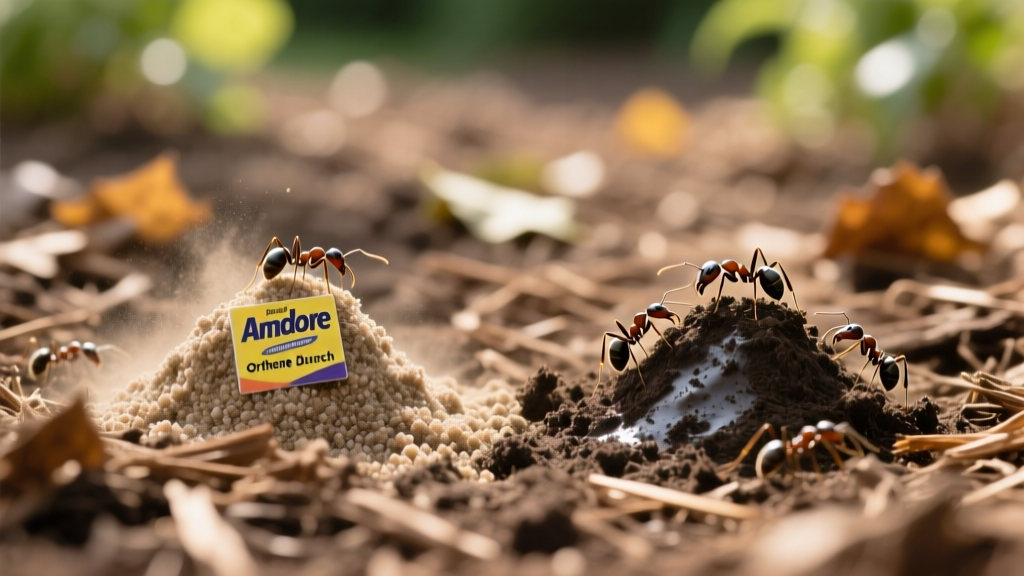
Amdro Bait vs Orthene Drench: 2026 Fire Ant Mulch Treatment Guide
James MillerPublished
The Mulch-Fire Ant Connection in 2026
Fire ants (Solenopsis invicta) are notorious for thriving in landscaped garden beds. Mulch provides ideal thermal and moisture retention, making it a prime habitat for these aggressive pests. In 2026, with shifting climate patterns leading to more erratic spring rainfall, mulched beds have become primary nesting zones in many residential landscapes. When treating these hidden mounds, homeowners typically reach for two industry-standard products: Amdro (a hydramethylnon-based bait) and Orthene (an acephate-based contact insecticide and drench). However, applying these treatments directly over or through a thick layer of organic or inorganic mulch fundamentally alters their efficacy. Understanding how mulch materials interact with these chemical delivery systems is critical for integrated pest management (IPM) and long-term garden health.
Amdro Bait: How Mulch Impacts Foraging Success
Amdro relies on worker ants foraging for food, picking up the bait granules, and carrying them back to the colony to feed the queen. The active ingredient, hydramethylnon, is a slow-acting metabolic inhibitor that ensures the workers survive long enough to share the toxic food source with the brood and the queen.
The Mulch Interference Problem
When Amdro is broadcast over thick wood chips or pine straw, several issues arise. First, the bait granules can become trapped in the upper canopy of the mulch, preventing foraging ants from finding them. Second, organic mulches retain moisture. If Amdro granules rest on damp pine bark, they quickly absorb water, develop mold, and become unpalatable to ants within 24 hours, rendering the treatment useless.
Best Practices for Amdro in Mulched Beds
To use Amdro effectively in mulched environments in 2026, you must part the mulch layer. Gently rake back the top 2 to 3 inches of mulch to expose the soil surface near the suspected mound perimeter. Apply the bait directly to the bare soil where foraging trails are most active. This ensures the granules remain dry and accessible to the ants. Avoid placing bait directly on top of the mulch canopy, as birds and non-target insects are more likely to intercept it before the ants do.
Orthene Drench: Penetrating the Mulch Layer
Orthene Fire Ant Killer utilizes acephate, a fast-acting organophosphate that works on contact and through ingestion. Unlike baits, Orthene is often mixed with water to create a liquid mound drench, providing rapid knockdown of aggressive colonies that pose an immediate threat to humans and pets.
The Mulch Interference Problem
Dry organic mulch acts like a sponge. If you pour an Orthene drench over dry wood chips, the mulch will absorb a significant portion of the active ingredient before it ever reaches the soil and the subterranean galleries of the mound. Conversely, if the mulch is heavily saturated from recent rain, the drench may run off the hydrophobic surface of the mulch bed, failing to penetrate the mound core and leaving the queen unharmed.
Best Practices for Orthene in Mulched Beds
For liquid drenches, mulch management is about saturation and exposure. The most effective 2026 protocol involves physically exposing the mound by removing the mulch layer directly over and immediately surrounding the nest. Pre-wet the exposed soil with plain water to break surface tension, then apply the Orthene drench directly to the soil and the mound entrance. This guarantees the chemical reaches the deep galleries where the colony resides.
Head-to-Head Comparison: Amdro vs. Orthene in Mulched Beds
| Feature | Amdro (Hydramethylnon Bait) | Orthene (Acephate Drench) |
|---|---|---|
| Speed of Control | 1 to 2 weeks (slow, colony-wide) | 24 to 48 hours (rapid knockdown) |
| Mulch Interaction | High risk of mold if trapped in damp organic mulch | Absorbed by dry mulch; blocked by thick layers |
| Application Prep | Rake back mulch to expose soil foraging trails | Remove mulch entirely over the mound core |
| Queen Elimination | Excellent (carried to brood chamber) | Moderate to High (depends on drench penetration) |
| 2026 Avg. Cost | $18 - $22 per pound | $12 - $15 per 16 oz tub |
Choosing Mulch Materials to Deter Fire Ants
Beyond treating existing mounds, the type of mulch you select plays a preventative role in your 2026 IPM strategy. Not all mulches are created equal when it comes to fire ant deterrence.
Cedar and Cypress Mulches
Cedar and cypress mulches contain natural oils (such as thujone) that act as mild, natural insect repellents. While they will not eliminate an established colony, they can discourage foraging trails and make the area less hospitable for new queens looking to start a nest. To maximize this effect, ensure the cedar mulch is fresh, as the repellent oils degrade over 12 to 18 months of UV and weather exposure.
Hardwood vs. Pine Bark
Shredded hardwood mulch tends to mat down heavily when wet, creating a dense, impermeable barrier. This matting makes liquid drenches like Orthene nearly impossible to apply without first removing the mulch entirely. Pine bark nuggets, however, leave large air gaps. While these gaps allow for easier drench penetration, they also provide excellent aerial cover for fire ants, allowing them to build tall, sprawling mounds hidden beneath the bark canopy. For beds with a history of severe fire ant pressure, a moderate layer of pine straw is often the best compromise, as it breaks down evenly and allows for both bait placement and drench penetration when managed correctly.
Inorganic Options: Gravel and Rubber
Gravel and river rock do not provide the organic food sources that fire ants sometimes farm, but the thermal mass of stone can create extreme temperature fluctuations that ants exploit by moving deeper underground during the day. Rubber mulch is generally discouraged in fire-ant-prone zones because its heat-retention properties in the summer sun can bake the surface, forcing the colony to build extensive, deep subterranean galleries that are entirely out of reach of standard Orthene drench volumes.
Step-by-Step Mulch Management Protocol for 2026
- Inspection and Mapping: Walk your mulched beds in the early morning or late evening. Look for loose soil particles pushed up through the mulch, which indicate subterranean gallery expansion.
- Mulch Retraction: Using a steel bow rake, gently pull back the mulch in a 3-foot radius around any identified mound to expose the soil architecture.
- Treatment Selection: If the mound is near edible plants or a water feature, use Amdro bait on the exposed soil perimeter. If the mound is in an ornamental bed and poses an immediate stinging hazard, use the Orthene drench.
- Post-Treatment Mulch Replacement: For Amdro, wait 48 hours before replacing the mulch to allow foraging ants ample time to find the granules. For Orthene, wait until the liquid drench has fully dried into the soil (usually 2 to 4 hours) before covering the area back up with mulch.
Safety, IPM, and Environmental Considerations
When managing pests in mulched beds, it is vital to consider the broader ecosystem. According to the Texas A&M Fire Ant Project, integrated pest management (IPM) emphasizes using the least toxic method that effectively solves the problem. While Orthene is highly effective for quick knockdown, acephate is highly toxic to bees and aquatic life. Therefore, Orthene drenches should never be applied where mulch slopes directly into storm drains, koi ponds, or natural waterways.
Amdro is generally safer for the surrounding environment when applied correctly, but it must be kept away from non-target organisms. The EPA Safe Pest Control guidelines remind homeowners to always read the 2026 updated label instructions, as formulations and environmental safety buffers are periodically revised to protect local pollinators and soil microbiomes.
Furthermore, consider your overall mulch depth. Keeping organic mulch at a maximum depth of 3 inches discourages deep nesting while preserving adequate soil moisture for your ornamental plants. For more regional advice on habitat modification, the University of Georgia Extension provides excellent resources on adapting landscape practices to local pest pressures.
Conclusion
Treating fire ant mounds in mulched landscape beds requires more than just sprinkling a product on the surface. By understanding the physical barrier that mulch presents, you can adapt your strategy. Use Amdro bait by exposing the soil foraging trails, and use Orthene drenches by fully uncovering the mound core to ensure deep penetration. With proper mulch management, smart material selection, and targeted application, you can maintain a beautiful, pest-free garden in 2026 and beyond.