Pest Control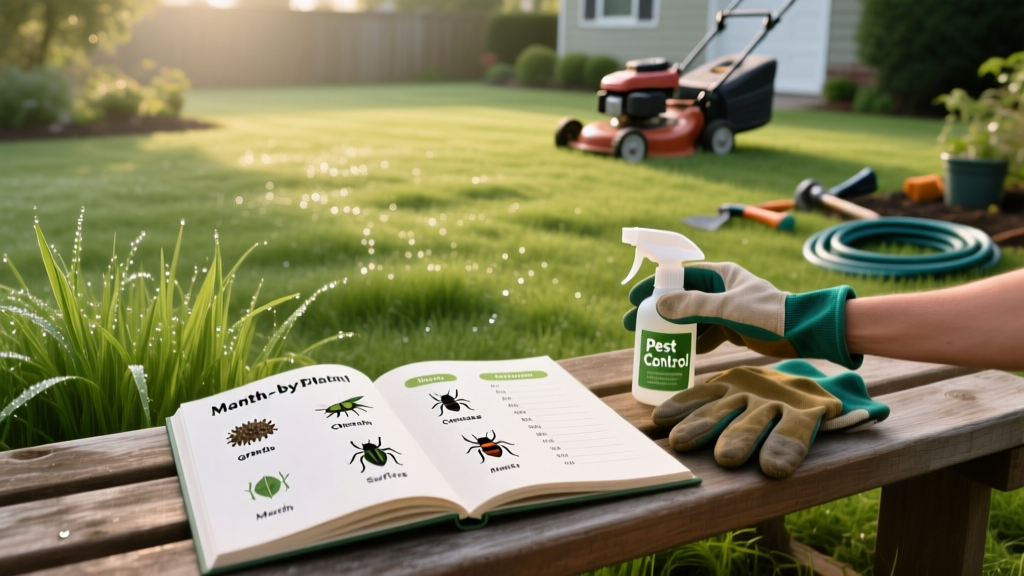
The Annual Lawn Pest Control Schedule And Checklist
David ParkPublished
Why a Seasonal Pest Control Schedule is Essential
Maintaining a pristine, healthy lawn requires more than just regular mowing and fertilization; it demands a proactive approach to pest management. Relying on reactive treatments—applying chemicals only after you see severe damage—often leads to overuse of pesticides, increased costs, and long-term turf decline. Instead, professional landscapers and turfgrass scientists advocate for Integrated Pest Management (IPM). According to the Environmental Protection Agency (EPA), IPM focuses on understanding pest life cycles, monitoring populations, and using targeted interventions only when necessary.
By following a structured annual lawn pest control schedule, you can align your preventative and curative treatments with the biological timelines of common turf pests like white grubs, chinch bugs, and sod webworms. Below is your comprehensive, month-by-month checklist to keep your lawn thriving year-round.
Spring Checklist: Inspection and Prevention (March - May)
Spring is the season of awakening, not just for your grass, but for overwintering pests. The goal during these months is monitoring, cultural control, and early preventative applications.
- March: Conduct a thorough lawn inspection as the snow melts. Look for signs of billbug damage, which often appears as dead patches that pull up easily, revealing sawdust-like frass (excrement) at the roots. Rake away dead winter grass to improve air circulation and discourage fungal gnats and early-season surface insects.
- April: Monitor soil temperatures. When soil temperatures consistently reach 55°F at a 2-inch depth, it is time to consider preventative grub control. Apply a preventative insecticide containing Chlorantraniliprole (commonly found in products like Scotts GrubEx). This active ingredient takes several weeks to translocate through the soil and root zone, so early application is vital.
- May: Focus on cultural controls. Aerate compacted areas to improve drainage, as overly moist, thatchy lawns are prime breeding grounds for crane flies and sod webworms. Keep your thatch layer below 0.5 inches to eliminate surface insect habitats.
Summer Checklist: Active Defense and Monitoring (June - August)
Summer is the most critical period for lawn pests. Japanese beetles, masked chafers, and June bugs lay their eggs in the soil, which hatch into turf-destroying grubs by mid-to-late summer. Simultaneously, heat and drought stress can trigger chinch bug outbreaks.
The Summer Pest Control Product Matrix
Choosing the right product depends on whether you are trying to stop eggs from developing (preventative) or kill active, feeding larvae (curative). Refer to the table below to select the appropriate active ingredient for your summer schedule.
| Active Ingredient | Control Type | Target Pests | Best Application Window |
|---|---|---|---|
| Chlorantraniliprole | Preventative | White grubs, billbugs | April to early June |
| Imidacloprid | Preventative | White grubs, chinch bugs | June to mid-July |
| Trichlorfon (Dylox) | Curative | Active late-stage grubs | August to September |
| Bifenthrin | Curative / Contact | Chinch bugs, sod webworms | As needed upon detection |
- June: If you missed the spring application of Chlorantraniliprole, apply Imidacloprid now. This neonicotinoid is highly effective against newly hatched grubs and provides secondary suppression of chinch bugs. Crucial Step: Water the lawn with 0.25 to 0.5 inches of irrigation immediately after application to wash the chemical off the grass blades and into the soil profile.
- July: Perform the "Coffee Can Test" for chinch bugs. Remove both ends of a metal can, push it 2 inches into the soil at the edge of a damaged patch, and fill it with water. If more than 5-10 chinch bugs float to the surface within 5 minutes, treatment with a pyrethroid like Bifenthrin is justified.
- August: Monitor for sod webworms. Use a soap flush (2 tablespoons of liquid dish soap mixed into 2 gallons of water) poured over a 1-square-yard area. If 10 or more larvae emerge, apply a targeted biological insecticide like Bacillus thuringiensis (Bt) kurstaki, which specifically targets caterpillars without harming beneficial insects.
Fall Checklist: Curative Control and Recovery (September - November)
As temperatures cool, cool-season grasses enter their peak growth phase, but pests are also preparing for winter. Fall is the time for curative treatments and biological controls.
- September: This is the prime window for curative grub control if you skipped summer preventatives or if a severe infestation has slipped through. Apply Trichlorfon (commonly sold as Dylox). Trichlorfon degrades rapidly in soils with a high pH (above 7.0) and must be watered in heavily (up to 0.75 inches of water) immediately after spreading to ensure it reaches the root zone before breaking down.
- October: Consider organic alternatives for long-term soil health. Apply beneficial nematodes (Heterorhabditis bacteriophora). These microscopic worms seek out and destroy grub larvae. Apply them in the late afternoon or evening when UV radiation is low, and ensure the soil temperature is still above 60°F. Keep the soil consistently moist for two weeks post-application.
- November: As the Penn State Extension notes, late fall is when grubs burrow deep into the soil to overwinter. Stop all chemical treatments at this stage, as the pests are out of reach and no longer feeding. Focus instead on final leaf removal; wet, matted leaves harbor ticks and surface-dwelling rodents that can damage turf crowns.
Winter Checklist: Planning and Maintenance (December - February)
While the lawn is dormant, your pest management strategy should not be. Winter is the ideal time to audit your equipment and plan for the upcoming year.
- December: Review the past year's pest pressures. Did you experience a localized chinch bug outbreak? Map these areas to prioritize monitoring next summer.
- January: Calibrate your broadcast and drop spreaders. An improperly calibrated spreader can lead to overlapping applications (causing chemical burn and wasted money) or gaps in coverage (leaving vulnerable strips for pests to exploit). Use a 10x10 foot test area on a driveway to measure product output accurately.
- February: Order biological controls and specialized IPM products early. Supplies of beneficial nematodes and specialized Bt formulations can sell out by late spring.
Understanding Treatment Thresholds
"Treat the lawn only when pest populations reach a level that causes unacceptable damage. A few grubs are normal and support a healthy, biodiverse ecosystem."
A core tenet of IPM is respecting economic and aesthetic injury levels. According to turfgrass experts at the University of Minnesota Extension, a healthy, well-watered lawn can easily tolerate 5 to 10 white grubs per square foot without showing visible damage. It is only when populations exceed this threshold—and the root system is severed to the point that the turf rolls back like a carpet—that chemical intervention is strictly necessary.
By adhering to this annual checklist, you shift from a reactive, chemical-heavy approach to a strategic, science-backed schedule. This not only saves you time and money but also protects local waterways, pollinators, and the long-term biological balance of your soil.