Tree Care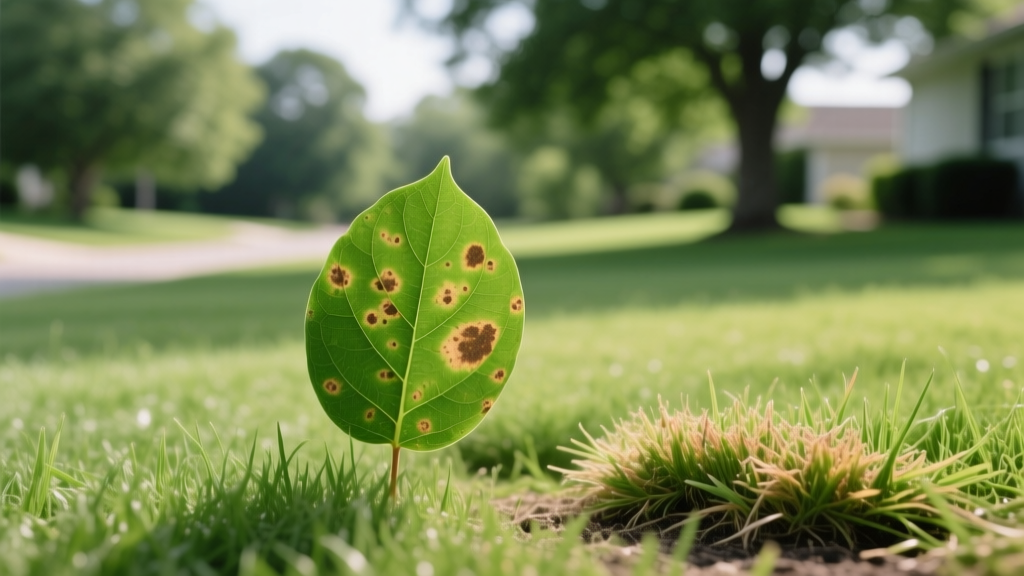
Anthracnose in Trees and Turf: Identification and Treatment
Robert HayesPublished
The Hidden Link Between Tree Health and Lawn Diseases
When homeowners notice unsightly brown patches on their lawn or premature leaf drop in their shade trees, they rarely connect the two issues. However, in the world of arboriculture and turf management, tree health and lawn disease identification are deeply intertwined. One of the most common culprits that bridge the gap between canopy and turf is Anthracnose. This aggressive fungal disease does not discriminate; it attacks the vascular systems of prized shade trees above while simultaneously devastating the cool-season turfgrasses below.
Anthracnose is not a single disease but rather a group of fungal infections caused by several species of fungi, including Apiognomonia, Colletotrichum, and Gloeosporium. Because the spores easily travel via splashing rain, wind, and falling debris, an infected tree canopy acts as a constant reservoir, raining fungal spores down onto the lawn below. Understanding how to identify, treat, and prevent anthracnose in both your trees and your turf is essential for maintaining a cohesive, healthy landscape.
Identifying Anthracnose in Shade Trees
Tree anthracnose is most prevalent in early spring during cool, wet weather. According to the University of Minnesota Extension, the disease primarily targets sycamore, white oak, ash, maple, and dogwood trees. Identifying the disease early is critical before it causes severe defoliation.
Key Symptoms in Trees:
- Leaf Lesions: Look for irregular, tan to brown blotches on the leaves. Unlike other fungal diseases that form perfect circles, anthracnose lesions typically follow the leaf veins and margins.
- Twig Dieback: In severe cases, the fungus girdles small twigs and branches, causing them to wither and die back from the tips.
- Witches' Brooms: Sycamore trees often respond to repeated twig dieback by producing dense, tangled clusters of shoots known as witches' brooms.
- Premature Defoliation: Heavily infected trees may drop a significant portion of their leaves by late May or early June, leaving the lawn below covered in fungal-laden debris.
Identifying Anthracnose in Turfgrass
While tree anthracnose is primarily a foliar and twig issue, turfgrass anthracnose (caused mainly by Colletotrichum graminicola) is a devastating lawn disease that affects the crown and roots of the grass. The Penn State Extension notes that this lawn disease is particularly aggressive on annual bluegrass (Poa annua) and creeping bentgrass, but it frequently attacks perennial ryegrass and fine fescues in residential lawns.
Key Symptoms in Turf:
- Foliar Blight: Initial symptoms appear as small, yellow to orange circular patches on the lawn, typically 2 to 6 inches in diameter.
- Black Fruiting Bodies: If you inspect individual grass blades with a magnifying glass, you will see tiny, black, spore-producing structures (acervuli) that resemble small black dots on the leaf surface and crown.
- Basal Rot: In advanced stages, the fungus attacks the crown and roots, causing the grass to pull away easily from the soil. The base of the plant will appear black and rotted.
The Microclimate Connection: How Trees Fuel Lawn Disease
The reason anthracnose frequently appears in both trees and the lawn beneath them comes down to the microclimate. A dense, overgrown tree canopy restricts sunlight penetration and limits air circulation at the soil level. This creates a damp, shaded, and humid environment on the turf—the exact conditions that trigger turfgrass anthracnose and other lawn diseases like dollar spot and brown patch. Furthermore, when an infected tree drops its diseased leaves, those leaves land on the damp turf, introducing massive quantities of fungal spores directly to the grass canopy.
Comprehensive Treatment and Management Strategies
Successfully managing anthracnose requires a dual-pronged approach that addresses both the tree canopy and the turfgrass below. Relying solely on lawn fungicides will fail if the tree above continues to drop infected debris.
Cultural Controls for Trees and Turf
Cultural practices are your first line of defense and focus on altering the environment to make it hostile to fungal growth.
- Canopy Pruning and Airflow: Prune your shade trees during the dormant winter months to open up the canopy. Remove dead, diseased, or crossing branches. This increases sunlight penetration and air movement, drying out the turf below much faster after morning dew or rainfall. Always sterilize pruning tools with a 10% bleach solution or 70% isopropyl alcohol between cuts to prevent spreading the fungus.
- Aggressive Sanitation: Rake and destroy all fallen leaves from infected trees in the autumn and early spring. Do not compost these leaves, as home compost piles rarely reach the 140°F temperatures required to kill anthracnose spores. Bag them and send them to a municipal waste facility.
- Smart Lawn Watering: Water your lawn deeply but infrequently, aiming for 1 to 1.5 inches of water per week. Always water in the early morning (between 4:00 AM and 8:00 AM) so the grass blades dry quickly in the sun. Evening watering leaves the turf wet overnight, inviting fungal explosions.
- Balanced Fertilization: Avoid heavy applications of fast-release nitrogen fertilizers in the spring. Excess nitrogen promotes lush, tender, and highly susceptible turfgrass growth. Instead, use slow-release nitrogen and ensure your soil has adequate potassium, which strengthens grass cell walls against fungal penetration.
Chemical Controls: Fungicide Application
When cultural controls are insufficient, or when weather conditions are exceptionally wet, chemical intervention is necessary. Timing is everything; fungicides are protectants, not eradicants. They must be applied before or at the very first sign of infection.
For Shade Trees:
- Timing: Begin applications at bud break in early spring and repeat every 7 to 14 days as long as cool, wet weather persists.
- Active Ingredients: Look for products containing chlorothalonil (e.g., Daconil), mancozeb, or copper-based fungicides.
- Cost & Application: DIY spraying costs roughly $15 to $30 per tree per season. For large, mature trees where canopy coverage is impossible with a hose-end sprayer, hire a certified arborist for systemic trunk injections (e.g., Alamo or Propizol). Professional injections typically cost $150 to $300 per tree but provide 1 to 2 years of protection.
For Turfgrass:
- Timing: Apply when daytime temperatures are consistently between 60°F and 80°F and humidity is high, or at the first sign of yellowing patches.
- Active Ingredients: Effective turf fungicides include azoxystrobin (Heritage), fludioxonil (Medallion), and pyraclostrobin.
- Measurements & Cost: Most liquid turf fungicides are applied at a rate of 2 to 4 ounces per 1,000 square feet. Granular options require watering in. Expect to spend $30 to $50 to treat a standard 5,000-square-foot lawn. Rotate chemical classes (FRAC codes) every 2 to 3 applications to prevent fungal resistance.
Comparison Chart: Anthracnose vs. Other Common Fungal Diseases
Because lawn disease identification can be tricky, it is vital to distinguish anthracnose from other common fungal issues that thrive in similar tree-shaded microclimates.
| Disease | Primary Targets | Key Visual Symptoms | Optimal Weather Triggers |
|---|---|---|---|
| Anthracnose (Tree & Turf) | Sycamore, Oak, Ryegrass, Poa annua | Vein-following leaf blotches; black acervuli on grass crowns. | Cool, wet springs (50°F - 65°F) |
| Dollar Spot | Bentgrass, Fescue, Bluegrass | Silver-dollar-sized straw-colored patches; white cobweb-like mycelium in morning dew. | Warm days, cool nights, high humidity (60°F - 85°F) |
| Brown Patch | Tall Fescue, Ryegrass, St. Augustine | Large circular brown patches with a distinct 'smoke ring' border on the outer edge. | Hot, humid summer weather (Above 80°F) |
| Powdery Mildew | Dogwood, Crepe Myrtle, shaded Fescue | White, powdery fungal growth on leaf surfaces; distorted new growth. | High humidity, dry foliage, heavy shade |
Expert Tip: If you are struggling to identify a lawn disease beneath a struggling shade tree, take a sample of both the grass (including the roots) and the fallen tree leaves to your local cooperative extension office. They can provide microscopic confirmation and tailored treatment plans for your specific region.
Conclusion
Managing anthracnose requires a holistic view of your landscape. By recognizing that the health of your shade trees directly impacts the health of your turfgrass, you can implement integrated pest management strategies that protect both. Through diligent pruning, aggressive sanitation, smart watering practices, and targeted fungicide applications, you can break the disease cycle and restore the vibrant, healthy aesthetic of your entire outdoor space.
