Home & Garden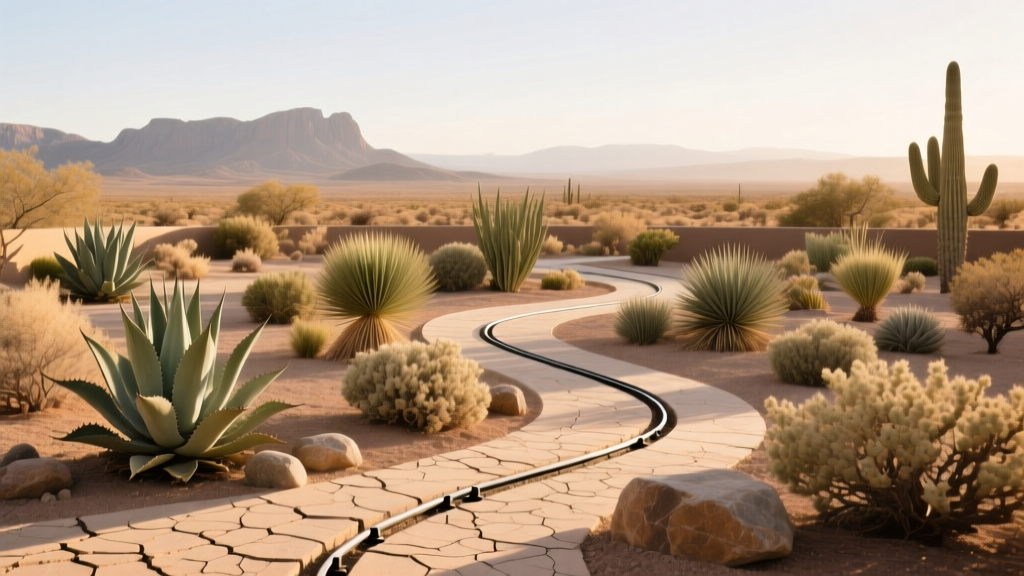
Arid Southwest Xeriscaping and Smart Irrigation Guide
Emily WatsonPublished
The arid Southwest of the United States presents a unique set of challenges for homeowners and gardeners. With USDA Hardiness Zones ranging from 8 to 10, summer temperatures frequently exceeding 105°F, and annual rainfall often dipping below 10 inches, maintaining a traditional turf lawn is not just an environmental burden—it is an expensive, uphill battle. However, the intersection of regional xeriscaping principles and modern smart home irrigation technology offers a sustainable, beautiful, and highly efficient solution for desert landscapes.
The Challenge of Landscaping in the Arid Southwest
Desert climates are defined by extreme evapotranspiration (ET) rates. In cities like Phoenix, Las Vegas, and Tucson, the sun and wind strip moisture from the soil and plant leaves at an astonishing rate. According to the Southern Nevada Water Authority, outdoor water use can account for up to 60% of a household's total water consumption, much of which is wasted through evaporation, runoff, or overwatering non-native turfgrass.
Furthermore, the native soil in the Southwest is often heavy, alkaline caliche clay, which resists water penetration and restricts root growth. To succeed in this environment, homeowners must abandon the 'east coast' gardening mentality and embrace a climate-specific approach that combines biological adaptation with technological precision.
Core Principles of Southwest Xeriscaping
Xeriscaping is not about creating a barren, sterile yard filled only with gravel and a single cactus. True xeriscaping, or 'water-wise landscaping,' focuses on seven core principles, three of which are critical for immediate impact in the desert.
1. Soil Amendment and Preparation
While many native desert plants prefer unamended, well-draining soil, introducing non-native drought-tolerant species or establishing new transplants requires soil preparation. Breaking through the caliche layer is mandatory. Use a rotary hammer drill or heavy pickaxe to fracture the hardpan, then backfill with a mixture of native soil and high-quality compost. This improves drainage while providing just enough organic matter to support a healthy microbial ecosystem.
2. Strategic Hydrozoning
Hydrozoning is the practice of grouping plants with similar water and sunlight requirements together. In a Southwest garden, you should divide your yard into three distinct zones:
- Oasis Zone (High Water): Located near patios or entryways. This area can support higher-water plants like citrus trees, bougainvillea, or even small patches of drought-tolerant hybrid Bermuda grass, utilizing the runoff from roof gutters or smart drip systems.
- Transition Zone (Moderate Water): The middle ground featuring robust desert-adapted plants like Texas Ranger (Leucophyllum frutescens), Lantana, and Red Yucca (Hesperaloe parviflora).
- Natural Zone (Low/No Water): The perimeter of the property, relying entirely on natural rainfall once established. Ideal for Agave, Ocotillo, and native Palo Verde trees.
3. Selecting Desert-Adapted Flora
Choosing the right plants is half the battle. The University of Arizona Cooperative Extension highly recommends focusing on Sonoran and Chihuahuan desert natives. These plants possess specialized adaptations, such as waxy leaf cuticles, silver-hued foliage to reflect sunlight, and deep taproots that allow them to thrive in extreme heat.
Integrating Smart Irrigation for Desert Climates
Even the most meticulously planned xeriscape requires supplemental watering during its first two years of establishment, and occasional deep watering during prolonged summer droughts. This is where smart home integration becomes a game-changer.
Traditional timer-based irrigation controllers operate on a fixed schedule, completely ignoring the dynamic nature of desert weather. If a monsoon storm rolls through in late August, a traditional timer will still water your yard the next morning, leading to root rot and wasted resources. Smart irrigation controllers solve this by connecting to your home's Wi-Fi and utilizing local meteorological data.
Weather-Based Controllers vs. Soil Moisture Sensors
According to the EPA WaterSense Program, smart irrigation controllers can save the average home nearly 7,600 gallons of water annually. For the Southwest, you have two primary technological options:
- Weather-Based (ET) Controllers: These use local Evapotranspiration (ET) data to adjust watering schedules based on temperature, humidity, wind, and solar radiation. If the forecast predicts a 110°F heatwave with high winds, the controller automatically increases watering duration to compensate for rapid moisture loss.
- Soil Moisture Sensors (SMS): Buried directly in the root zones of your hydrozones, these sensors physically measure the volumetric water content of the soil. They act as a gatekeeper, overriding the smart controller if the soil already holds sufficient moisture.
Comparison Chart: Smart Irrigation Systems for Xeriscapes
When outfitting a Southwest property, selecting the right smart hub and emitter combination is crucial. Below is a comparison of top-tier systems suited for arid environments.
| System / Brand | Best Feature for Arid Climates | Estimated Cost | Ideal Use Case |
|---|---|---|---|
| Rachio 3 Smart Sprinkler Controller | Hyper-local weather intelligence and freeze/monsoon skips | $229 (8-zone) | Existing drip systems needing a smart brain; easy app integration. |
| Orbit B-hyve XR with Soil Sensors | On-device soil moisture overrides prevent overwatering caliche soils | $179 + $40/sensor | Hydrozones with mixed soil types; highly reactive to actual ground moisture. |
| Hunter Hydrawise Pro-HC | Advanced flow metering detects leaks in buried drip lines | $350+ | Large desert estates with extensive subsurface drip irrigation (SDI). |
The Shift to Subsurface Drip Irrigation (SDI)
In the arid Southwest, spraying water into the air via traditional pop-up sprinklers is highly discouraged due to rapid wind drift and evaporation. Drip irrigation is the standard, but Subsurface Drip Irrigation (SDI) is the ultimate evolution for xeriscapes.
SDI involves burying specialized drip lines with built-in, root-intrusion-resistant emitters 3 to 6 inches below the soil surface. This delivers water directly to the root zone, eliminating surface evaporation entirely. Furthermore, it prevents the germination of surface weed seeds, drastically reducing garden maintenance time.
'In desert environments, delivering water below the soil surface is not just an efficiency measure; it is a necessity for deep root establishment and salinity management.' — Desert Landscaping Best Practices, University of Arizona.
Seasonal Watering Schedules for the Southwest
Smart controllers automate the process, but homeowners must understand the underlying philosophy of desert watering: Water deeply and infrequently. Shallow, daily watering encourages weak, surface-level roots that will scorch and die during the first 110°F day of summer. Deep watering trains roots to seek moisture deep in the cool earth.
Recommended Watering Depths and Frequencies
- Turfgrass (Hybrid Bermuda): Water to a depth of 8-10 inches. In summer, water every 3 days. In winter, water every 14-21 days.
- Shrubs and Groundcovers (Lantana, Texas Sage): Water to a depth of 12-18 inches. In summer, water every 7-10 days. In winter, water every 21-30 days.
- Desert Trees (Palo Verde, Mesquite): Water to a depth of 24-36 inches. In summer, water every 14-21 days. In winter, water every 45-60 days.
By programming your smart controller's 'cycle and soak' feature, you can achieve these depths without causing runoff. Program the system to water for 15 minutes, pause for an hour to allow the heavy caliche soil to absorb the moisture, and then water for another 15 minutes.
Financial and Environmental ROI
Transitioning to a smart-irrigated xeriscape requires an upfront investment. Replacing 1,000 square feet of turf with desert landscaping and a smart drip system typically costs between $3,500 and $6,000, depending on hardscaping elements and plant maturity. However, the return on investment is substantial.
Many municipalities, such as the Southern Nevada Water Authority, offer aggressive 'Cash for Grass' rebates, paying homeowners up to $3 per square foot of turf removed. When combined with the 30-50% reduction in monthly summer water bills, the system frequently pays for itself within 24 to 36 months. Beyond the financial benefits, you are actively preserving the Colorado River basin and protecting the fragile desert aquifer system for future generations.
Conclusion
Landscaping in the arid Southwest does not require sacrificing beauty for conservation. By embracing the natural aesthetics of xeriscaping and pairing them with the precision of smart home irrigation technology, you can create a vibrant, resilient outdoor living space. Whether you are nurturing a desert oasis in Scottsdale or designing a water-wise courtyard in Albuquerque, the synergy of native flora and intelligent technology is the key to thriving in the desert.
