Home & Garden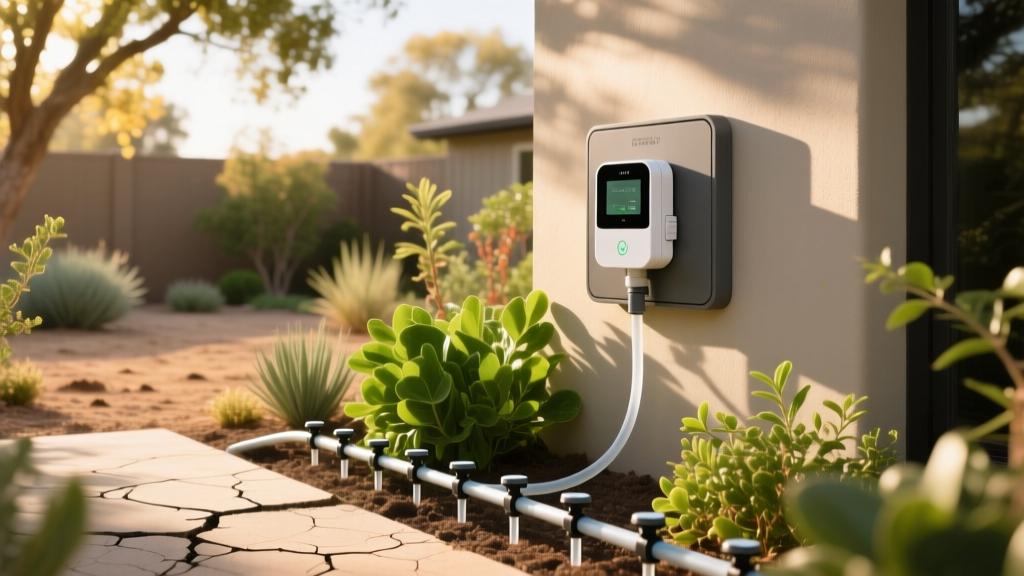
Smart Irrigation and Drip Conversion: A Drought-Proof Garden Guide
Mike RodriguezPublished
As climate patterns shift and severe droughts become a recurring challenge across North America, homeowners are being forced to rethink their outdoor water usage. According to the Environmental Protection Agency (EPA), outdoor water use accounts for nearly 30 to 60 percent of total household water consumption, and in arid regions, that number can skyrocket. The traditional approach to lawn and garden care—relying on outdated spray sprinklers and rigid, timer-based clocks—is no longer sustainable. To build a resilient, drought-proof landscape, you must bridge the gap between smart home technology and water-wise gardening techniques. This comprehensive guide explores how upgrading to smart irrigation controllers and converting spray zones to drip irrigation can drastically reduce your water footprint, lower your utility bills, and keep your garden thriving even under strict municipal watering restrictions.
The Hidden Water Waste in Traditional Sprinklers
Traditional pop-up spray heads and rotor sprinklers were designed for an era of abundant water and cheap utility rates. While they are effective at covering large, uniform areas of turfgrass, they are notoriously inefficient in mixed garden beds, slopes, and narrow strips. When a traditional sprinkler operates, a significant percentage of the water is lost before it ever reaches the plant roots.
Three primary factors contribute to this waste:
- Evaporation and Wind Drift: Spray heads atomize water into fine droplets. On a hot or breezy day, up to 30 percent of this water evaporates into the air or blows onto paved driveways and sidewalks.
- Runoff and Soil Compaction: Traditional systems apply water much faster than the soil can absorb it, especially in clay-heavy soils. This leads to immediate runoff, carrying fertilizers and pesticides into local storm drains.
- Overspray and Mismatched Zones: Grouping drought-tolerant shrubs with thirsty turfgrass on the same irrigation valve forces you to overwater the shrubs just to keep the grass alive.
By leaving these legacy systems unmanaged, homeowners unknowingly waste thousands of gallons of water every summer. The solution requires a two-pronged approach: upgrading the 'brains' of your system with smart technology, and upgrading the 'muscle' by converting inefficient spray heads to targeted drip lines.
The Brains of the Operation: Smart Irrigation Controllers
A smart irrigation controller replaces the outdated mechanical timer on your garage wall. Instead of blindly watering for 15 minutes every morning regardless of the weather, smart controllers use real-time data to calculate exactly how much water your landscape needs. The EPA WaterSense program certifies weather-based irrigation controllers that can save the average home nearly 7,600 gallons of water annually.
Weather-Based vs. Soil Moisture Sensors
There are two main types of smart irrigation technology available for residential use:
- Weather-Based Controllers (ET Controllers): These devices connect to your home Wi-Fi and pull data from local weather stations or hyper-local satellite feeds. They calculate Evapotranspiration (ET)—the rate at which water evaporates from the soil and transpires from plant leaves. Popular models like the Rachio 3 or Hunter Hydrawise automatically skip watering when rain is forecasted and adjust run times based on seasonal temperature shifts.
- Soil Moisture Sensors: These involve burying a physical probe in your garden bed or lawn. The sensor measures the actual volumetric water content in the root zone. If the soil is still moist from a previous watering or a passing storm, the sensor overrides the controller and prevents the valves from opening. This is highly recommended for shaded areas or heavy clay soils where evaporation rates are unpredictable.
According to the Alliance for Water Efficiency, smart irrigation controllers can reduce outdoor water use by 20 to 50 percent compared to traditional clock timers, offering a return on investment in as little as one to two irrigation seasons.
The Muscle: Converting Spray Zones to Drip Irrigation
While smart controllers optimize the schedule, drip irrigation optimizes the delivery. Drip systems use a network of flexible polyethylene tubing and low-volume emitters to apply water drop-by-drop directly to the base of the plant. According to the University of California Agriculture and Natural Resources, drip irrigation operates at 90 to 95 percent efficiency, compared to just 50 to 65 percent for traditional spray heads.
Drip irrigation is the ultimate drought-survival tool for trees, shrubs, vegetable gardens, and foundation plantings. Because the water is applied at a slow rate (measured in Gallons Per Hour, or GPH, rather than Gallons Per Minute), it penetrates deeply into the soil profile, encouraging roots to grow downward where they are protected from surface heat.
Step-by-Step Drip Conversion Guide
Converting an existing spray zone to a drip system is a highly manageable DIY weekend project. Here is how to execute the conversion:
- Step 1: Cap the Existing Spray Heads. Dig around the old pop-up spray heads, unscrew them, and install threaded PVC or poly caps. Leave one head at the highest point of the zone uncapped to serve as a flush valve for future maintenance.
- Step 2: Install a Filter and Pressure Regulator. Drip emitters have tiny water passages that clog easily. At the zone's main water source, install a 120-mesh screen filter and a pressure regulator to drop the household water pressure (usually 50-80 PSI) down to the 25-30 PSI required for drip lines.
- Step 3: Lay the 1/2-Inch Poly Tubing. Unroll 1/2-inch blank polyethylene tubing and let it sit in the sun for an hour to soften and uncoil. Snake the tubing through your garden beds, securing it every few feet with landscape staples.
- Step 4: Punch in the Emitters. Use a specialized hole punch tool to insert emitters directly into the tubing near the base of your plants. Use 1.0 GPH emitters for small shrubs, 2.0 GPH for larger bushes, and inline drip rings for trees.
Cost vs. Savings: Is the Upgrade Worth It?
Upfront costs for water-wise technology can deter some homeowners, but municipal rebates and long-term utility savings quickly offset the investment. Many local water districts offer rebates ranging from $100 to $300 for installing EPA WaterSense-certified smart controllers.
| Irrigation Method | Water Efficiency | Est. Water Use (per 1,000 sq ft/week) | Avg. Equipment Cost | Best Application |
|---|---|---|---|---|
| Traditional Spray | 50% - 65% | 1,000 - 1,500 gallons | $150 - $300 | Large, uniform turfgrass |
| Smart Spray (Weather-Based) | 70% - 80% | 600 - 900 gallons | $250 - $400 | Existing turf with smart upgrade |
| Drip Irrigation | 90% - 95% | 300 - 500 gallons | $100 - $250 | Garden beds, shrubs, trees, rows |
When you combine a smart controller with drip conversion in your non-turf zones, you can expect to see a 40 to 60 percent reduction in your summer water bills. Furthermore, you will spend significantly less money replacing dead shrubs and treating fungal diseases caused by overhead watering.
Maximizing Efficiency with Mulch and Soil Health
No irrigation system can overcome the rapid evaporation caused by bare, sun-baked soil. To truly drought-proof your garden, you must pair your new drip system with a robust mulching strategy. Applying a 2 to 3-inch layer of organic mulch—such as shredded hardwood bark, pine straw, or compost—over your drip lines acts as an insulating barrier. Mulch reduces soil surface evaporation by up to 70 percent, keeps the root zone cool during heatwaves, and suppresses water-stealing weeds. As the organic mulch breaks down, it improves soil structure, increasing the soil's water-holding capacity and allowing your drip emitters to penetrate deeper with less runoff.
Seasonal Maintenance for Peak Efficiency
A water-wise garden requires a different type of maintenance. While you will spend less time dragging hoses and adjusting broken sprinkler heads, you must perform specific seasonal checks to keep your smart drip system functioning perfectly:
- Spring Flush: Open the end caps of your drip lines and let the system run for two minutes to flush out any sediment, mineral buildup, or debris that accumulated over the winter.
- Emitter Audits: Walk your garden beds while the system is running. Look for geysers (which indicate a popped emitter) or dry soil patches (which indicate a clog). Replace clogged emitters immediately.
- Controller Seasonal Adjustments: Even with a smart controller, verify that your zone settings are accurate. Ensure that your drip zones are categorized as 'Drip/Trickle' in the app, as this changes the algorithm's precipitation rate calculations to prevent underwatering.
- Winterization: If you live in a climate with hard freezes, blow out your drip lines with compressed air (keeping the PSI under 30 to avoid blowing the fittings apart) or open the manual drain valves to prevent cracked tubing.
Conclusion
Transitioning to a water-wise landscape is no longer just an environmental courtesy; it is a practical necessity for modern homeowners facing erratic weather patterns and rising utility costs. By integrating smart irrigation controllers to manage the schedule and converting inefficient spray zones to targeted drip systems, you create a resilient outdoor living space. Your garden will not only survive the harshest drought conditions but will thrive, proving that intelligent design and water conservation can beautifully coexist.
