Home & Garden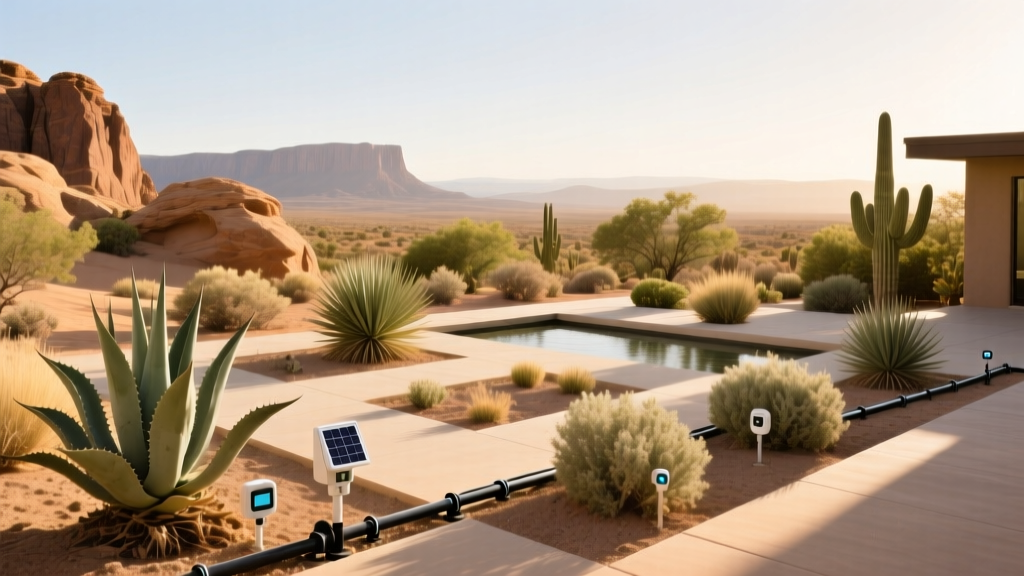
Southwest Desert Landscaping and Smart Irrigation Guide
Mike RodriguezPublished
Bridging Indoor and Outdoor Living in the Arid Southwest
Living in the American Southwest (USDA Hardiness Zones 8 through 10) offers a unique opportunity to seamlessly blend indoor and outdoor living spaces. Floor-to-ceiling sliding glass doors and shaded patios invite the desert beauty inside. However, the arid climate—characterized by scorching summers, mild winters, and less than 12 inches of annual rainfall—demands a highly specialized approach to garden care and landscaping. Bridging the gap between a lush outdoor oasis and responsible water conservation requires mastering xeriscaping principles and integrating smart home irrigation technology. This comprehensive guide explores how homeowners in states like Arizona, New Mexico, Texas, and Southern California can cultivate stunning, energy-efficient landscapes that thrive in extreme heat while keeping utility costs remarkably low.
Understanding the Southwest Arid Climate and Soil
The Southwest is defined by high evapotranspiration rates, meaning water evaporates from the soil and transpires from plants much faster than in temperate regions. Furthermore, the native soil is often heavy in clay and caliche—a hardened, cement-like layer of calcium carbonate that restricts root growth and prevents water penetration. Before planting a single shrub, it is crucial to amend the soil. Break up the caliche layer using a pickaxe or mechanical tiller to a depth of at least 18 inches, then mix in organic compost and agricultural gypsum to improve drainage and calcium levels.
According to the Texas A&M AgriLife Extension, successful desert landscaping begins with understanding your yard's microclimates. South-facing walls absorb and radiate intense heat, creating harsh environments for delicate plants, while north-facing courtyards offer shaded, cooler retreats ideal for outdoor furniture and moisture-sensitive foliage.
Xeriscaping Principles for Desert Homes
Xeriscaping is not about replacing your yard with barren rock and a single cactus; it is a strategic, beautiful approach to water-wise landscaping. The core principle is hydrozoning—grouping plants with similar water and sunlight requirements together. This prevents overwatering drought-tolerant species while underwatering thirstier patio plants.
Hardscaping and Mulching Strategies
Hardscaping plays a massive role in Southwest design. Replace water-guzzling turfgrass with permeable hardscapes like flagstone patios, decomposed granite (DG) pathways, and stamped concrete. To protect plant roots from the baking sun and reduce soil evaporation, apply a 3-inch layer of inorganic mulch, such as crushed granite or river rock, around the base of your plants. Organic wood mulch tends to blow away during desert monsoons and decomposes too rapidly in the relentless heat.
Best Drought-Tolerant Plants for the Southwest
Selecting native and adapted plants is the cornerstone of a resilient desert garden. These plants require minimal supplemental watering once established and provide year-round architectural interest that complements modern outdoor decor. Below is a comparison of top-performing desert plants:
| Plant Name | Type | Water Needs | Sun Exposure | Mature Size | Est. Cost |
|---|---|---|---|---|---|
| Agave parryi (Parry's Agave) | Succulent | Very Low | Full Sun | 2 ft x 2 ft | $25 - $45 |
| Leucophyllum frutescens (Texas Ranger) | Evergreen Shrub | Low | Full Sun | 6 ft x 6 ft | $35 - $60 |
| Chilopsis linearis (Desert Willow) | Deciduous Tree | Low | Full Sun | 20 ft x 15 ft | $80 - $150 |
| Lantana camara (New Gold Lantana) | Perennial | Low | Full to Part Sun | 2 ft x 4 ft | $10 - $15 |
| Muhlenbergia capillaris (Pink Muhly Grass) | Ornamental Grass | Moderate-Low | Full Sun | 3 ft x 3 ft | $15 - $25 |
Integrating Smart Irrigation and Drip Systems
Traditional sprinkler systems are highly inefficient in the Southwest, losing up to 50% of water to wind drift and evaporation. The EPA WaterSense program strongly recommends upgrading to smart irrigation controllers and drip irrigation systems to maximize efficiency.
Drip Irrigation Specifications
Drip irrigation delivers water directly to the root zone at a slow, measurable rate. For established desert shrubs and trees, use 2 Gallons Per Hour (GPH) pressure-compensating emitters. For groundcovers, perennials, and container gardens on your patio, 1 GPH emitters or Netafim drip lines are ideal. Run the drip lines beneath your inorganic rock mulch to further eliminate evaporation.
Smart Controllers and Wi-Fi Integration
Pairing drip lines with a smart Wi-Fi controller, such as the Rachio 3 or Orbit B-hyve, transforms your garden into a responsive, automated ecosystem. These controllers connect to local weather stations and automatically skip watering schedules before, during, and after rain events. They also adjust run times dynamically based on seasonal evapotranspiration data. According to the Alliance for Water Efficiency, smart controllers can reduce outdoor water use by up to 20% annually compared to standard clock timers, all while integrating seamlessly with smart home hubs like Amazon Alexa and Google Home.
"In arid climates, the goal of irrigation is deep, infrequent watering. Watering for longer durations but fewer days per week encourages roots to grow downward into cooler soil layers, making plants significantly more resilient to summer heatwaves."
Smart Outdoor Lighting for Desert Landscapes
To truly bridge indoor and outdoor living, your landscape must be visually appealing at night. Energy-efficient LED lighting is essential. Use low-voltage (12V) LED uplights to highlight the architectural silhouettes of Agaves and the twisting trunks of Desert Willows. Integrate smart relays, like the Shelly 1 or Wyze Plug Outdoor, to control your landscape lighting via your smartphone. Set schedules to illuminate pathways and patios precisely at dusk, saving electricity while enhancing home security and ambiance for evening entertaining.
Seasonal Maintenance Calendar for Desert Gardens
Maintaining a Southwest garden requires timing your chores with the unique desert seasons, rather than the traditional four-season calendar.
- Spring (March - April): Prune winter-damaged branches from frost-tender plants like Bougainvillea only after the last threat of frost has passed. Apply a slow-release, low-nitrogen fertilizer specifically formulated for alkaline desert soils.
- Summer (May - August): Monitor smart irrigation soil moisture sensors. Flush drip lines to clear mineral deposits from hard water. Avoid heavy pruning, which exposes the inner bark of trees and shrubs to severe sunburn.
- Fall (September - October): This is the absolute best time to plant new trees and shrubs in the Southwest. The soil is still warm, encouraging rapid root establishment before winter dormancy. Scatter native wildflower seeds for a vibrant spring bloom.
- Winter (November - February): Protect young citrus trees and sensitive succulents from freezing temperatures using breathable frost cloths (never plastic). Reduce your smart irrigation run times by 50% to 70% as plant metabolism slows down.
Cost Analysis and ROI of Smart Desert Landscaping
Transitioning to a xeriscape with smart irrigation requires an upfront investment, but the return on investment (ROI) is substantial, both financially and environmentally.
- Smart Wi-Fi Controller (e.g., Rachio 3): ~$230
- Drip Irrigation Conversion Kit (per zone): ~$150 - $300
- Professional Xeriscape Design & Installation (1,000 sq ft): $3,000 - $6,000
By eliminating turfgrass and utilizing smart drip irrigation, Southwest homeowners typically see a 30% to 50% reduction in their monthly summer water bills. Furthermore, many local municipalities and water districts offer aggressive rebates ranging from $100 to $500 for installing EPA WaterSense-certified smart controllers and removing water-intensive turf. Over a five-year period, the water savings and rebate incentives often completely offset the cost of the smart irrigation hardware.
Conclusion
Creating a stunning outdoor living space in the Southwest does not require fighting the natural environment. By embracing xeriscaping principles, selecting resilient native plants, and leveraging smart home irrigation and lighting technology, you can cultivate a vibrant, energy-efficient garden. This climate-specific approach not only conserves vital water resources but also provides a breathtaking, low-maintenance extension of your home that can be enjoyed year-round.
