Tree Care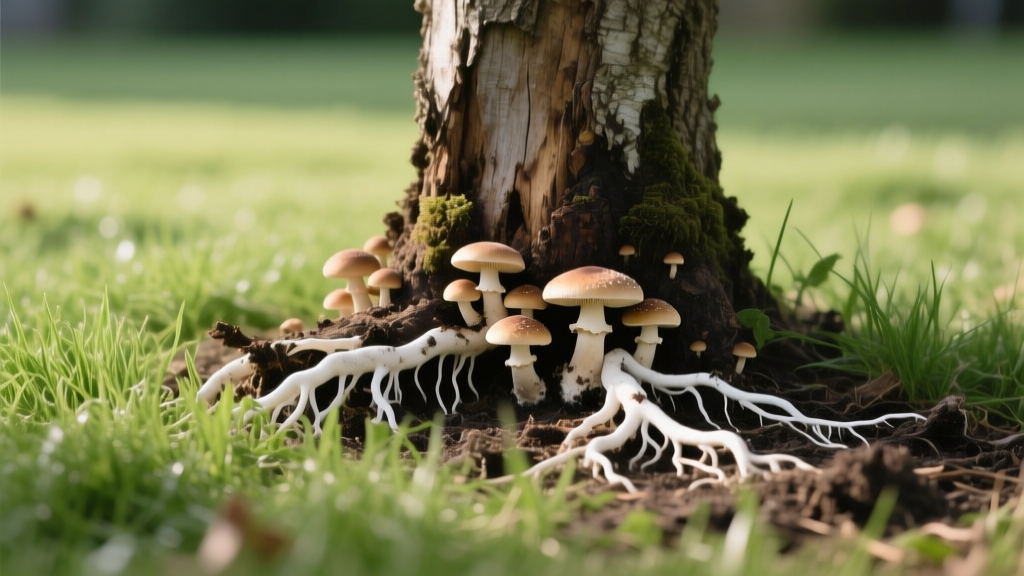
Armillaria Root Rot: When Lawn Fungus Attacks Trees
James MillerPublished
The Hidden Threat: When Lawn Disease Signals Tree Death
Homeowners and landscape professionals often spot mushrooms emerging from their turfgrass and assume they are dealing with a standard lawn disease or a harmless saprophytic fungus feeding on dead organic matter. However, when these fungal fruiting bodies appear in the drip line of a tree or directly at the root flare, they are frequently the visible symptom of a devastating and often fatal tree pathogen: Armillaria mellea, commonly known as Oak Root Fungus or Armillaria Root Rot.
Bridging the gap between lawn disease identification and advanced tree care is critical for landscape health. Armillaria does not discriminate; it destroys the structural integrity and vascular systems of hundreds of tree species while simultaneously manifesting as a fungal anomaly in the surrounding lawn. Understanding how to identify, manage, and treat this aggressive pathogen requires a dual approach that addresses both the turf environment and the tree's root system. According to the University of California Integrated Pest Management (UC IPM), Armillaria is one of the most destructive root diseases in the world, capable of killing both stressed and apparently healthy trees.
What is Armillaria Root Rot?
Armillaria root rot is caused by several species of fungi within the Armillaria genus. The pathogen survives in the soil and on dead wood for decades. It spreads primarily through rhizomorphs—dark, shoestring-like structures that grow through the soil, seeking out new, healthy roots to infect. Once the rhizomorphs make contact with a susceptible tree root, they penetrate the bark and colonize the cambium layer, effectively girdling the tree and cutting off the flow of water and nutrients.
While lawn diseases like brown patch or dollar spot are confined to the turfgrass canopy, Armillaria operates below the surface, using the lawn's root zone as a highway to reach the structural roots of your most valuable shade and ornamental trees.
Identifying the Pathogen: Lawn Symptoms vs. Tree Symptoms
Accurate identification is the first step in any integrated pest management (IPM) strategy. Because Armillaria affects both the soil ecosystem and the tree, you must look for symptoms in both zones.
Lawn and Turf Indicators
- Honey Mushrooms: The most obvious sign is the sudden appearance of clusters of tan to honey-colored mushrooms in the lawn, typically emerging after the first heavy autumn rains. These mushrooms often grow in rings or clusters near the base of infected trees.
- Mycelial Fans in Turf: If you peel back sections of dying turfgrass near a tree's drip line, you may find flat, white, fan-like sheets of mycelium beneath the soil surface, often accompanied by a strong, sweet mushroom odor.
- Localized Turf Decline: Patches of lawn that continually thin out, turn yellow, or die back despite proper fertilization and irrigation may be suffering from the same underlying fungal network that is attacking the adjacent tree.
Tree and Canopy Indicators
Above ground, the symptoms of Armillaria can mimic general environmental stress, making diagnosis tricky without inspecting the root flare. The Penn State Extension notes that above-ground symptoms are often the result of the root system's inability to uptake water. Look for:
- Canopy Dieback: Thinning foliage, undersized leaves, and premature autumn coloring or early leaf drop.
- Resin or Gum Exudation: Conifers and stone fruit trees may exude copious amounts of sap or gum at the soil line or on the lower trunk.
- Bark Sloughing: The bark at the base of the tree may become spongy, discolored, or easily pull away to reveal the white mycelial fans beneath.
- Structural Failure: Because the fungus causes a white rot in the heartwood, infected trees are highly susceptible to being blown over in storms, even if the canopy still looks relatively green.
How Common Lawn Care Practices Invite Root Rot
Armillaria is an opportunistic pathogen. While it can attack healthy trees, it thrives when trees are stressed by poor lawn and landscape maintenance practices. Ironically, many common lawn care routines inadvertently create the perfect environment for Oak Root Fungus to flourish.
The Dangers of Volcano Mulching
Piling mulch high against the trunk of a tree (volcano mulching) keeps the root flare constantly moist and deprived of oxygen. This stress weakens the tree's natural defense mechanisms and provides a dark, humid bridge for Armillaria rhizomorphs to access the trunk tissue above the soil line.
Over-Irrigation and Poor Drainage
Turfgrass requires consistent moisture, but overwatering your lawn to maintain a lush green appearance can saturate the deeper soil layers where tree roots reside. Soggy, poorly drained soils suffocate tree roots, making them highly susceptible to fungal invasion. If your lawn remains spongy for days after a rainstorm, your trees are at an elevated risk for root rot.
Soil Compaction from Heavy Equipment
Using heavy lawn rollers, driving tractors over the root zone, or allowing foot traffic to compact the soil around the tree's drip line reduces soil porosity. Compacted soil limits oxygen exchange, stressing the tree and inviting opportunistic pathogens like Armillaria to take hold.
Armillaria Treatment and Management Strategies
Once a tree is heavily infected with Armillaria, there is no chemical cure that will eradicate the fungus from the soil or save a dying tree. Management focuses on prolonging the life of mildly infected trees, preventing the spread to healthy plants, and modifying the lawn environment to discourage fungal growth.
| Strategy Category | Specific Action | Target Area | Efficacy | Estimated Cost |
|---|---|---|---|---|
| Cultural | Root Flare Excavation & Mulch Correction | Tree Base / Lawn Interface | High (Preventative & Early Stage) | $50 - $200 per tree |
| Biological | Trichoderma Soil Drench | Root Zone Soil | Moderate (Competitive Exclusion) | $30 - $80 per treatment |
| Chemical | Phosphite Trunk Injections | Tree Vascular System | Low-Moderate (Suppressant Only) | $100 - $300 per tree |
| Mechanical | Deep Root Barriers | Soil Between Trees | High (Prevents Rhizomorph Spread) | $15 - $25 per linear foot |
Cultural Controls: Sanitation and Water Management
The most effective way to manage Armillaria is to remove the food source. If a tree dies from Oak Root Fungus, the stump and as much of the root system as possible must be ground out or excavated. Leaving the stump in the lawn allows the fungus to survive for years, sending rhizomorphs out to infect neighboring trees and turf areas. Furthermore, adjusting your lawn irrigation system to avoid oversaturating the tree's root zone is vital. Utilize smart irrigation controllers and soil moisture sensors to ensure deep, infrequent watering rather than daily shallow sprinkling.
Biological Controls: Harnessing Beneficial Fungi
Recent advancements in soil science have highlighted the use of beneficial fungi, such as Trichoderma harzianum, to combat Armillaria. When applied as a soil drench to the lawn and tree root zone, Trichoderma acts as a mycoparasite, colonizing the soil and competing with Armillaria for space and nutrients. While it will not cure a severely infected tree, it can help protect surrounding healthy trees and improve overall soil biology.
Chemical Interventions: Phosphorous Acid
While traditional contact fungicides applied to the lawn are entirely ineffective against soil-borne root rots, systemic phosphites (such as Agri-Fos or phosphorous acid) can be injected directly into the trunk of high-value, mildly infected trees. Phosphites do not kill the Armillaria fungus; instead, they stimulate the tree's natural defense mechanisms and slow the progression of the disease. This treatment must be repeated annually and should only be performed by a certified arborist.
Preventing the Spread to Healthy Trees
If Armillaria has been identified in your lawn, protecting adjacent, uninfected trees becomes the top priority. The pathogen spreads through root-to-root contact and rhizomorph growth. To halt this subterranean march, landscape professionals often install heavy-duty, high-density polyethylene (HDPE) root barriers. By trenching a line between the infected stump or tree and the healthy tree, and inserting a barrier at least 18 to 24 inches deep, you can physically block the shoestrings from reaching new hosts.
Expert Tip: When replanting in an area where a tree has succumbed to Armillaria, avoid planting highly susceptible species like oak, birch, and citrus. Instead, opt for resistant species such as ginkgo, crape myrtle, or certain species of pine, and ensure the new planting site has been thoroughly amended for optimal drainage.
Seasonal Care Schedule for Armillaria Monitoring
Integrating Armillaria monitoring into your seasonal lawn and tree care schedule ensures early detection and timely intervention.
- Spring: Inspect the base of all trees as the lawn begins to green up. Look for signs of gummosis, bark splitting, or delayed bud break. Ensure mulch rings are pulled back at least 6 inches from the trunk.
- Summer: Monitor soil moisture levels. Adjust lawn sprinkler heads to avoid directly hitting tree trunks. Watch for premature canopy thinning or yellowing leaves during peak heat.
- Autumn: This is the prime season for mushroom fruiting. After heavy rains, walk the lawn and inspect the drip lines of all trees for honey-colored mushrooms. Document their locations for future treatment planning.
- Winter: Perform structural pruning on trees to reduce wind resistance, minimizing the risk of a compromised, rot-weakened tree blowing over in winter storms. Remove and destroy any dead wood or stumps from the property.
Conclusion
Armillaria root rot is a stark reminder that lawn health and tree health are inextricably linked. The mushrooms appearing in your turfgrass are not merely a cosmetic lawn disease; they are a warning flare indicating a severe threat to your landscape's structural trees. By understanding the biology of Oak Root Fungus, correcting harmful lawn care practices like volcano mulching and over-irrigation, and implementing proactive cultural and biological barriers, you can manage this aggressive pathogen. For definitive guidance and localized advice, always consult resources like the University of Minnesota Extension or hire a certified arborist to conduct a thorough root collar excavation and health assessment.