
Landscaping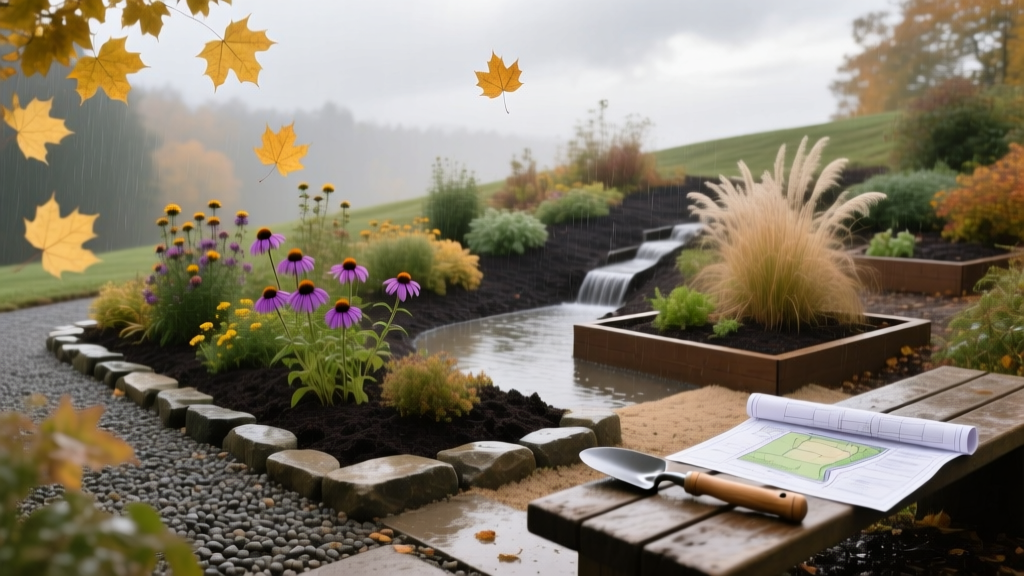
2026 Fall Rain Garden Guide: Stormwater Management Tips
Mike RodriguezPublished
Why Fall 2026 is the Ultimate Season for Rain Garden Installation
As homeowners finalize their fall lawn care routines, one critical landscaping project often gets overlooked: stormwater management. With climate models in 2026 indicating heavier, more concentrated autumn downpours across many regions, managing yard runoff is no longer just an environmental ideal—it is a practical necessity for protecting your home's foundation and preventing lawn erosion. A rain garden is a shallow, planted depression that captures and filters stormwater, allowing it to slowly percolate into the ground rather than overwhelming municipal sewer systems or washing away your carefully applied fall fertilizer.
While spring is a popular time for landscaping, autumn is actually the superior season for installing a rain garden. The cooler air temperatures reduce transplant shock, and the warm autumn soil encourages vigorous root growth. Furthermore, natural fall rains provide consistent moisture, reducing the need for manual irrigation while your new native plants establish themselves before the winter freeze. According to the EPA's Soak Up the Rain initiative, a properly designed rain garden can capture up to 90% of the pollutants typically carried by residential stormwater runoff.
Step 1: Site Selection and the Percolation Test
Before you start digging, you must identify the optimal location. A rain garden should be situated in a naturally low-lying area of your yard where water tends to pool, or at the base of a downspout. However, to protect your home's structural integrity, the garden must be located at least 10 feet away from your foundation, 5 feet from property lines, and away from septic systems.
Once you have selected a site, you must perform a percolation (perk) test to ensure your native soil can drain adequately. Dig a test hole about 12 inches deep and 6 inches wide. Fill it with water and let it drain completely to saturate the soil. Then, fill it a second time and measure how long it takes for the water level to drop. If the water drains at a rate of at least 1 inch per hour, your site is viable. If it takes longer than 24 hours to drain completely, you will need to amend the soil heavily or consider an alternative drainage solution, as standing water for more than 48 hours can create mosquito breeding grounds.
Step 2: Excavation and 2026 Soil Mix Economics
A standard residential rain garden is typically excavated to a depth of 6 to 8 inches, with gently sloping sides to prevent erosion. The excavated soil can be repurposed to build a berm on the downhill side of the garden, which helps contain the water during heavy storms.
Because native clay soils often drain too slowly, you must replace or heavily amend the soil with a specialized bioretention mix. The ideal ratio is 60% coarse sand, 20% topsoil, and 20% organic compost. This mixture ensures rapid drainage while providing enough organic matter to sustain plant life and filter pollutants. In 2026, sourcing this specific bioretention mix from local landscape suppliers typically costs between $45 and $65 per cubic yard. For a standard 150-square-foot rain garden dug to a depth of 8 inches, you will need approximately 4 cubic yards of soil, putting your material cost for the soil amendment around $180 to $260.
Step 3: Fall Plant Selection for Stormwater Resilience
Choosing the right plants is critical for the long-term success of your rain garden. You need species that can tolerate both temporary inundation (when the garden is full of water) and periods of drought (during late summer or dry winter spells). Fall planting gives these perennials and shrubs a head start, allowing them to develop deep, resilient root systems over the autumn and early winter months.
The University of Minnesota Extension highly recommends utilizing native plants, as their root systems can reach up to 10 feet deep, creating natural channels in the soil that drastically improve water infiltration. Below is a curated list of top-performing native plants ideal for autumn installation in a rain garden environment.
| Common Name | Botanical Name | Fall Planting Advantage | Stormwater Role |
|---|---|---|---|
| Swamp Milkweed | Asclepias incarnata | Establishes deep taproots before the winter freeze | Excellent water uptake; supports local pollinators |
| Blue Flag Iris | Iris versicolor | Rhizomes settle securely in cool, moist autumn soil | Thrives in the deepest, wettest center of the garden |
| New England Aster | Symphyotrichum novae-angliae | Can be planted immediately after its late-fall bloom | Stabilizes soil on the sloped edges of the rain garden |
| Red Osier Dogwood | Cornus sericea | Transplants easily in dormancy; provides winter color | Shrub-level transpiration pulls massive amounts of water |
| Joe-Pye Weed | Eutrochium purpureum | Root crowns expand rapidly in cool autumn temperatures | Tall structure slows down rushing water from downspouts |
When arranging your plants, place the most moisture-tolerant species (like Blue Flag Iris) in the deepest center of the garden, and position drought-tolerant species (like Asters) on the higher, drier berms. The National Wildlife Federation notes that grouping native plants in clusters of three or five not only creates a more natural aesthetic but also maximizes their collective stormwater filtration capabilities.
Step 4: Mulching and Winterization
Mulch is non-negotiable for a newly installed rain garden. It suppresses weeds, retains moisture, and protects the soil surface from the erosive force of falling rain. However, you must choose the right type of mulch. Avoid lightweight materials like pine bark or straw, as these will float away during the first heavy storm, taking your topsoil with them.
Instead, use a 2 to 3-inch layer of shredded hardwood mulch. The interlocking nature of shredded hardwood allows it to mat together, staying firmly in place even when submerged. As you prepare your yard for winter, ensure the rain garden is clear of debris. While it might be tempting to dump your raked autumn leaves into the garden bed to decompose, this is a critical mistake. A thick layer of wet leaves will smother your newly planted perennials, block sunlight, and create an impermeable mat that prevents stormwater from entering the soil.
Step 5: Integrating the Rain Garden with Fall Lawn Care
Installing a rain garden should complement your broader fall lawn care strategy, not disrupt it. If you are aerating and overseeding your lawn in the autumn, be mindful of how water flows across your newly graded yard. Core aeration is highly beneficial for the surrounding lawn, as it reduces soil compaction and increases the overall permeability of your turf, reducing the sheer volume of water that the rain garden needs to handle.
Furthermore, when applying your late-fall winterizer fertilizer to your lawn, maintain a strict buffer zone. Do not apply synthetic fertilizers within 15 feet of the rain garden. The entire purpose of the bioretention area is to filter out excess nutrients like nitrogen and phosphorus before they reach local waterways. Overloading the garden with fresh lawn fertilizer defeats its ecological purpose and can lead to aggressive weed growth within the garden bed.
Final Thoughts for the 2026 Landscaping Season
A rain garden is a dynamic, living piece of landscaping infrastructure. By taking advantage of the cool, moist conditions of autumn, you are setting your stormwater management system up for decades of success. Not only will you protect your property from the increasingly intense fall storms of 2026, but you will also create a beautiful, low-maintenance habitat that supports local wildlife and keeps your community's waterways clean.

