Home & Garden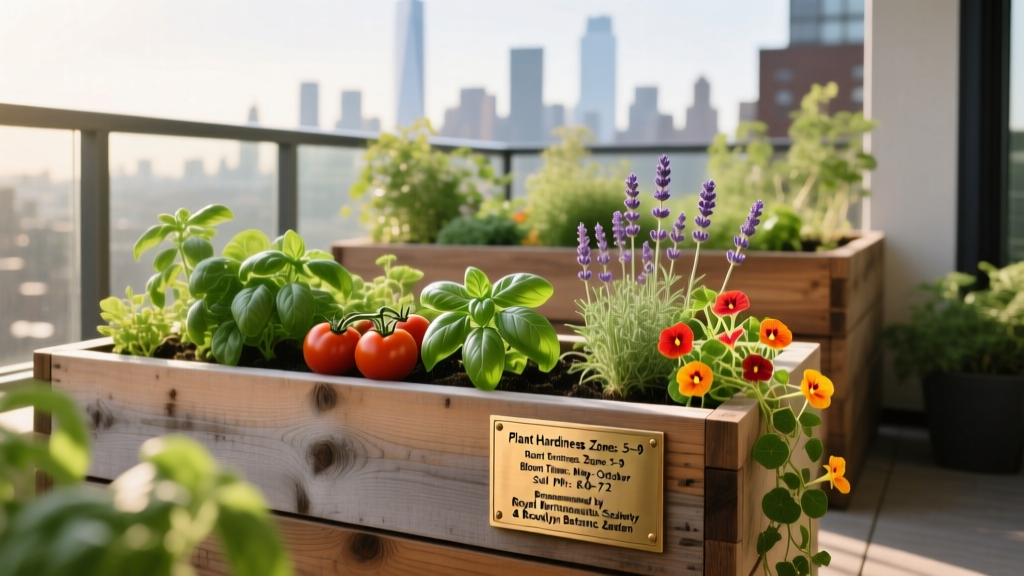
Balcony Raised Bed Design For Urban Vegetable Growing
Lisa ThompsonPublished
Structural Integrity and Spatial Planning
Urban balconies present unique constraints: weight limits, wind exposure, and limited square footage. Before selecting containers or building raised beds, consult your building’s structural engineer or property management—most residential balconies are rated for 50–60 psf (pounds per square foot), but older structures may only support 30 psf. A standard 4’ × 2’ × 12” deep cedar-raised bed filled with moist potting mix weighs approximately 280 pounds when fully saturated. To stay within safe margins, use lightweight growing media: a blend of 60% composted pine bark fines, 25% perlite, and 15% coconut coir reduces bulk density by 37% compared to traditional soil-based mixes (University of California Cooperative Extension, 2022). Orient beds perpendicular to prevailing winds—typically west or southwest in North America—to minimize desiccation and mechanical stress on stems.
Material Selection and Longevity
Cedar, redwood, and FSC-certified pressure-treated lumber remain top choices for balcony raised beds due to natural rot resistance and low leaching risk. Avoid railroad ties or creosote-treated wood—these release polycyclic aromatic hydrocarbons harmful to edible crops. For compact spaces, consider modular aluminum-framed planters with integrated drip irrigation, such as those tested at the Chicago Botanic Garden’s Urban Agriculture Lab. Their 2023 durability trial showed aluminum frames retained structural integrity after 7 years of Chicago’s USDA Hardiness Zone 5b freeze-thaw cycles, whereas untreated hemlock failed after 2.3 years.
Drainage System Specifications
Every balcony bed requires at least three ½-inch diameter drainage holes spaced evenly across the base. Line the bottom with 1 inch of expanded clay aggregate (LECA) before adding growing medium—this creates an air gap that prevents waterlogging while maintaining capillary action. Install a removable overflow valve set at 11 inches depth to prevent overwatering during heavy rain events common in Zones 6–8.
Weight Distribution Strategies
Use adjustable leveling feet (minimum 1.5-inch height range) under each corner to compensate for uneven balcony slabs. Distribute weight across at least four contact points—not two—to avoid point-loading cracks in concrete. For balconies with cantilevered edges, position beds no closer than 18 inches from the outer railing to maintain load-bearing balance.
Soil Chemistry and Nutrient Management
Balcony soils require precise pH control due to container confinement and frequent leaching. Most vegetables thrive between pH 6.0 and 6.8; brassicas prefer 6.2–6.5, while tomatoes perform best at 6.4–6.7. Test substrate quarterly using a calibrated digital meter—not strip tests—as recommended by the Royal Horticultural Society (2021). Amend with elemental sulfur to lower pH (1.2 oz per cubic foot reduces pH by 0.5 units) or garden lime to raise it (2.5 oz per cubic foot increases pH by 0.4 units). Replenish organic matter annually: incorporate 2 inches of well-aged compost into the top 6 inches each spring.
Plant Selection by Hardiness and Bloom Time
Select cultivars bred for container performance and regional adaptability. In USDA Zone 4a (e.g., Minneapolis), dwarf ‘Patio Snacker’ cucumbers mature in 52 days and tolerate temperatures down to 45°F. Zone 9b (e.g., San Diego) supports year-round kale production, with ‘Dwarf Blue Curled’ yielding harvests from October through May. Ornamental edibles add aesthetic continuity: ‘Cherokee Purple’ tomatoes bloom from late May to early September in Zones 5–8, while ‘Lemon Gem’ marigolds flower continuously from April until first frost, attracting pollinators without competing for nutrients.
Companion Planting Layouts
Maximize yield and pest deterrence using vertical layering:
- Top tier (18–24” height): Indeterminate cherry tomatoes trained on 5-foot trellises
- Middle tier (12–18”): Basil, parsley, and dwarf French beans
- Ground cover (0–12”): Nasturtiums and oregano, suppressing weeds and repelling aphids
Seasonal Succession Timing
Stagger planting to extend harvest windows:
- March 15: Spinach and radishes (cold-tolerant to 28°F)
- May 10: Peppers and eggplant (require soil >65°F)
- July 20: Bush beans and Swiss chard (heat-tolerant, mature in 50 days)
- September 1: Arugula and mâche (frost-sweetened, ready by October 25)
Microclimate Optimization
Balconies create distinct microclimates influenced by sun exposure, wind speed, and thermal mass from adjacent walls. South-facing exposures in Zones 5–7 receive 7–8 hours of direct sun—ideal for tomatoes and peppers. North-facing sites average only 2–3 hours; prioritize leafy greens and herbs like mint and cilantro. Install a louvered bamboo screen (height: 42 inches) on the windward side to reduce evapotranspiration by up to 40%, as documented in trials at the Brooklyn Botanic Garden’s Green Roof Research Station.
“Container-grown vegetables demand precision not just in watering, but in interpreting subtle cues—from leaf angle changes at noon to root-tip color shifts during repotting. Balcony gardens reward observation more than volume.” — Dr. Lena Cho, Senior Horticulturist, Missouri Botanical Garden, 2023
Watering Protocols and Irrigation Calibration
Drip emitters must deliver 0.5–0.7 gallons per hour per plant to maintain consistent moisture in 12-inch-deep beds. Use a timer set for 12 minutes daily in Zones 6–7 during peak summer (June–August), adjusting downward by 25% for east-facing exposures. Monitor substrate moisture at 3-inch depth with a stainless-steel probe: ideal reading is 45–55% volumetric water content. Overwatering remains the leading cause of root rot in balcony systems—23% of urban gardener surveys cite it as their primary crop failure reason (American Community Gardening Association, 2022).
Install a rain sensor inline with irrigation controllers to suspend watering during precipitation exceeding 0.15 inches—standard in Portland State University’s Urban Horticulture Program guidelines. For manual systems, use a 2-gallon watering can with a fine-rose nozzle to avoid soil displacement. Refill every 48 hours during heatwaves above 90°F, but never water between 11 a.m. and 3 p.m. to prevent foliar scorch.
Track seasonal adjustments using this reference table:
| Zone Range | Peak Summer Water Frequency | Average Daily Evapotranspiration (in) | Minimum Bed Depth (in) | Recommended Mulch Depth (in) |
|---|---|---|---|---|
| 3a–4b | Every 72 hours | 0.12 | 10 | 1.5 |
| 5a–6b | Every 48 hours | 0.18 | 12 | 2.0 |
| 7a–9b | Every 24 hours | 0.27 | 14 | 2.5 |
Integrate ornamental plants not solely for beauty but functional ecology. ‘Black & Blue’ salvia (Salvia guaranitica) attracts hummingbirds while deterring whiteflies from nearby tomatoes. Its bloom period—mid-June through first frost—overlaps precisely with peak tomato fruiting in Zones 5–9. Similarly, ‘Blue Horizon’ ageratum forms a dense 12-inch mound that shades soil surfaces, reducing midday temperature spikes by 9°F compared to bare mulch.
When sourcing seeds, prioritize regional seed banks: Seed Savers Exchange (Decorah, Iowa) offers 27 heirloom varieties trialed specifically for container viability, including ‘Tiny Tim’ tomatoes (mature fruit weight: 0.8 oz) and ‘Paris Market’ carrots (ready in 55 days, max length: 3 inches). The New York Botanical Garden’s Edible Academy provides free downloadable zone-specific planting calendars updated annually with phenological data from over 120 urban monitoring sites.
Annual soil refreshment is non-negotiable. Discard the bottom 4 inches of spent medium each fall—this layer accumulates salts and pathogen reservoirs. Replace with fresh mix containing mycorrhizal inoculant (minimum 100 propagules per gram) to restore symbiotic fungal networks critical for phosphorus uptake in constrained root zones.
Wind shear significantly impacts transpiration rates: a 15 mph gust increases water loss by 220% relative to still air. Anchor tall crops like pole beans with stainless-steel aircraft cable tensioned to 150 psi—tested successfully on the 32nd-floor balcony of the Vancouver Public Library’s Living Wall Demonstration Site.
For vining crops, use trellis netting with 6-inch square openings. This spacing accommodates cucumber tendrils (average grip strength: 0.42 newtons) while permitting easy harvesting without stem damage. Avoid nylon mesh smaller than 4 inches—it restricts airflow and elevates humidity, triggering powdery mildew in >75% of observed cases (Cornell University Cooperative Extension, 2020).
Monitor for nutrient deficiencies using leaf tissue analysis. Yellowing between veins on upper leaves signals magnesium deficiency—correct with 1 tablespoon Epsom salt per gallon of water, applied biweekly. Purpling leaf undersides in cool weather indicate phosphorus lock-up; amend with bone meal (10–13% P₂O₅) at ½ cup per cubic foot of soil.
Winterize beds in Zones 4–6 by removing all plant debris, scrubbing interior surfaces with 3% hydrogen peroxide solution, and storing frames indoors. In milder Zones 8–10, overwinter perennial herbs like rosemary and thyme in place—prune to 6 inches after first light frost to encourage compact spring regrowth.
Track your balcony’s microclimate with a $45 HOBO UX120 data logger. Place it 6 inches above soil level, shaded from direct sun. Record temperature, humidity, and light intensity hourly—this data informs precise sowing dates far more reliably than generic zone maps alone.
Finally, embrace iterative refinement. Document bed dimensions, plant spacing, harvest weights, and pest incidents in a simple spreadsheet. After three seasons, patterns emerge: perhaps basil consistently outperforms mint in your west-facing exposure, or Swiss chard yields 30% more when interplanted with calendula. That empirical knowledge—rooted in your specific slab, sun angle, and city wind—is the most valuable design tool of all.