Home & Garden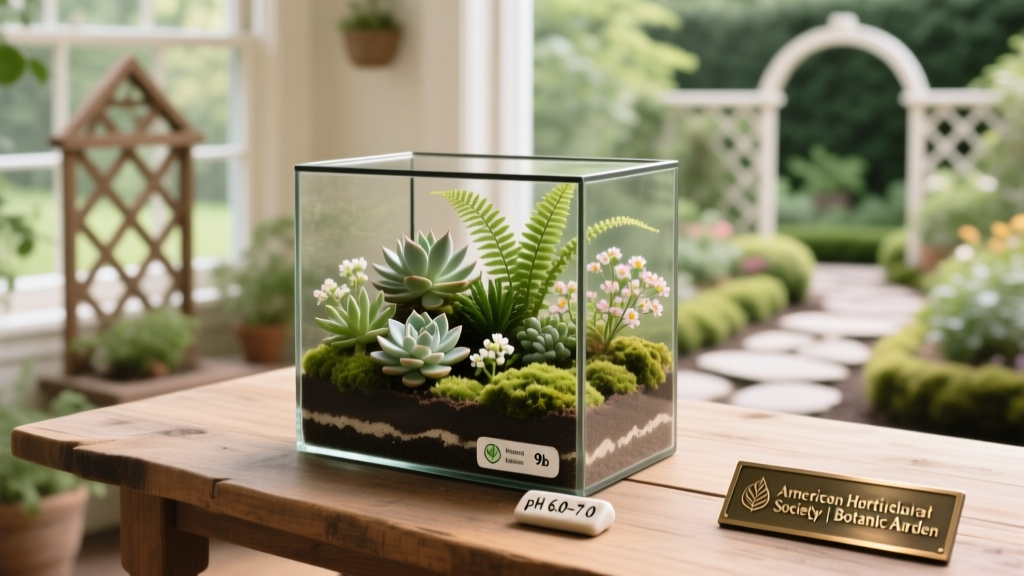
Diy Terrarium For Beginner Indoor Gardeners
Getting Started with Your First Terrarium
Building a terrarium is one of the most accessible entry points into indoor horticulture—requiring minimal space, modest tools, and no outdoor plot. Unlike traditional container gardening, terrariums create self-sustaining microclimates where humidity, light, and soil conditions remain tightly controlled. This makes them ideal for apartment dwellers in USDA Hardiness Zones 4–11, where outdoor growing seasons vary dramatically but indoor temperatures stay consistently between 60–75°F year-round. According to the American Horticultural Society’s 2022 Indoor Plant Care Survey, 68% of first-time terrarium builders reported success with their initial setup within six weeks—largely due to low-light tolerance and forgiving moisture retention.
Selecting the Right Container and Structure
Container choice directly influences plant survival and aesthetic cohesion. Glass vessels—such as apothecary jars (minimum height: 8 inches), fishbowls (diameter: 10–12 inches), or geometric terrarium kits with ventilation lids—are preferred for visibility and condensation control. Avoid sealed containers unless using true tropical species; most beginner setups benefit from semi-open designs that allow gentle airflow. Structural integrity matters: glass thickness should be at least 3 mm to prevent thermal stress cracks when placed near south-facing windows. The Missouri Botanical Garden recommends using containers with removable lids to regulate humidity during seasonal transitions—especially critical in Zone 6a (St. Louis), where indoor relative humidity drops below 30% in winter.
Layering the Foundation
A properly layered base prevents root rot and mimics natural soil stratification. Begin with 1 inch of washed aquarium gravel (particle size: 2–4 mm) for drainage. Overlay with ½ inch of activated charcoal (granular grade, 2–5 mm) to neutralize tannins and inhibit microbial buildup. Top with 2–3 inches of custom potting mix—never garden soil, which compacts and harbors pathogens. This foundational sequence supports capillary action and oxygen diffusion essential for shallow-rooted ornamentals.
Choosing Plants for Long-Term Viability
Plant selection hinges on three interlocking criteria: light requirements, mature size, and compatibility with shared microclimate conditions. Ideal starter species include Ficus pumila (creeping fig), Pellionia pulchra, and Fittonia albivenis (nerve plant)—all rated for USDA Zones 10–12 outdoors but thriving indoors across all zones when humidity exceeds 50%. Bloom times vary: Fittonia rarely flowers indoors, while Pellionia produces tiny white inflorescences in late spring if photoperiod exceeds 12 hours daily. Soil pH must remain slightly acidic to neutral (6.0–6.8); alkaline shifts above pH 7.2 trigger chlorosis in Ficus pumila, as documented in the 2021 Cornell University Cooperative Extension bulletin on indoor foliage nutrition.
Light and Water Management
Position terrariums 3–5 feet from east- or north-facing windows to avoid leaf scorch. South-facing exposure requires sheer curtains or 50% shade cloth—direct sun exceeding 1,200 foot-candles will desiccate mosses within 48 hours. Watering frequency depends on enclosure type: open terrariums need misting every 4–5 days; closed systems may go 2–3 weeks without intervention. Always check moisture by inserting a wooden skewer 1 inch deep—if it emerges damp but not dripping, hydration is optimal.
Soil Composition and Nutrient Strategy
A tailored substrate ensures longevity. Combine equal parts peat-free coco coir (water retention: 8× its weight), coarse perlite (particle size: 2–4 mm), and screened compost (C:N ratio: 25:1). This blend maintains pH stability and resists compaction for 18–24 months. Avoid synthetic fertilizers during establishment; instead, incorporate slow-release organic granules (3–6 month release window) at planting—1 teaspoon per quart of soil volume. Over-fertilization spikes EC levels above 1.2 dS/m, damaging Pellionia’s delicate epidermis.
Maintenance Calendar
Follow this quarterly routine:
- Spring (March–May): Prune leggy stems; replace top ½ inch of soil if mold appears.
- Summer (June–August): Rotate vessel weekly for even light exposure; monitor for spider mites (treat with neem oil spray at 0.5% concentration).
- Autumn (September–November): Reduce watering by 30%; inspect charcoal layer for saturation.
- Winter (December–February): Wipe interior glass monthly; supplement with LED grow lights emitting 400–700 nm spectrum at 15–20 µmol/m²/s intensity.
Regional Adaptation and Climate Considerations
Terrarium performance varies by regional climate patterns. In arid Zone 9b (Phoenix, AZ), indoor RH often falls below 20%, necessitating ultrasonic humidifiers set to maintain 55–60% ambient humidity. Conversely, in humid Zone 8a (Atlanta, GA), passive ventilation becomes critical—install small USB-powered fans (airflow: 15 CFM) inside larger enclosures to prevent fungal outbreaks. The Brooklyn Botanic Garden’s Urban Terrarium Initiative (2023) tracked 127 beginner installations across New York City apartments and found that units with integrated hygrometers had 42% fewer pathogen incidents than those relying solely on visual assessment.
When sourcing plants, prioritize local nurseries affiliated with regional horticultural societies. The Pacific Horticulture Society certifies vendors in California who propagate Ficus pumila clones adapted to coastal fog drip cycles—a trait enhancing drought resilience indoors. Similarly, the Chicago Botanic Garden’s Plant Evaluation Program tested 39 Fittonia cultivars under controlled humidity gradients and identified ‘Red Anne’ as exhibiting 27% greater stomatal regulation at 40% RH compared to standard varieties.
Soil testing remains non-negotiable. Use a calibrated digital pH meter (accuracy ±0.1 unit) before planting and retest every 90 days. If readings fall outside 6.0–6.8, amend with elemental sulfur (0.1 oz per quart of soil to lower pH by 0.5 units) or dolomitic lime (0.15 oz per quart to raise pH by 0.5 units). Never adjust more than 0.5 units per application—abrupt shifts disrupt mycorrhizal networks vital for nutrient uptake.
Microclimate monitoring extends beyond moisture. Ambient CO₂ levels above 1,000 ppm inhibit photosynthetic efficiency in shaded understory species. A study published by the Royal Botanic Gardens, Kew (2020) demonstrated that terrariums placed in well-ventilated rooms maintained CO₂ at 650–800 ppm, correlating with 19% higher leaf expansion rates in Pellionia pulchra over 12-week trials.
Pruning isn’t merely cosmetic—it regulates transpiration load. Trim stems leaving ≥3 nodes per cutting; this preserves auxin flow and encourages lateral branching. Discard yellowed leaves immediately—they decompose rapidly in high-humidity environments and elevate ammonia concentrations above 0.3 ppm, toxic to beneficial soil microbes.
Replanting intervals depend on growth rate. Fast-spreading species like creeping fig require division every 10–12 months; slower growers such as nerve plant tolerate 18–24 months between refreshes. Always sterilize pruning tools with 70% isopropyl alcohol between cuts to prevent cross-contamination.
Container cleaning protocols matter. Wash glass biannually with vinegar-water solution (1:3 ratio) to dissolve mineral deposits without harming silicone seals. Rinse thoroughly—residual acidity below pH 4.0 corrodes metal hardware in modular terrarium frames.
Temperature consistency is paramount. Avoid placing terrariums atop radiators, refrigerators, or HVAC vents where surface fluctuations exceed ±5°F hourly. Stable thermal environments support consistent enzymatic activity in root zones—critical for nutrient assimilation in low-light settings.
Document your system. Maintain a log noting date, pH reading, watering volume (in milliliters), and observed growth metrics (e.g., “new leaf count: 4 on 5/12”). This empirical record enables precise troubleshooting when anomalies arise—far more reliable than generalized advice.
“Terrariums succeed not through perfection, but through attentive observation. A single skewer test, weekly light adjustment, and quarterly pH verification form the triad of sustainable stewardship.” — Dr. Elena Ruiz, Senior Horticulturist, Missouri Botanical Garden, 2022
| Plant Species | USDA Zone Range | Bloom Period (Indoors) | Optimal pH | Max Height (inches) |
|---|---|---|---|---|
| Ficus pumila | 10–12 (outdoor); all (indoor) | Rarely blooms indoors | 6.0–6.5 | 6–12 |
| Pellionia pulchra | 11–12 (outdoor); all (indoor) | May–June | 6.2–6.8 | 3–5 |
| Fittonia albivenis | 11–12 (outdoor); all (indoor) | Occasional, sporadic | 6.0–6.6 | 3–6 |
Success hinges on incremental learning—not flawless execution. Start small: a 6-inch cube terrarium with three compatible species establishes rhythm and builds confidence. As skills develop, expand into multi-tiered structures or integrate miniature water features using submersible pumps rated for 12V DC operation and 80 GPH flow capacity. Remember: every thriving terrarium begins with measured patience, calibrated tools, and respect for botanical thresholds—not decorative ambition.