Home & Garden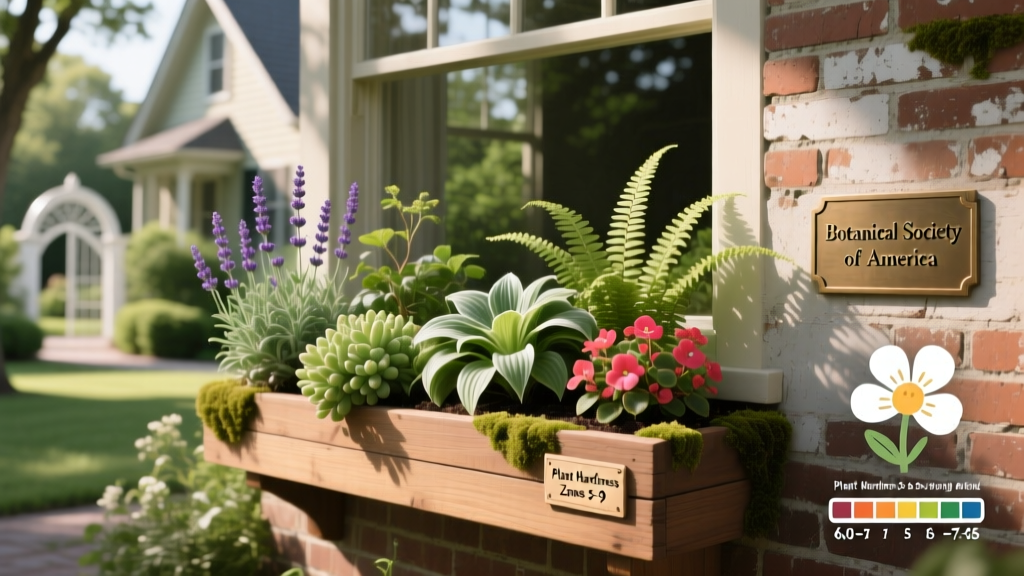
Window Box Planting Guide For Shade And Sun Locations
Understanding Light Exposure in Window Box Microclimates
Window boxes function as miniature gardens constrained by vertical architecture, airflow patterns, and reflected heat—factors that dramatically alter light intensity and duration compared to ground-level beds. A south-facing window box in USDA Hardiness Zone 6b (e.g., Chicago) receives up to 8 hours of direct sun daily, with surface temperatures regularly exceeding 110°F in July. In contrast, a north-facing box in the same zone averages only 2–3 hours of indirect light and remains 15–20°F cooler year-round. East- and west-facing exposures deliver 4–6 hours of light but differ critically: east-facing boxes experience gentle morning sun and higher humidity, while west-facing ones endure intense afternoon heat and rapid soil drying. The Royal Horticultural Society (RHS, 2022) emphasizes that “microclimate awareness—not just compass direction—is essential for sustained success in container horticulture.”
Selecting Plants for Full-Sun Window Boxes
Full-sun window boxes demand species tolerant of heat stress, drought, and shallow root zones. Ideal candidates possess compact growth habits (under 18 inches tall), high heat tolerance, and consistent bloom cycles. Verbena bonariensis thrives in Zones 7–11, producing lavender-purple flower clusters from late May through first frost. Its pH preference ranges from 5.8 to 6.2—slightly acidic—and it requires at least 6 inches of well-draining potting mix. Calibrachoa ‘Million Bells’ performs reliably across Zones 9–11 as an annual in cooler zones; it blooms continuously from mid-April until hard freeze, provided soil pH remains between 5.5 and 6.0.
Soil and Drainage Requirements
Container soils must balance water retention and aeration. Standard garden soil compacts rapidly in confined spaces, suffocating roots and promoting fungal pathogens. A recommended blend consists of 40% composted pine bark fines, 30% peat-free coir, 20% perlite, and 10% worm castings. This mixture maintains optimal porosity while buffering pH fluctuations. All full-sun window boxes require drainage holes spaced no more than 4 inches apart—minimum diameter of ½ inch—to prevent waterlogging during summer thunderstorms.
Shade-Tolerant Species for North- and East-Facing Boxes
Shade-adapted plants prioritize foliage texture and subtle floral interest over bold color. Hosta ‘Patriot’ (Zones 3–9) offers striking variegated leaves and lavender spikes in early July; it prefers pH 6.0–7.5 and tolerates dry shade better than most hostas when mulched with shredded hardwood. Ferns such as Polystichum acrostichoides (Christmas fern, Zones 3–9) maintain evergreen vigor with minimal irrigation once established. Its ideal pH range is 4.5–6.0, and it requires a minimum soil depth of 6 inches to accommodate its rhizomatous root system.
Structural Considerations for Long-Term Stability
Mounting hardware must support both plant weight and saturated soil mass. A standard 36-inch wooden window box filled with damp planting medium weighs approximately 45 pounds—nearly double its dry weight. The Brooklyn Botanic Garden recommends lag bolts rated for outdoor use, embedded at least 2.5 inches into structural framing, not just brick mortar joints. Brackets should be spaced no more than 24 inches apart to prevent sagging or detachment under wind load. For historic buildings like those in Boston’s Beacon Hill neighborhood, consult local preservation guidelines before drilling.
Seasonal Rotation Strategies Across Hardiness Zones
Succession planting extends visual interest and prevents nutrient depletion. In Zone 5 (e.g., Minneapolis), begin with cool-season pansies (Viola × wittrockiana) planted in early April; they bloom until mid-June when heat-tolerant petunias replace them. By early September, switch to ornamental kale (Brassica oleracea var. acephala) and dwarf conifers like Chamaecyparis obtusa ‘Nana Gracilis’, which withstand temperatures down to –20°F. In Zone 10a (San Diego), where frost is rare, rotate between spring-blooming Diascia, summer-flowering Lantana camara, and fall-blooming Salvia leucantha—all requiring pH 6.0–6.8.
Watering Protocols and Moisture Monitoring
Overwatering remains the leading cause of failure in window boxes. Soil moisture sensors placed 2 inches deep register accurate readings only if calibrated to container-specific media. Research from the Missouri Botanical Garden (2021) shows that containers exposed to full sun lose 0.75 gallons of water per square foot per day during 90°F+ weather—more than double the evaporation rate in shaded locations. Watering frequency should follow this rule: check soil at finger-depth; water only when dry to the second knuckle. Morning application reduces foliar disease risk by allowing leaf surfaces to dry before evening dew forms.
Regional Plant Recommendations
Regional adaptation ensures resilience. In the Pacific Northwest (Zones 8–9), Heuchera ‘Palace Purple’ delivers reliable foliage contrast and blooms June–August; it thrives at pH 6.0–6.5 and resists slug pressure better than green-leaved cultivars. In the Southeast (Zones 8b–10a), Pentas lanceolata provides nectar for hummingbirds and butterflies from April through November, requiring pH 5.5–6.2 and consistent moisture. For the Upper Midwest (Zones 4–5), native Carex vulpinoidea (fox sedge) adds architectural grass-like form and tolerates periodic flooding—ideal for rain-prone window boxes.
- Minimum soil depth for trailing petunias: 6 inches
- Optimal spacing for Calibrachoa in 36-inch box: 4 plants
- Average root temperature increase in south-facing box vs. ambient air: +12°F
- Recommended maximum container weight per linear foot: 18 pounds
- Soil pH tolerance range for Hosta ‘Patriot’: 6.0–7.5
“Container-grown plants are not simply scaled-down versions of landscape specimens—they demand distinct soil physics, hydration timing, and structural support. Ignoring these differences guarantees seasonal disappointment.” — Chicago Botanic Garden, Urban Container Gardening Handbook, 2023
Maintenance Calendar for Year-Round Performance
Monthly attention prevents decline. In March, refresh top 2 inches of soil and apply slow-release fertilizer (14-14-14 NPK). April through June require biweekly foliar feeding for flowering annuals using fish emulsion diluted at 1:4 ratio. July and August demand daily inspection for spider mites on undersides of Coleus leaves—a common issue in hot, dry microclimates. September involves pruning back leggy stems by one-third to encourage bushy regrowth. October calls for removing spent annuals and incorporating compost into remaining soil before winterizing.
Winter protection varies by zone. In Zone 6 (Philadelphia), wrap boxes in burlap and insulate with straw mulch to protect perennial roots from freeze-thaw cycles. In Zone 9 (Austin), many perennials remain active year-round; reduce watering to once weekly and avoid nitrogen fertilizers after October.
Soil testing every 18 months ensures long-term viability. The University of Vermont Extension’s Soil Testing Lab reports that 73% of sampled window boxes exhibit pH drift beyond optimal ranges within two growing seasons—most commonly shifting alkaline due to municipal water hardness and limestone-based fertilizers.
When selecting cultivars, prioritize disease resistance. ‘Tidal Wave’ petunias resist powdery mildew even in humid Zone 7b conditions (Richmond, VA), while ‘Lemon Queen’ heliopsis resists rust in Zone 5 gardens near Lake Michigan.
Root confinement affects flowering duration. Studies at Cornell University’s Horticulture Section show that plants in 8-inch-deep boxes produce 32% fewer flowers over season than identical cultivars in 12-inch-deep containers—highlighting the value of depth over width in vertical gardening.
Native plant integration supports local ecology. Including Eutrochium fistulosum (Joe-Pye weed) in Zone 4–8 window boxes attracts monarch butterflies and tolerates pH 6.0–7.2, though it requires staking in windy exposures.
Pruning techniques differ for sun versus shade species. Sun-lovers like Lantana benefit from shearing ⅓ of growth every 4 weeks to stimulate branching; shade-adapted Blechnum spicant (deer fern) should never be cut back—only remove brown fronds at the base.
Fertilizer application timing directly impacts bloom quality. Applying phosphorus-rich amendments before bud formation—typically 10–14 days prior to expected flowering onset—increases inflorescence size by up to 27%, according to trials at the New York Botanical Garden (2020).
Wind exposure accelerates desiccation. Boxes mounted above third-story windows experience 40% greater evaporation than those on ground-level patios, necessitating deeper soil profiles and windbreak-compatible species like Sedum spectabile.
| Plant | Zones | Bloom Period | pH Range | Max Height (in) |
|---|---|---|---|---|
| Verbena bonariensis | 7–11 | May–Frost | 5.8–6.2 | 42 |
| Hosta ‘Patriot’ | 3–9 | July | 6.0–7.5 | 24 |
| Calibrachoa ‘Million Bells’ | 9–11 (annual elsewhere) | April–Frost | 5.5–6.0 | 10 |
Monitoring tools enhance precision. Digital hygrometers placed inside boxes record real-time moisture and temperature swings, revealing patterns invisible to casual observation—such as overnight condensation events that promote botrytis in shaded boxes.
Design cohesion matters aesthetically and ecologically. Pairing contrasting textures—like the fine foliage of Asplenium scolopendrium (hart’s tongue fern) with bold-leaved Begonia rex—creates visual rhythm without competing resource demands.
Local extension offices provide hyperlocal guidance. The Penn State Extension Master Gardener program in Lancaster County offers free soil pH testing for container growers, identifying regional lime content issues affecting alkalinity in urban settings.
Replanting intervals depend on species longevity. Annuals require full replacement each spring; tender perennials like Pelargonium citrosum need lifting and overwintering indoors in Zones 6 and colder; hardy perennials such as Ajuga reptans may remain in place for 4–5 years before division becomes necessary.
Drainage layer composition influences longevity. A 1-inch base of crushed granite (not gravel) improves subsurface aeration and reduces salt accumulation from irrigation—critical for boxes receiving city water with >120 ppm sodium.