Gardening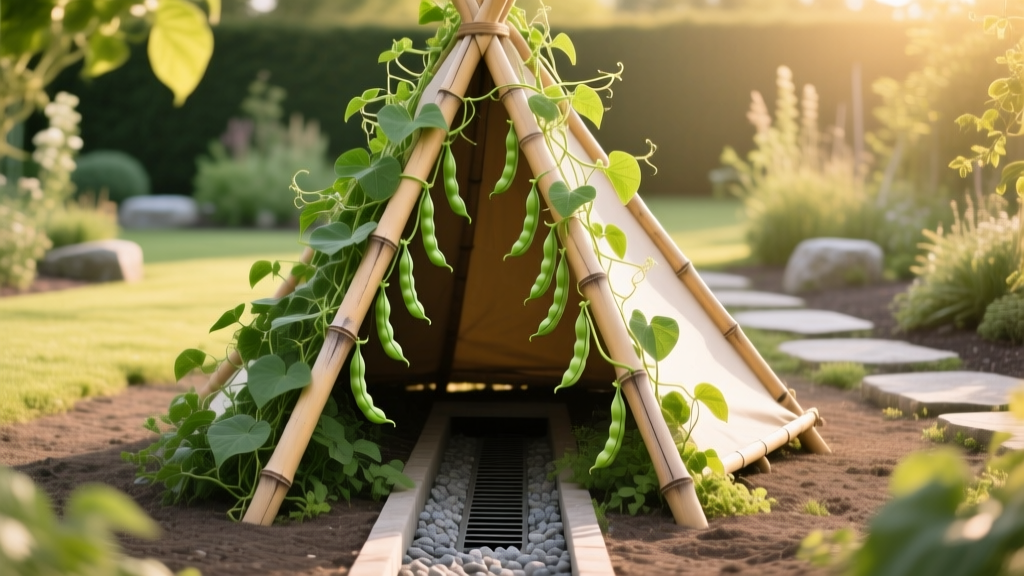
2026 Guide: Building Bamboo Bean Teepees Over French Drains
Mike RodriguezPublished
The 2026 Infrastructure Gardening Trend
As landscape professionals and advanced DIYers plan their 2026 water management strategies, the integration of edible landscaping over subsurface infrastructure has become a top priority. French drains are essential for managing yard runoff, preventing foundation damage, and eliminating soggy lawn patches. However, the resulting gravel trenches and catch basins can disrupt the visual flow of a lush, carefully curated garden. Meanwhile, pole beans require excellent drainage to prevent root rot, yet they demand significant vertical space. In 2026, the trend of 'infrastructure gardening' has popularized a brilliant dual-purpose solution: constructing a bamboo bean teepee directly over or adjacent to a French drain system. This technique camouflages unsightly drainage gravel while creating a towering, productive, and beautiful focal point in your vegetable or flower garden.
Why Pole Beans and French Drains are a Perfect Match
From an agronomic perspective, pole beans and subsurface drainage systems are a match made in heaven. Beans are notoriously susceptible to fungal diseases and root rot when left in waterlogged soil. According to the Royal Horticultural Society (RHS), poor drainage is a leading cause of crop failure in heavy clay soils, as waterlogging deprives roots of essential oxygen. A properly installed French drain ensures the soil profile remains aerated and free of standing water, even during the erratic, heavy spring rainfall patterns observed in early 2026.
By positioning a bean teepee near a French drain, you provide the beans with the exact moisture dynamics they crave: consistent soil hydration without the suffocating saturation. Furthermore, the vigorous vining habit of pole beans like the Scarlet Runner or Kentucky Wonder provides a dense, living screen that completely hides the gravel swale or drainage exit from view, turning a landscape utility into an architectural garden feature.
The 'Offset Apex' Technique: Protecting Your Drainage Pipe
The most critical aspect of combining French drain installation with bamboo teepee construction is avoiding structural damage to your drainage system. You cannot simply jab 8-foot bamboo poles blindly into a gravel trench. Doing so risks puncturing the corrugated HDPE or PVC drainage pipe, rendering the system useless and causing localized flooding.
To solve this, landscape architects utilize the Offset Apex Technique. The standard French drain trench is typically 12 to 18 inches wide. Instead of placing the base of your bamboo poles inside the gravel trench, you map out a circular footprint that sits entirely outside the trench boundaries. The poles are driven into the solid, undisturbed soil adjacent to the drain and angled inward. They meet at an apex directly above the center of the gravel trench. This creates a canopy that shades and hides the drain while keeping the sharp tips of the bamboo poles safely away from the subterranean pipe and landscape fabric.
Materials and 2026 Cost Breakdown
Building this dual-purpose feature requires specific materials to ensure longevity and structural integrity against wind and the weight of mature, fruit-bearing vines. Below is a breakdown of the estimated costs for a standard 10-foot teepee and adjacent French drain installation in 2026:
- Tonkin Bamboo Poles (Bundle of 8, 10-12 ft length): $55 - $75 (Tonkin cane is preferred for its high tensile strength and straightness).
- Corrugated Slotted Drain Pipe (100 ft coil): $85 - $110.
- Washed Drainage Gravel (1 cubic yard): $60 - $85 (Must be washed to prevent soil clogging in the pipe).
- Non-Woven Geotextile Landscape Fabric: $45.
- Heavy-Duty Jute Twine or Sisal Cord: $12.
- Pole Bean Seeds (Heirloom or Hybrid varieties): $8 - $15.
Step-by-Step Construction Guide
Step 1: Excavate and Install the French Drain
Dig your trench following the natural slope of your yard, ensuring a minimum drop of 1 inch per 8 feet of run. Line the trench with non-woven geotextile fabric, leaving enough overhang on the sides to wrap over the gravel later. Place the slotted corrugated pipe at the bottom, slots facing down (a 2026 industry standard update to prevent immediate top-soil clogging). Fill the trench with washed gravel to within 3 inches of the surface, fold the fabric over the top, and cap with a thin layer of topsoil or decorative river rock.
Step 2: Map the Offset Base
Measure the width of your completed gravel trench. Using a stake and string, draw a circle in the soil that is at least 24 inches wider than the trench on all sides. For a 12-inch trench, your teepee base circle should be roughly 5 feet in diameter. Mark 6 to 8 equidistant points along this outer circle.
Step 3: Set the Bamboo Poles
Using a manual post-hole digger or a heavy iron digging bar, create 12-inch deep pilot holes at your marked points. Never use a motorized auger near a French drain, as the torque can catch and rip the landscape fabric or crush the pipe. Insert the thick end of the bamboo poles into the holes, tamping the native soil firmly around them.
Step 4: Lash the Apex
Gather the tops of the bamboo poles together over the center of the gravel trench. Secure the apex tightly using a square lashing technique with heavy-duty jute twine. Wrap the twine at least four times around the bundle, then tie off with a clove hitch. For added stability in high-wind zones, weave thinner bamboo shoots horizontally between the vertical poles to create a ladder-like trellis.
Bamboo Pole Sizing and Offset Data Table
Selecting the correct pole length dictates the size of your base and the required offset from the French drain. Use the chart below to plan your layout:
| Bamboo Pole Length | Recommended Base Diameter | Minimum Trench Offset | Estimated Canopy Cover |
|---|---|---|---|
| 8 feet | 36 inches | 18 inches | 15 sq ft |
| 10 feet | 48 inches | 24 inches | 25 sq ft |
| 12 feet | 60 inches | 30 inches | 38 sq ft |
Planting, Training, and Maintenance
Once the structure is secure, it is time to plant. The soil immediately adjacent to a French drain can be slightly dry due to the gravel's wicking effect. To counteract this, amend the planting ring (located just outside the gravel line) with high-quality organic compost. According to the University of Minnesota Extension, pole beans thrive in well-drained, loamy soil enriched with organic matter, and they require a minimum of 6 to 8 hours of direct sunlight daily.
Plant 2 to 3 bean seeds at the base of each bamboo pole, 1 inch deep. Once the seedlings emerge and reach 6 inches in height, thin them to the strongest single plant per pole. Gently guide the young vines to wrap clockwise around the bamboo. Pole beans are natural climbers, but they occasionally need manual assistance in the first two weeks to establish their grip on smooth Tonkin cane.
Throughout the 2026 growing season, monitor the moisture levels. While the French drain protects the roots from drowning, the dense canopy of the bean teepee can block light summer rains from reaching the soil. Water deeply at the base of the poles during dry spells, and harvest the beans frequently to encourage continuous flowering and pod production well into the autumn months. By merging hardscape drainage solutions with vertical edible gardening, you maximize every square foot of your landscape while ensuring a bountiful, rot-free harvest.
