Gardening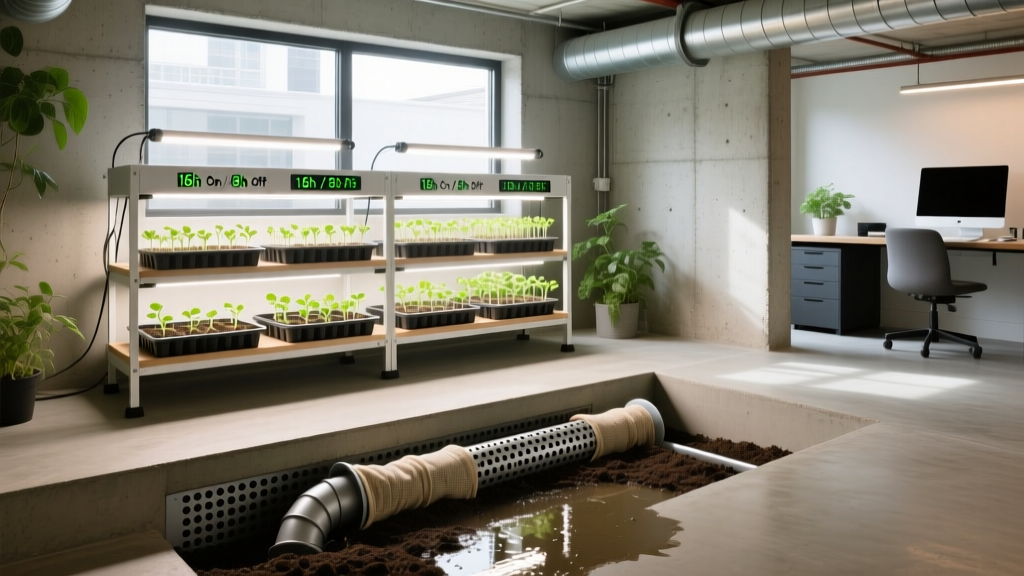
2026 Seed Starting: LED Light Schedules & French Drain Setup
James MillerPublished
The Intersection of Foundation Waterproofing and Indoor Horticulture
As a specialist in French drain installation and foundation waterproofing, I frequently consult with homeowners who are devastated to find their expensive basement seed starting setups ruined by groundwater seepage, mold, and short-circuited LED ballasts. As we enter the 2026 gardening season, the trend of utilizing lower-level spaces, cellars, and outbuildings for indoor seed starting under advanced LED grow lights is at an all-time high. These spaces offer the stable, cool temperatures ideal for early plant growth and seed stratification. However, they are also highly susceptible to hydrostatic pressure and moisture intrusion.
In this comprehensive guide, I will walk you through the critical first step of securing your seed starting room via interior French drain installation, followed by the precise 2026 LED light schedules required to cultivate robust, garden-ready seedlings. You cannot grow healthy plants in a compromised environment; structural moisture management is just as vital as your lighting spectrum.
The Hidden Threat: Hydrostatic Pressure and Damping Off
Before you hang your first LED grow light or plug in your propagation heat mats, you must address the structural integrity of your growing space. Basements and ground-level sunrooms are notorious for elevated humidity and latent water seepage. When groundwater presses against your foundation (hydrostatic pressure), it forces moisture through microscopic cracks in the concrete. This creates a damp, stagnant environment that is a breeding ground for Pythium and Rhizoctonia, the fungal pathogens responsible for 'damping off'—a fatal disease that causes seedling stems to rot at the soil line and collapse.
Furthermore, modern high-output LED grow lights and smart environmental controllers are expensive investments. Exposing these electronic ballasts and diodes to constant, unmitigated basement dampness will void warranties and lead to premature failure. According to the United States Environmental Protection Agency (EPA), controlling indoor moisture is the single most effective way to prevent mold growth and protect both structural integrity and indoor air quality. An interior French drain system intercepts this water before it ever reaches your seedling trays.
French Drain Installation: Securing Your Seed Starting Perimeter
An interior French drain (often referred to as a footing drain or perimeter drain) is designed to capture water as it enters the basement and route it safely away from your growing area. Here is the professional 2026 standard for installing a system that will keep your seed starting room bone-dry.
Step 1: Planning and Trenching
The first step involves jackhammering a trench along the interior perimeter of your seed starting room, typically 12 to 18 inches wide and deep enough to reach the top of the concrete footing. The trench must be graded with a precise slope of 1/8 inch per linear foot toward a designated sump pit. This gravity-fed slope ensures that water flows naturally away from your shelving units and electrical outlets.
Step 2: Pipe Selection, Fabric, and Gravel
Once the trench is excavated and sloped, we lay down a base layer of washed drainage gravel. Next, we install a rigid, perforated PVC pipe (Schedule 40 is recommended for 2026 installations due to its crush resistance). Unlike flexible corrugated tubing, rigid PVC allows for easy snaking and maintenance if the line ever clogs with silt. The pipe is then wrapped in a non-woven geotextile filter fabric. This fabric is non-negotiable; it prevents fine clay and soil particles from migrating into the pipe and blocking the weep holes. Finally, the trench is backfilled with more washed gravel, leaving a few inches at the top for a concrete cap.
Step 3: Sump Pump Integration and Capping
The perimeter pipe feeds into a heavy-duty sump basin equipped with a primary submersible pump and a battery-backup secondary pump. In the event of a severe spring storm—exactly when you are hardening off your most delicate tomato and pepper seedlings—the backup pump ensures your basement remains dry even if the power grid fails. The trench is then capped with fresh concrete, seamlessly blending with your existing floor and providing a solid, level surface for your heavy, multi-tier seed starting racks.
2026 French Drain Cost Estimates
Budgeting for structural prep is essential. Below are the average 2026 costs for interior French drain installation in a standard 400-square-foot basement seed starting room:
| Component | Estimated Cost (2026) | Notes |
|---|---|---|
| Concrete Demolition & Trenching | $1,500 - $2,200 | Depends on slab thickness and rebar |
| Rigid PVC Pipe & Geotextile Fabric | $400 - $600 | Schedule 40 PVC with non-woven wrap |
| Washed Drainage Gravel | $300 - $450 | 3/4-inch clean crushed stone |
| Dual Sump Pump System | $800 - $1,200 | Primary + Battery Backup combo |
| Concrete Capping & Finishing | $600 - $900 | Smooth trowel finish for easy cleaning |
| Total Estimated Project Cost | $3,600 - $5,350 | Varies by regional labor rates |
2026 LED Grow Light Schedules for Indoor Seedlings
With the perimeter secured against water intrusion and the sump pump actively managing the water table, you can safely deploy your 2026 LED lighting arrays. Modern full-spectrum LEDs, utilizing advanced diodes like the Samsung LM301H, offer unprecedented energy efficiency and light penetration. However, simply turning them on for 16 hours a day is an outdated approach. Modern horticulture relies on Daily Light Integral (DLI) and Photosynthetic Photon Flux Density (PPFD) targets tailored to specific growth stages.
According to research from the University of Minnesota Extension, providing the correct light intensity and duration prevents seedlings from becoming 'leggy' and weak. Below is the definitive 2026 LED schedule for common vegetable and flower seedlings.
| Growth Stage | Hours On / Off | PPFD Target (µmol/m²/s) | Light Height Above Canopy | Spectrum Focus |
|---|---|---|---|---|
| Germination (Days 1-7) | 12 Hours On / 12 Off | 100 - 150 | 24 - 30 inches | Full Spectrum White (Low Intensity) |
| Cotyledon Emergence (Days 8-14) | 14 Hours On / 10 Off | 150 - 250 | 18 - 24 inches | Blue-Heavy (Promotes compact growth) |
| True Leaf Development (Weeks 3-6) | 16 Hours On / 8 Off | 250 - 400 | 12 - 18 inches | Full Spectrum + Red Peaks (Foliage mass) |
| Pre-Hardening (Weeks 7-8) | 14 Hours On / 10 Off | 350 - 500 | 12 inches | Full Spectrum + UV/FR (Stress adaptation) |
Understanding the Dark Period
Notice that the schedule never recommends 24 hours of light. Seedlings require a dark period to undergo essential cellular respiration and metabolic processing. Leaving your LEDs on continuously will stress the plants, leading to chlorosis (yellowing leaves) and stunted root development. Utilize smart plugs or integrated environmental controllers to automate this schedule, ensuring consistency even if you are away from home.
Synergizing Drainage, Dehumidification, and Airflow
A French drain handles liquid water, but seed starting requires careful management of ambient humidity. While the geotextile-wrapped gravel trench prevents puddles and capillary action from wicking moisture up into your seed trays, the act of watering hundreds of seedlings daily will naturally raise the room's relative humidity. If left unchecked, this ambient moisture will condense on your walls and light fixtures.
To create the ultimate 2026 seed starting ecosystem, pair your newly installed French drain with a high-capacity commercial dehumidifier. Set the dehumidifier to maintain a relative humidity (RH) between 50% and 60%. This range is the 'goldilocks zone': humid enough to prevent the seedling soil surface from drying out too rapidly, but dry enough to inhibit fungal spores from germinating on the foliage. Additionally, install oscillating fans to provide a gentle breeze across the canopy. This airflow mimics outdoor wind conditions, triggering a biological response called thigmomorphogenesis, which forces the seedlings to develop thicker, stronger stems capable of supporting heavy fruit later in the season.
Conclusion
Successful indoor seed starting is a holistic endeavor that begins long before the first seed is sown. By investing in a professionally installed interior French drain, you protect your home, your expensive LED lighting arrays, and your seedlings from the devastating effects of moisture intrusion and fungal disease. Once your foundation is dry and secure, implementing a precise, stage-specific LED light schedule will reward you with vigorous, deeply rooted transplants ready to dominate your outdoor garden in the spring of 2026.
