Pest Control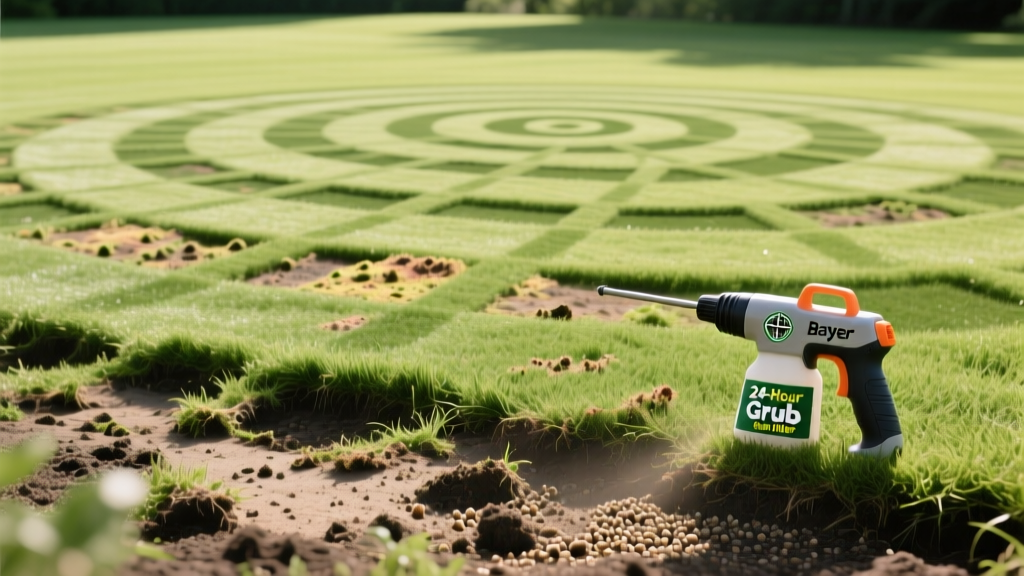
2026 Grub ID & Bayer Treatment: Mowing Pattern Guide
James MillerPublished
The 2026 Approach to Turf Management and Pest Control
As we navigate the 2026 turfgrass season, integrated pest management (IPM) has evolved to rely heavily on cultural practices rather than just chemical interventions. One of the most overlooked cultural practices in pest detection is your mowing routine. While most homeowners view mowing strictly as an aesthetic chore, alternating mowing patterns and adjusting cutting heights are actually your first line of defense in identifying subsurface pests like white grubs. When paired with targeted, fast-acting solutions like the Bayer Advanced 24-Hour Grub Killer Plus (now widely branded under the BioAdvanced label), strategic mowing becomes a powerful diagnostic and treatment-preparation tool. This guide will walk you through how to use your mower to spot grub damage early, properly identify the pests, and prepare your lawn for a highly effective 24-hour eradication treatment.
How Mowing Patterns Reveal Subsurface Grub Activity
Grub worms feed on the root systems of your turfgrass just below the soil surface, severing the plant's ability to uptake water and nutrients. Above ground, this manifests as irregular brown patches. However, in the early stages of a 2026 spring or late-summer infestation, visual browning might not yet be apparent. This is where mowing patterns come into play.
By utilizing a checkerboard or alternating 90-degree striping pattern each week, you create a visual grid across your lawn. When grubs destroy the root matrix, the turf loses its anchorage and becomes spongy. As your mower wheels pass over these compromised zones, the spongy turf will depress differently than healthy, deeply rooted grass. This uneven depression disrupts the crisp visual lines of your mowing pattern, alerting you to localized hotspots of root destruction before the grass actually turns brown. Furthermore, alternating your mowing direction prevents soil compaction and turf grain, ensuring that the lawn's stress responses are entirely natural and not caused by mower wheel ruts, making pest-induced anomalies much easier to spot.
Visual Grub Worm Identification and the 'Tug Test'
Once your mowing pattern reveals a spongy or disrupted zone, it is time to confirm the presence of grubs. Perform the 'Tug Test': grab a handful of the suspect turf and pull gently. If the grass rolls up like a loose carpet with no resistance, grubs have likely severed the roots. Peel back the turf to inspect the top two inches of soil.
According to University of Kentucky Entomology, white grubs are the larval stage of several beetle species, including Japanese beetles, June bugs, and European chafers. You can identify them by their plump, C-shaped, grayish-white bodies and distinct brown head capsules. Depending on the species and their instar (growth stage) during the 2026 season, they can range from a quarter-inch to over an inch in length. Look closely at the raster pattern (the arrangement of tiny bristles on their underside) if you need to differentiate between species, though the treatment protocol remains largely the same for all major turf-destroying grubs.
Pre-Treatment Mowing Techniques for Optimal Soil Contact
Before applying any granular pesticide, proper lawn preparation is non-negotiable. The active ingredient in the Bayer Advanced 24-Hour Grub Killer Plus is Trichlorfon (often listed as Dylox), a fast-acting compound that requires direct contact with the soil and immediate watering to activate. If your grass is too tall, the granules will become trapped in the thatch and turf canopy, degrading in the sunlight before they ever reach the grubs feeding below.
For optimal treatment efficacy, mow your lawn slightly lower than your usual maintenance height just 24 hours before application. If you typically maintain a Kentucky Bluegrass lawn at 3.0 inches, drop your mower deck to 2.5 inches. This 'scalping' technique is not meant to stress the grass, but rather to open the canopy. Ensure your mower blades are freshly sharpened; dull blades tear the grass tips, leaving the lawn vulnerable to secondary fungal infections while it is already stressed by grub feeding. Bag your clippings during this specific pre-treatment mow to remove any physical barriers between the soil and the incoming granules.
Applying Bayer Advanced 24-Hour Grub Killer Plus
Once the lawn is mowed and the canopy is open, you are ready to apply the treatment. The Bayer Advanced 24-Hour formula is highly regarded in the 2026 pest control market because it does not require weeks to translocate through the plant system; it acts directly on the nervous system of the grubs upon contact in the soil.
- Calibration: Set your broadcast spreader according to the product label's 2026 updated guidelines, typically around 2.0 to 2.5 settings depending on the brand of spreader.
- Application Rate: Apply evenly across the affected areas, overlapping slightly to ensure no strips are missed. Grubs often congregate in localized patches, but treating the entire lawn prevents migration from untreated borders.
- The Critical Watering Step: Trichlorfon requires moisture to dissolve and move into the root zone. Immediately after application, irrigate the lawn with at least 0.5 inches of water. If you are utilizing a 2026 smart irrigation system, manually override the schedule to ensure this deep watering occurs immediately, rather than waiting for the next automated cycle.
Mowing Height vs. Grub Vulnerability Matrix
Maintaining the correct mowing height post-treatment is vital for lawn recovery. Taller grass grows deeper roots, which can withstand minor grub feeding better than shallow-rooted, closely cropped turf. Below is a matrix detailing how mowing heights influence both grub damage visibility and turf recovery.
| Turfgrass Species | Optimal 2026 Mowing Height | Grub Damage Visibility | Root Recovery Speed Post-Treatment |
|---|---|---|---|
| Kentucky Bluegrass | 2.5 - 3.5 inches | Moderate (Spongy feel) | Fast (Rhizome spread) |
| Tall Fescue | 3.0 - 4.0 inches | High (Visible browning) | Moderate (Bunch-type) |
| Bermudagrass | 1.0 - 2.0 inches | Low (Dense mat hides sponginess) | Very Fast (Stolon growth) |
| Perennial Ryegrass | 2.0 - 3.0 inches | High (Rapid wilting) | Slow (Bunch-type) |
Post-Treatment Recovery and Robotic Mower Protocols
After applying the Bayer Advanced 24-Hour treatment and watering it in thoroughly, you must give the chemical time to work and the turf time to recover. Do not mow for at least 48 hours post-application. Mowing too soon can cause the mower tires to rut the softened, heavily irrigated soil, further tearing the already compromised root systems.
If you use an automated robotic mower, it is imperative to pause its schedule for 48 hours. The continuous, light trimming and constant wheel traffic of robotic mowers can disrupt the chemical barrier forming in the topsoil and stress the recovering grass. Once the 48-hour window has passed, check the soil moisture. If the ground is still overly saturated, wait another day to avoid severe soil compaction.
When you resume mowing, return to your alternating checkerboard pattern. This will help you monitor the lawn for any surviving grub activity. According to Purdue Extension, while 24-hour treatments are highly lethal to active grubs, heavily infested lawns may require overseeding in the fall to replace turf where the root matrix was entirely destroyed before the treatment could take effect. By combining precise mowing diagnostics with the rapid knockdown power of Bayer Advanced 24-Hour Grub Killer Plus, you ensure your lawn remains dense, healthy, and resilient throughout the 2026 growing season.