Tree Care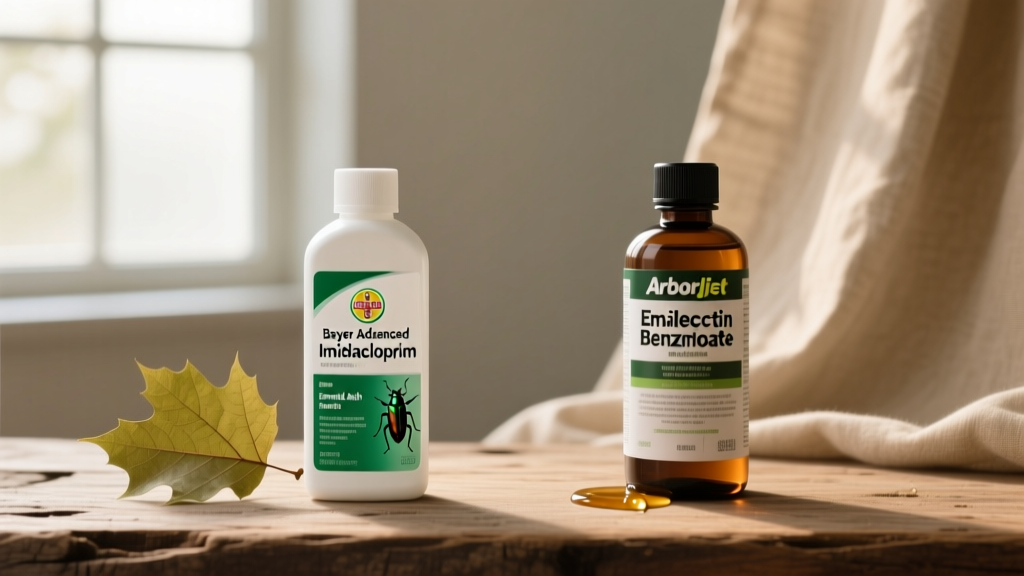
Bayer Advanced vs Arborjet: Emerald Ash Borer Treatment
Anna KowalskiPublished
The Emerald Ash Borer Crisis
The Emerald Ash Borer (EAB) is an invasive, wood-boring beetle that has systematically devastated ash tree populations across North America. Since its initial discovery in Michigan in 2002, this destructive pest has killed hundreds of millions of trees, fundamentally altering urban and rural forest canopies. According to the USDA APHIS, the economic impact of the EAB invasion runs into the billions of dollars, affecting municipalities, homeowners, and the timber industry alike. For homeowners with mature ash trees on their property, the choice is stark: treat the tree or face inevitable removal, which can cost thousands of dollars.
When it comes to saving your ash trees, two primary chemical treatments dominate the market: Bayer Advanced Tree & Shrub (active ingredient: Imidacloprid) and Arborjet Tree-äge (active ingredient: Emamectin Benzoate). Both products have proven efficacy, but their application methods, costs, target tree sizes, and residual control periods differ dramatically. In this comprehensive product comparison, we will break down the science, the logistics, and the economics of Bayer Advanced versus Arborjet to help you make the best decision for your landscape.
Contender 1: Bayer Advanced Tree & Shrub (Imidacloprid)
How It Works
Bayer Advanced 12 Month Tree & Shrub Protect & Feed utilizes Imidacloprid, a systemic neonicotinoid insecticide. This product is applied as a soil drench around the base of the tree. Once poured onto the soil, the active ingredient is absorbed by the tree's shallow feeder roots and translocated upward through the xylem into the canopy. When EAB larvae feed on the vascular tissue just beneath the bark, they ingest the insecticide and die. Because it relies on root uptake and the tree's natural transpiration pull, it moves relatively slowly, taking anywhere from two to six weeks to fully distribute throughout a mature tree.
Application & Dosage
The homeowner formulation of Bayer Advanced is designed for simplicity. The standard dosage for the liquid concentrate is 1 fluid ounce of product per inch of trunk circumference measured at chest height. The concentrate is mixed with water in a watering can or bucket and poured in a circular band around the drip line or directly at the base of the trunk. It requires no drilling, no specialized equipment, and can be completed in minutes.
Pros & Cons
- Pros: Highly accessible at local garden centers; very affordable for small to medium trees; completely non-invasive (no trunk wounds); includes a mild fertilizer component to support stressed trees.
- Cons: Limited efficacy on trees with a trunk diameter greater than 22 inches (or roughly 69 inches in circumference); requires annual application; slower uptake means it is strictly a preventative, not a curative treatment for heavily infested trees; soil drenching carries a higher risk of runoff and soil leaching.
Contender 2: Arborjet Tree-äge (Emamectin Benzoate)
How It Works
Arborjet's flagship EAB treatment, Tree-äge, utilizes Emamectin Benzoate. Unlike soil drenches, this product is applied directly into the tree's vascular system via trunk injection. Emamectin Benzoate is a highly potent, broad-spectrum insecticide derived from a naturally occurring soil bacterium. Because it is injected directly into the xylem, it bypasses the soil entirely and is distributed rapidly throughout the canopy, often within days. It is widely considered the gold standard for EAB treatment by professional arborists.
Application & Dosage
Trunk injection requires specialized equipment, such as the Arborjet QUIK-jet or TREE I.V. systems. Small, precise holes are drilled into the trunk at the root flare, and injection tees are inserted. The chemical is then pressurized into the tree. Dosage is calculated based on the Diameter at Breast Height (DBH). While professional application is standard, DIY trunk injection kits (like the Arborjet QUIK-jet Air) have become available for advanced homeowners, though they require a significant upfront equipment investment.
Pros & Cons
- Pros: Unmatched efficacy, even on large, mature trees; provides two full years of residual control per application; highly curative, capable of saving trees with early-stage active infestations; zero soil runoff or environmental leaching.
- Cons: Invasive (requires drilling holes into the trunk, which can introduce secondary pathogens if done improperly); significantly more expensive per treatment; requires specialized equipment and technical knowledge; generally restricted to licensed pesticide applicators in many states.
Head-to-Head Comparison Chart
| Feature | Bayer Advanced (Imidacloprid) | Arborjet Tree-äge (Emamectin Benzoate) |
|---|---|---|
| Active Ingredient | Imidacloprid (1.47%) | Emamectin Benzoate (4.0%) |
| Application Method | Soil Drench | Trunk Injection |
| Uptake Speed | 2 to 6 weeks | 1 to 4 days |
| Residual Control | 1 Year (Annual treatment required) | 2 Years (Biennial treatment) |
| Max Tree Size Limit | Best for trees under 22 inches DBH | Effective on trees of any size |
| Curative Ability | Low (Preventative only) | High (Can halt early active infestations) |
| Estimated Cost (per 20" DBH tree) | $25 - $40 per year | $150 - $300 every two years (Pro service) |
| DIY Friendliness | Excellent (Requires only a bucket) | Poor (Requires drills, tees, and pressurized caps) |
Crucial Application Rules for Success
Choosing the right product is only half the battle. Proper application timing and tree assessment are critical to ensuring your investment actually saves the tree. The University of Minnesota Extension emphasizes that insecticide treatments are only effective if the tree still has a viable vascular system to transport the chemical.
The 30% Canopy Dieback Rule
Before purchasing any EAB treatment, you must assess the health of your ash tree's canopy. Look for signs of dieback, starting at the top of the crown and working downward. If more than 30% of the canopy is dead, bare, or severely thinning, the tree's vascular system is too damaged to distribute the insecticide. In these cases, both Bayer Advanced and Arborjet will fail, and the tree should be removed for safety reasons. Treatment is only viable for trees with 70% or more healthy canopy.
Measuring DBH Accurately
Tree care professionals use Diameter at Breast Height (DBH) to calculate chemical dosages. DBH is measured at exactly 4.5 feet (54 inches) above the ground. To find the DBH, wrap a flexible measuring tape around the trunk at this height to get the circumference, then divide that number by 3.14 (Pi). For example, if the circumference is 62.8 inches, the DBH is 20 inches. Accurate measurement prevents under-dosing (which leads to treatment failure) and over-dosing (which wastes money and stresses the tree).
Timing Your Treatment
Timing is everything. Systemic insecticides must be applied when the tree is actively transpiring and pulling water from the soil or absorbing injections. According to the Michigan State University Extension, the optimal window for soil drenches like Bayer Advanced is early to mid-spring, just as the leaves are emerging. Trunk injections with Arborjet are best performed from mid-May through June, when the spring sap flow is strong and the EAB larvae are actively feeding beneath the bark. Applying treatments in late fall or winter is entirely ineffective, as the tree is dormant.
Environmental and Pollinator Considerations
Ash trees are not major nectar producers for honeybees, but they do produce pollen and can attract various pollinators. Because Imidacloprid (Bayer Advanced) is a neonicotinoid applied to the soil, there is a risk of the chemical leaching into groundwater or running off into storm drains if applied before heavy rains. Furthermore, if the ash tree is located near a body of water or in sandy, highly permeable soil, soil drenches are generally discouraged.
Conversely, Emamectin Benzoate (Arborjet) is injected directly into the trunk. There is virtually zero risk of soil contamination, runoff, or exposure to non-target insects in the surrounding landscape. For environmentally sensitive areas, near wetlands, or in urban settings with high foot traffic where children and pets play, trunk injection is the vastly superior and safer choice.
Final Verdict: Which Should You Choose?
The decision between Bayer Advanced and Arborjet ultimately comes down to the size of your ash tree, your budget, and your willingness to perform the application yourself.
Choose Bayer Advanced (Imidacloprid) if:
- Your ash trees are relatively small to medium (under 22 inches DBH).
- You are on a strict budget and prefer a low-cost, DIY-friendly solution.
- The trees are currently healthy, and you are establishing a preventative maintenance routine.
- You are comfortable committing to an annual application schedule.
Choose Arborjet Tree-äge (Emamectin Benzoate) if:
- You have large, mature, high-value shade trees (over 22 inches DBH).
- Your tree is showing early signs of EAB damage (under 30% canopy dieback) and needs a fast-acting, curative treatment.
- You prefer a biennial (every two years) treatment schedule to minimize long-term labor.
- You want to eliminate the risk of soil runoff and protect local waterways.
- You are willing to hire a certified arborist or invest in professional-grade injection equipment.
Protecting your ash trees from the Emerald Ash Borer requires vigilance, proper product selection, and precise timing. By understanding the distinct advantages and limitations of both Bayer Advanced and Arborjet, you can implement a targeted defense strategy that preserves your landscape's beauty, shade, and property value for decades to come.