
Landscaping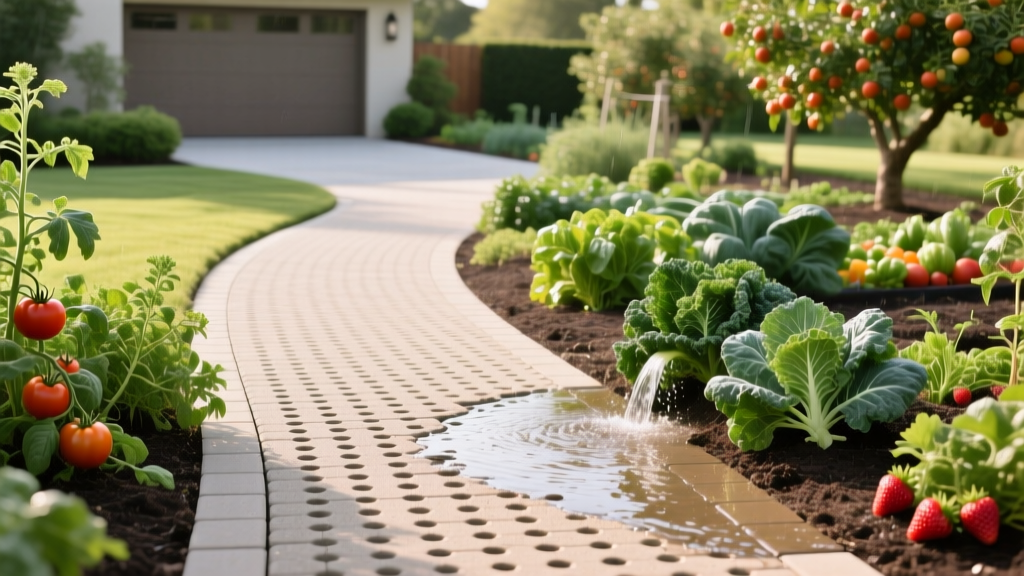
Belgard Aqua-Roc Permeable Driveways For Foodscaping 2026
Robert HayesPublished
The Intersection of Hardscaping and Foodscaping in 2026
In 2026, the concept of the American residential landscape has fundamentally shifted. Homeowners are no longer satisfied with purely ornamental yards or sterile, impermeable concrete driveways. The modern landscape demands multifunctionality, sustainability, and productivity. This is where the art of foodscaping—integrating edible plants seamlessly into ornamental and hardscaped environments—meets advanced stormwater management. One of the most powerful tools in the modern foodscaper’s arsenal is the permeable paver driveway, specifically engineered systems like the Belgard Aqua-Roc. By transforming your driveway from a water-shedding liability into a water-harvesting asset, you can dramatically improve the health, yield, and resilience of your edible landscape.
Understanding the Belgard Aqua-Roc System
The Belgard Aqua-Roc system is a premier Permeable Interlocking Concrete Paver (PICP) designed to handle heavy loads while allowing surface water to pass directly through the joints and into the ground below. Unlike traditional porous asphalt or pervious concrete, which can clog easily and degrade under vehicle weight, the Aqua-Roc system utilizes a carefully engineered cross-section of open-graded aggregates. According to the Belgard Commercial Permeable Pavers specifications, the system relies on a bedding course, a base course, and a subbase course of clean, washed stones. The void spaces between these stones act as an underground reservoir, temporarily storing stormwater and allowing it to infiltrate the native soil slowly.
For the edible landscaper, this underground reservoir is a game-changer. It mimics the natural hydrological cycle, recharging the local water table and providing a consistent, passive moisture source for deep-rooted edible plants situated adjacent to the driveway.
How Permeable Pavers Benefit Your Edible Landscape
Groundwater Recharge for Deep-Rooted Edibles
Fruit trees, berry bushes, and perennial edibles like asparagus require deep, consistent watering to establish robust root systems and produce high yields. In a traditional landscape, rainwater hitting a solid concrete driveway is immediately diverted to municipal storm drains, taking thousands of gallons of free irrigation water with it. The Environmental Protection Agency (EPA) highlights that permeable pavements significantly reduce stormwater runoff and promote groundwater recharge. By installing an Aqua-Roc driveway, the rainwater that falls on your hardscape percolates into the subgrade. If your driveway is graded with a slight subsurface pitch toward your edible garden beds or fruit tree root zones, you create a passive irrigation system that sustains your crops during dry spells without relying on municipal water.
Microclimate Creation for Extended Growing Seasons
Concrete pavers possess high thermal mass. During the day, the Belgard Aqua-Roc pavers absorb solar radiation, and at night, they slowly release that heat. In a foodscaping design, you can leverage this thermal mass to create a warmer microclimate along the borders of your driveway. This is particularly valuable in early spring and late autumn. By planting cold-sensitive edibles like dwarf citrus, rosemary, or early-season tomatoes in raised beds immediately adjacent to the pavers, the radiant heat can protect these plants from light frosts, effectively extending your growing season by several weeks.
Filtering Pollutants Away from Your Food Supply
One of the primary concerns with harvesting food near a driveway is the potential for soil contamination from automotive fluids, heavy metals, and winter de-icing salts. Impermeable driveways concentrate these pollutants into highly toxic runoff streams that can wash directly into your garden beds. The Aqua-Roc system naturally filters these contaminants. As water passes through the aggregate joints, physical filtration and biological breakdown by microbes in the subbase trap and neutralize many common pollutants before they reach the deeper soil layers. This ensures that the water wicking into your adjacent edible landscape is cleaner and safer for your food supply.
Designing Your Aqua-Roc Driveway with Foodscaping Borders
To maximize the synergy between your permeable driveway and your edible landscape, the transition zone between the hardscape and the soil must be thoughtfully designed. Avoid using impermeable concrete curbs that block subsurface water flow. Instead, opt for flush-set paver edges or permeable trench drains filled with river rock that allow water to migrate laterally into your garden beds.
Recommended Edible Border Plants for Driveway Edges:
- Alpine Strawberries (Fragaria vesca): These low-growing, shade-tolerant edibles form a dense mat that thrives in the slightly cooler, moister soil found at the edge of permeable pavers. They do not send out aggressive runners, keeping your driveway joints clear.
- Creeping Thyme (Thymus serpyllum): While primarily an ornamental groundcover, creeping thyme is entirely edible and highly drought-tolerant. It can handle the radiant heat of the pavers and releases a beautiful aroma when brushed against.
- Dwarf Highbush Blueberries (Vaccinium corymbosum): Planted in slightly raised, acidic beds adjacent to the driveway, blueberries benefit immensely from the consistent subsurface moisture provided by the Aqua-Roc aggregate base.
- Sea Kale (Crambe maritima): If you live in a region where winter de-icing is necessary, sea kale is a highly salt-tolerant perennial edible that can thrive in the driveway border zone where other plants might suffer from salt spray.
2026 Cost and Installation Comparison
When planning your 2026 landscape renovation, it is essential to weigh the initial investment against the long-term ecological and agricultural benefits. While permeable pavers carry a higher upfront cost than poured concrete, many municipalities now offer substantial stormwater fee reductions or rebates for installing permeable surfaces, which can offset the initial expense.
| Driveway Material | Avg 2026 Cost (Per Sq Ft) | Stormwater Runoff | Foodscaping Synergy |
|---|---|---|---|
| Poured Concrete | $12 - $18 | High (Requires drainage) | Low (Creates toxic runoff) |
| Standard Pavers | $18 - $25 | High (Sheds water) | Low (No water harvesting) |
| Belgard Aqua-Roc (PICP) | $28 - $38 | Zero (Full infiltration) | High (Passive irrigation) |
Maintenance for Longevity and Garden Health
Maintaining a Belgard Aqua-Roc driveway requires a different approach than maintaining traditional hardscaping, and these maintenance practices directly impact the health of your edible landscape. The most critical rule is to never use a pressure washer on permeable pavers. High-pressure water will blast the jointing aggregate out of the voids and push surface debris deep into the subbase, clogging the system and ruining its permeability.
Instead, use a specialized vacuum sweeper or a stiff push broom to remove leaves, soil, and organic debris from the surface. If your driveway borders your edible beds, ensure that heavy layers of autumn leaves or mulch are cleared promptly so they do not decompose and form an impermeable mat over the paver joints. Additionally, avoid using harsh chemical herbicides or synthetic fertilizers on the lawn or garden beds immediately adjacent to the driveway. Because the Aqua-Roc system rapidly channels surface water into the ground, any chemicals applied to the surrounding landscape will be quickly pulled into the subbase and groundwater. Stick to organic, permaculture-approved soil amendments to keep both your driveway system and your food supply safe and thriving.
Conclusion
Integrating a Belgard Aqua-Roc permeable paver driveway into your foodscaping master plan is a hallmark of advanced, sustainable landscape design in 2026. By viewing your driveway not just as a place to park your vehicle, but as a vital component of your property’s water management and microclimate strategy, you can cultivate a more resilient, productive, and beautiful edible landscape. Through careful plant selection, proper subsurface grading, and mindful maintenance, your hardscape and your harvest will thrive in perfect harmony.

