
Landscaping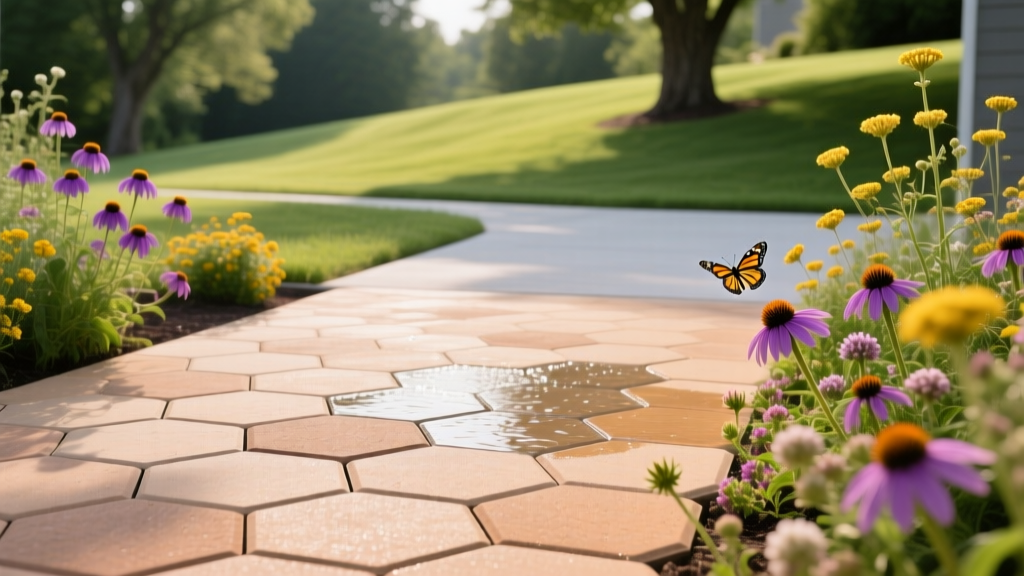
Belgard Aqua-Roc Permeable Driveways For Pollinator Gardens 2026
Mike RodriguezPublished
The Intersection of Hardscaping and Pollinator Health
When homeowners envision a pollinator-friendly garden, they typically picture sprawling wildflower meadows, buzzing bee hotels, and nectar-rich shrub borders. Rarely does the driveway come to mind. Yet, as we move through 2026, sustainable landscaping has evolved to recognize that every square foot of your property plays a critical role in the local ecosystem. Hardscaping, particularly driveway design, has a profound impact on soil health, water quality, and the microclimates that pollinators rely on to survive.
Traditional impermeable surfaces like asphalt and poured concrete create severe ecological bottlenecks. They generate toxic runoff, elevate local temperatures, and starve the soil of vital moisture. For the eco-conscious homeowner, the solution lies in advanced permeable interlocking concrete pavers (PICP). Specifically, the Belgard Aqua-Roc system has emerged in 2026 as a premier choice for homeowners looking to merge heavy-duty vehicular support with ecological stewardship.
By integrating the Belgard Aqua-Roc system into your landscape architecture, you are not just installing a driveway; you are engineering a massive, subterranean water filtration system that protects the riparian habitats where native bees, butterflies, and other vital pollinators breed and forage.
The Hidden Ecological Cost of Traditional Driveways
To understand why permeable pavers are a necessity for pollinator-friendly design, we must first examine the damage caused by standard driveways. According to the Environmental Protection Agency (EPA), polluted runoff from impervious surfaces is one of the leading causes of water quality degradation in urban and suburban areas.
As rain washes over an asphalt driveway, it picks up polycyclic aromatic hydrocarbons (PAHs), heavy metals from brake dust, and leaked automotive fluids. This toxic soup is funneled directly into storm drains and local waterways. While this might seem disconnected from your garden, riparian zones—the ecosystems alongside rivers and streams—are crucial corridors for pollinator migration. When these water sources are contaminated, the host plants that butterflies and bees rely on suffer, and the aquatic larval stages of many pollinator species are decimated.
Furthermore, large expanses of dark asphalt contribute heavily to the urban heat island effect. Elevated temperatures can cause a 'phenological mismatch'—a phenomenon where plants bloom earlier than usual due to localized heat, but their native pollinators have not yet emerged from winter dormancy. By replacing heat-absorbing asphalt with lighter-colored, permeable pavers, you help stabilize the microclimate of your property, ensuring that blooming cycles remain synchronized with pollinator life cycles.
Why Belgard Aqua-Roc is the 2026 Standard for Eco-Driveways
The Belgard Aqua-Roc system is specifically engineered to handle the unique demands of modern properties while maximizing water infiltration. In 2026, the average electric vehicle (EV) weighs significantly more than its gas-powered predecessors, often exceeding 5,500 pounds due to massive battery packs. Many older permeable paver systems struggle with the concentrated axle loads of modern EVs, leading to rutting and sub-base compaction.
The Aqua-Roc system solves this with a high-strength, interlocking structural design that distributes vehicular weight laterally across the surface. This prevents the pavers from shifting or sinking into the aggregate base, ensuring that the void spaces remain open for water infiltration year after year. The surface texture is designed to mimic natural cobbled stone, providing excellent tire traction while reflecting more solar radiation than traditional blacktop.
From an ecological standpoint, the Aqua-Roc system acts as a bio-filter. As rainwater passes through the permeable joints and down through the layered aggregate sub-base, physical and biological filtration processes strip away heavy metals and hydrocarbons. By the time the water reaches the native soil and the water table, it is clean enough to support sensitive root systems and the subterranean nesting habitats of ground-dwelling native bees, which comprise roughly 70% of all native bee species.
Designing a Pollinator-Integrated Permeable Driveway
Installing the Belgard Aqua-Roc system is only the first step. To truly embrace a pollinator-friendly garden design, you must integrate the hardscape with living, breathing ecological elements. Here are three highly effective strategies for 2026:
1. The 'Green Joint' Technique
While standard permeable installations use No. 8 or No. 9 crushed stone for the joints to ensure maximum drainage, you can design specific low-traffic zones of your driveway (such as the apron or guest parking pads) with wider joints filled with a specialized permeable soil matrix. This allows you to plant low-growing, drought-tolerant, pollinator-friendly groundcovers. Creeping Thyme (Thymus serpyllum) and Micro-Clover (Trifolium repens) are excellent choices. They can withstand occasional foot traffic, provide early-season nectar for solitary bees, and their root systems help stabilize the jointing material without clogging the sub-base.
2. Ribbon or 'Track' Paving
Instead of paving the entire width of the driveway, consider a ribbon driveway design using Aqua-Roc pavers. This involves paving only the two tire tracks (typically 24 to 30 inches wide each) and leaving the center strip as a permeable, planted bioswale. The center strip can be planted with deep-rooted native grasses and wildflowers, creating a continuous pollinator corridor right down the middle of your property while reducing the total hardscape footprint by up to 40%.
3. Outflow Rain Garden Borders
The Belgard Aqua-Roc system can be engineered with an underdrain pipe that captures excess water during torrential 2026 storm events and directs it to a specific outflow point. Design a pollinator rain garden at this outflow. Because the water has already been filtered by the paver's aggregate base, you can safely plant moisture-loving, high-nectar species like Swamp Milkweed (Asclepias incarnata), Blue Flag Iris (Iris versicolor), and Joe-Pye Weed (Eutrochium purpureum). These plants will thrive on the steady supply of clean water and serve as a magnet for Monarch butterflies and native swallowtails.
2026 Driveway Material Comparison Chart
When planning your landscape budget, it is essential to weigh the long-term ecological and financial returns of your hardscaping materials. Below is a comparison of standard driveway options available in 2026.
| Material | Avg. Cost per Sq. Ft. (Installed) | Water Permeability | Pollinator & Eco Benefit | Expected Lifespan |
|---|---|---|---|---|
| Traditional Asphalt | $9.00 - $14.00 | 0% (Impervious) | Negative (Toxic runoff, high heat island effect) | 15 - 20 Years |
| Poured Concrete | $12.00 - $18.00 | 0% (Impervious) | Low (Reflects heat, but causes severe runoff) | 30 - 40 Years |
| Standard Gravel | $3.00 - $6.00 | High (but compacts) | Moderate (Allows infiltration, but lacks structural stability for EVs) | 5 - 10 Years (Requires topping) |
| Belgard Aqua-Roc PICP | $22.00 - $32.00 | High (Engineered filtration) | Excellent (Filters toxins, supports green joints, reduces heat) | 50+ Years (Modular repair) |
Note: While the initial investment for the Aqua-Roc system is higher, many municipalities in 2026 offer substantial stormwater tax credits and rebates for installing certified permeable hardscapes, which can offset up to 25% of the installation cost.
The Anatomy of a Healthy Sub-Base
The magic of the Belgard Aqua-Roc system lies beneath the surface. A properly installed permeable driveway is essentially a hidden reservoir and filtration plant. For a pollinator-friendly installation, the sub-base must be meticulously engineered to prevent anaerobic conditions that can harm soil biology.
The installation typically requires excavating 12 to 18 inches of native soil. The base is then filled with washed, open-graded aggregate. The bottom layer consists of large No. 2 or No. 57 crushed stone, providing structural support and temporary water storage. Above this sits a choker layer of No. 8 stone, followed by a bedding layer of coarse, washed sand. Because these stones are 'open-graded' (meaning they are all roughly the same size with no fine dust or sand mixed in), they create a network of voids that allow water to flow freely while providing a massive surface area for beneficial microbes to break down trace pollutants.
For more information on how green infrastructure like permeable pavements protects local watersheds, the EPA's Green Infrastructure portal provides extensive data on municipal and residential water management strategies.
Eco-Safe Maintenance for Pollinator Health
Maintaining a permeable paver driveway requires a different mindset than maintaining asphalt. To protect the local pollinator population, you must avoid the harsh chemicals typically used in driveway maintenance.
- Avoid Chemical Sealers: Never apply acrylic or coal-tar sealers to permeable pavers. Not only will they clog the joints and ruin the permeability, but they also leach toxins into the soil. The Belgard Aqua-Roc pavers are manufactured with integral color that will not fade or require sealing.
- Winter De-Icing: In 2026, eco-conscious homeowners are moving away from sodium chloride (rock salt), which accumulates in the soil and is highly toxic to plant roots and ground-nesting bees. Use organic, pet-safe de-icers like calcium magnesium acetate (CMA) or simply rely on the paver's natural texture for traction. The permeability of the system also means that melting snow drains away instantly, preventing dangerous refreezing.
- Vacuum Sweeping: Over time, wind-blown soil and organic debris can clog the surface joints. Once a year, use a specialized vacuum sweeper to pull debris out of the joints. Avoid power washing, as high-pressure water simply pushes the clogging material deeper into the sub-base where it is harder to remove.
- Weed Management: If weeds begin to sprout in the joints, avoid broad-spectrum herbicides like glyphosate, which are devastating to pollinator health. Instead, use a targeted flame weeder or manually extract them, leaving intentional plantings like creeping thyme undisturbed.
Conclusion: Paving the Way for Conservation
The narrative that urban and suburban development must come at the expense of local ecosystems is outdated. As demonstrated by the 2026 landscaping standards, we now possess the materials and ecological knowledge to build infrastructure that actively supports nature. The Xerces Society for Invertebrate Conservation continually emphasizes that habitat creation and protection must happen in our own backyards to reverse pollinator decline.
By choosing the Belgard Aqua-Roc permeable paver system for your driveway, you are making a profound statement. You are eliminating toxic runoff, mitigating the heat island effect, and creating a foundation that integrates seamlessly with rain gardens and green corridors. Your driveway ceases to be a barren expanse of pavement and becomes an active, functioning component of your pollinator-friendly garden—a beautiful, durable entrance to your home that respects and nurtures the natural world.

