
Landscaping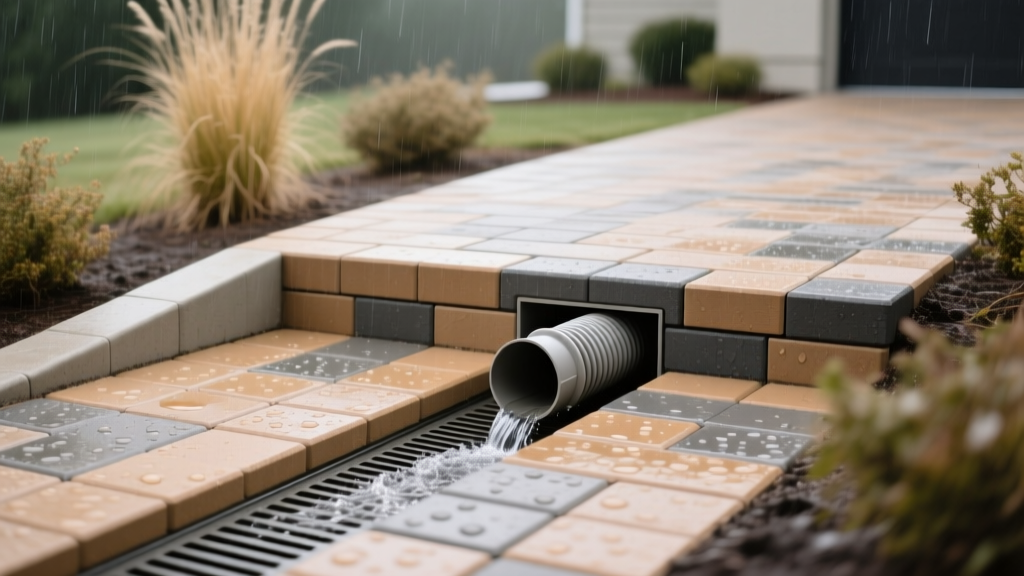
2026 Belgard Aqua-Roc Driveway Drainage Pipe Guide
Mike RodriguezPublished
The Evolution of Driveway Drainage in 2026
As extreme weather events and heavier rainfall totals continue to challenge residential infrastructure in 2026, traditional impervious concrete and asphalt driveways are increasingly becoming liabilities. Homeowners and landscape architects are pivoting toward sustainable, resilient hardscaping solutions. At the forefront of this movement is the integration of Permeable Interlocking Concrete Pavement (PICP) with advanced landscape drainage pipe networks. While permeable pavers are designed to absorb and infiltrate stormwater directly into the soil, the underlying drainage pipe system remains the unsung hero of a fully functional, flood-proof driveway. This comprehensive guide explores how to properly design, install, and maintain a landscape drainage pipe network beneath a Belgard Aqua-Roc permeable paver driveway to ensure optimal performance in 2026 and beyond.
Understanding the Belgard Aqua-Roc System
The Belgard Aqua-Roc system represents the pinnacle of modern permeable hardscaping. Engineered with wider joints and specialized edge designs, these pavers allow surface water to pass through into an open-graded aggregate reservoir below. Unlike traditional pavers that rely on a solid, compacted base, the Aqua-Roc system utilizes a series of graduated stone layers that act as a temporary underground reservoir. This reservoir holds water during heavy downpours, allowing it to slowly infiltrate the native subgrade soil. However, when rainfall exceeds the infiltration rate of the native soil, or when the subgrade consists of heavy, impermeable clay, a dedicated landscape drainage pipe system becomes absolutely critical to prevent surface ponding and structural failure.
Why Landscape Drainage Pipes are Still Essential
A common misconception among homeowners is that permeable pavers eliminate the need for landscape drainage pipes entirely. In reality, the Environmental Protection Agency (EPA) notes that permeable pavements in areas with poor soil infiltration rates or high water tables require underdrain systems to function correctly. The drainage pipes serve two primary functions in a Belgard Aqua-Roc installation: sub-base underdrains and overflow bypass pipes.
Sub-Base Underdrains
Sub-base underdrains are perforated pipes installed at the lowest point of the aggregate reservoir. Their job is to collect excess water that the native soil cannot absorb and safely convey it to a designated outlet, such as a storm sewer, dry well, or daylighted slope. In 2026, the industry standard for these underdrains is SDR 35 PVC or heavy-duty corrugated HDPE pipe, typically ranging from 4 to 6 inches in diameter, wrapped in a geotextile sock to prevent fine sediment intrusion.
Overflow and Bypass Pipes
Overflow pipes are solid, non-perforated pipes connected to the upper portion of the aggregate reservoir or integrated into specialized curb inlets. During catastrophic 100-year storm events, if the Aqua-Roc surface and the stone reservoir reach maximum capacity, the overflow pipe captures the excess surface runoff and routes it directly to the municipal stormwater system, preventing water from breaching the driveway edges and undermining adjacent landscaping or foundations.
Step-by-Step Integration: Aqua-Roc and Drainage Piping
Designing a cohesive system requires meticulous planning and adherence to the guidelines set forth by the Interlocking Concrete Pavement Institute (ICPI). Below is the standard protocol for integrating drainage pipes into a Belgard Aqua-Roc driveway in 2026.
Phase 1: Site Excavation and Infiltration Testing
Before any pipes are laid, a percolation test must be conducted to determine the native soil's infiltration rate. Excavation typically requires digging 12 to 18 inches below the subgrade, depending on the calculated water storage volume needed. The subgrade is then sloped at a minimum of 1% toward the designated drainage pipe outlets or daylighting points.
Phase 2: Laying the Perforated Drainage Pipe Network
The perforated landscape drainage pipes are placed directly on the sloped subgrade. In 2026, best practices dictate that these pipes should be surrounded by a clean, washed No. 57 aggregate to prevent clogging. Cleanout observation wells must be installed at every change of direction and at 50-foot intervals along straight runs. These vertical PVC pipes extend to the surface, capped with flush-mounted lids, allowing for future CCTV inspection and high-pressure jetting of the underground drainage network.
Phase 3: The Open-Graded Aggregate Reservoir
Once the drainage pipe network and geotextile separations are secured, the aggregate base is installed in lifts. The bottom layer consists of ASTM No. 57 stone (roughly 1 to 2 inches in diameter), which encapsulates the drainage pipes and provides the primary water storage void space. This is followed by a bedding layer of ASTM No. 8 or No. 89 stone (roughly 1/4 to 3/8 inch), which creates a stable, level surface for the pavers while maintaining high permeability.
Phase 4: Paver Installation and Jointing
The Belgard Aqua-Roc pavers are laid over the bedding stone. Instead of traditional polymeric sand, the joints are filled with clean, washed ASTM No. 8 or No. 9 jointing stone. A vibratory plate compactor is used to settle the pavers and lock the jointing stone into place, ensuring that surface water can immediately flow through the joints into the reservoir and down to the drainage pipes.
2026 Cost Breakdown: Aqua-Roc and Drainage Integration
Investing in a permeable driveway with a robust landscape drainage pipe network is a premium hardscaping project. Below is an estimated cost breakdown for a standard 1,000-square-foot residential driveway in 2026, factoring in current material and labor rates.
| Component | Material Specification | 2026 Est. Cost (per Sq Ft) | Primary Purpose |
|---|---|---|---|
| Belgard Aqua-Roc Pavers | PICP Certified Concrete | $8.50 - $12.00 | Durable, permeable surface layer |
| Jointing & Bedding Stone | ASTM No. 8 / No. 89 | $2.00 - $3.50 | Surface infiltration and paver stability |
| Reservoir Base Stone | ASTM No. 57 Washed | $3.00 - $4.50 | Underground water storage reservoir |
| Landscape Drainage Pipe | 4" SDR 35 Perforated PVC | $1.50 - $2.50 | Sub-base water conveyance and overflow |
| Cleanouts & Geotextiles | PVC Wells, Non-Woven Fabric | $1.00 - $1.50 | System maintenance and soil separation |
| Professional Labor & Excavation | Certified ICPI Installers | $12.00 - $18.00 | Site prep, grading, and precision installation |
Note: Total costs typically range from $28.00 to $42.00 per square foot, heavily dependent on regional labor rates, site accessibility, and the complexity of the drainage pipe routing.
Maintenance: Protecting Your Drainage Pipes and Pavers
The longevity of a Belgard Aqua-Roc driveway and its underlying landscape drainage pipe network depends entirely on a rigorous maintenance schedule. Over time, windblown sediment, decomposing leaves, and tire wear can clog the surface joints, reducing the infiltration rate and forcing excess water to bypass the reservoir and flood the drainage pipes with silt.
In 2026, the recommended maintenance protocol involves annual vacuum sweeping using regenerative air sweepers, which are far more effective at extracting deep-seated debris from the paver joints than traditional mechanical brooms. Every three to five years, the system should undergo a comprehensive inspection. Contractors will remove the caps from the observation cleanouts and deploy CCTV cameras into the landscape drainage pipes to check for root intrusion, sediment buildup, or pipe collapse. If sediment is detected in the underdrains, high-pressure hydro-jetting is used to flush the pipes clean, ensuring the system remains fully operational for the next major storm event.
Environmental Impact and 2026 Municipal Codes
Municipalities across the country are updating their stormwater management codes in 2026 to combat urban flooding and protect local watersheds. Many local governments now offer significant tax incentives, stormwater fee credits, or expedited permitting for homeowners who install certified PICP systems with integrated drainage pipe networks. By capturing, filtering, and slowly releasing runoff, the Belgard Aqua-Roc system paired with a properly engineered underdrain network removes heavy metals, oils, and pollutants before they reach municipal waterways. For specific product specifications and engineering manuals, the Belgard Permeable Pavers resource center offers updated 2026 documentation to help contractors and homeowners ensure their designs meet the latest local environmental regulations.
Ultimately, combining the aesthetic and structural brilliance of Belgard Aqua-Roc pavers with a meticulously planned landscape drainage pipe network provides a future-proof solution for residential properties. It transforms a basic driveway into an active, eco-friendly stormwater management asset that protects your home, enhances your landscape, and contributes to a healthier local environment.

