
Landscaping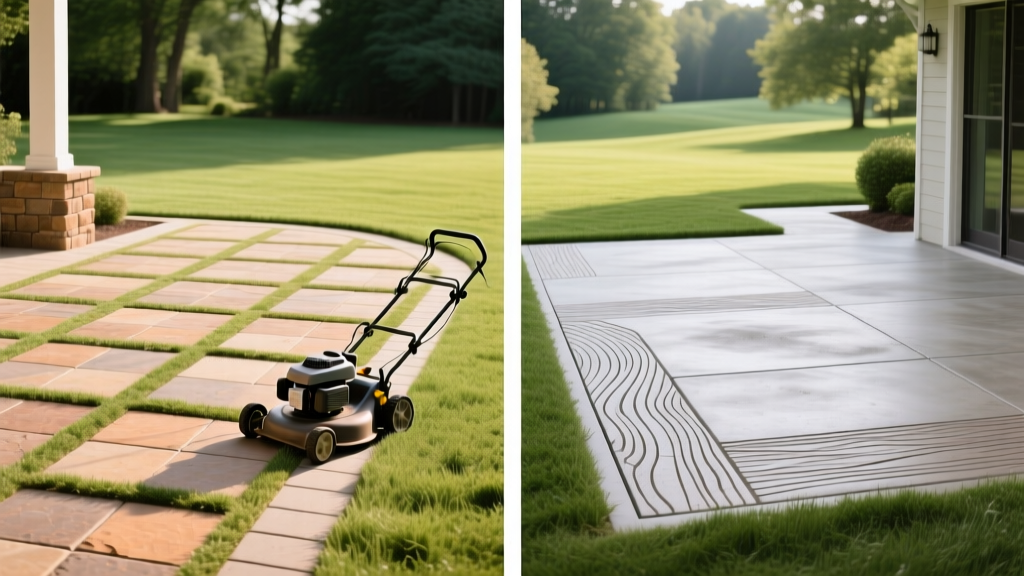
Belgard Pavers vs Stamped Concrete: 2026 Cost & Mowing Patterns
Lisa ThompsonPublished
The Intersection of Hardscaping and Turf Management
When planning an outdoor living space, homeowners and landscape architects often focus entirely on the patio itself, neglecting how the hardscaping will interact with the surrounding lawn. In 2026, the debate between installing a Belgard paver patio versus traditional stamped concrete remains at the forefront of landscape design. While aesthetics and initial costs are primary drivers, professional turf managers and landscaping enthusiasts know that the true test of a patio lies in its perimeter. The material you choose dictates your edging capabilities, influences adjacent turf health, and ultimately determines the crispness of your lawn mowing patterns and striping designs. This comprehensive guide breaks down the 2026 costs, durability factors, and the critical mowing technique implications of Belgard pavers versus stamped concrete.
2026 Cost Breakdown: Belgard Pavers vs. Stamped Concrete
Material and labor costs have shifted in 2026 due to advancements in permeable base technologies and updated concrete curing compounds. While stamped concrete traditionally held the edge in upfront affordability, the long-term maintenance and turf-repair costs associated with its perimeter are forcing homeowners to reconsider. Below is a comparative look at the average installed costs per square foot for the 2026 landscaping season.
| Feature | Belgard Paver Patio (2026) | Stamped Concrete (2026) |
|---|---|---|
| Material Cost (per sq ft) | $12.00 - $24.00 | $8.00 - $16.00 |
| Base Prep & Installation | $12.00 - $20.00 | $10.00 - $16.00 |
| Total Average Cost | $24.00 - $44.00 | $18.00 - $32.00 |
| Edge Restraint System | Hidden (Flush to Turf) | Formed (Curb or Step-Up) |
| Permeability Options | High (Permeable Pavers) | None (Solid Surface) |
| Heat Retention Index | Moderate to Low | Very High |
While stamped concrete remains the cheaper initial investment, the hidden costs emerge when maintaining the lawn border. Stamped concrete requires wooden forms during pouring, which often results in a rough edge or a necessary step-up curb to prevent cracking. This curb disrupts the flow of the landscape and complicates lawn care. Conversely, Belgard pavers utilize hidden edge restraints and geogrid base systems that allow for a perfectly flush transition between the hardscape and the soil, an essential feature for advanced mowing techniques.
Durability, Heat Retention, and Adjacent Turf Health
Durability in hardscaping is not just about the material itself; it is about how the material affects its environment. Stamped concrete is essentially a massive, solid slab that absorbs and radiates immense amounts of solar heat. During the peak summer months of 2026, surface temperatures on dark-stamped concrete can easily exceed 130°F. This creates a localized 'heat island' effect that scorches the adjacent grass. Cool-season turfgrasses like Kentucky Bluegrass and Tall Fescue are particularly vulnerable to this thermal stress, resulting in a permanent brown, dormant border around the patio. A scorched lawn edge completely ruins the visual contrast required for high-end mowing patterns and striping.
Belgard pavers, especially those in their lighter, natural stone-inspired color palettes, reflect more sunlight and dissipate heat through the sand joints. Furthermore, if a section of the patio edge settles or heaves due to freeze-thaw cycles, individual pavers can be lifted, the base re-tamped, and the pavers replaced without destroying the aesthetic. Stamped concrete, when it inevitably cracks along the stress points near the lawn edge, requires ugly patching compounds or full slab replacement, which often damages the adjacent turf roots in the process.
Mowing Techniques and Striping Patterns Around Hardscaping
The true advantage of a Belgard paver patio over stamped concrete reveals itself when you start the mower. Creating professional-grade lawn stripes—whether a classic checkerboard, a diamond pattern, or sweeping arcs—requires a firm, level baseline to pivot your mower and bend the grass blades uniformly. Here is how the two materials impact your mowing techniques.
The Flush Edge Advantage for Zero-Turn Mowers
To achieve a crisp stripe, the grass must be cut cleanly right up to the hardscape edge. With a Belgard paver patio installed with a flush hidden edge restraint, the turf is graded exactly level with the paver surface. This allows the caster wheels of a zero-turn mower to ride smoothly along the paver edge without dropping into a trench or bumping over a concrete curb. By keeping the mower deck perfectly level, you ensure an even cut that bends the grass consistently, maximizing the light-and-dark reflection of your striping pattern. Stamped concrete patios, which often feature a 2-inch raised lip or a rough form-line edge, force the mower deck to tilt or require the operator to pull back early, leaving a ragged fringe of uncut grass that must be addressed with a string trimmer. String trimming destroys the uniform bend of the grass blade, effectively erasing your stripe pattern at the patio border.
Pivoting and Pattern Alignment
When executing a checkerboard mowing pattern, you must make precise 90-degree turns at the end of every pass. A flush Belgard paver edge provides a hard, reliable stopping point. You can align the front edge of your mower deck perfectly with the straight line of the pavers, ensuring your perpendicular passes intersect at exact right angles. Stamped concrete edges, particularly those with curved or stamped cobblestone borders, lack a true straight line, making it incredibly difficult to align your mower for geometric striping patterns. The straight, modular lines of Belgard pavers act as a visual guide and a physical gauge for your mowing passes.
Edging and Turf Overgrowth
According to turf management experts at the University of Nebraska-Lincoln Turfgrass Program, proper edging is critical for both turf health and aesthetic definition. With stamped concrete, creeping grasses like Bermuda or Zoysia will quickly root into the microscopic pores and expansion joints of the concrete. Removing them requires harsh chemical herbicides or aggressive mechanical edging that can chip the concrete stain. Belgard pavers, while also susceptible to joint weeds, allow for the use of polymeric sand that hardens and resists turf encroachment. When it is time to use a mechanical lawn edger to redefine the trench, the straight line of a paver patio allows the edger blade to glide smoothly, creating a sharp, vertical cut that makes the lawn stripes pop visually.
Drainage, Soil Saturation, and Mower Rutting
One of the most overlooked aspects of landscape design is how hardscape drainage affects the mowability of the adjacent lawn. The Environmental Protection Agency (EPA) heavily advocates for permeable pavement systems to manage stormwater runoff and reduce local flooding. Stamped concrete is entirely impermeable. During heavy spring rains, water sheets off the solid concrete slab directly into the adjacent lawn border. This creates a zone of perpetually saturated soil.
Mowing over saturated soil is a cardinal sin in turf care. The heavy weight of a riding mower or zero-turn will cause severe soil compaction and leave deep wheel ruts in the soft earth. These ruts not only damage the grassroots but create an uneven surface that causes the mower deck to scalp the lawn, leaving ugly brown patches that disrupt your mowing patterns. Belgard offers highly engineered permeable paver systems that allow rainwater to drain directly through the joints and into a crushed stone reservoir base below. By absorbing the runoff, the permeable Belgard patio keeps the adjacent lawn soil firm, dry, and ready to be mowed without the risk of rutting or compaction, ensuring your lawn remains a smooth, pristine canvas for your striping designs.
Conclusion: Designing for the Mower
In 2026, the choice between a Belgard paver patio and stamped concrete extends far beyond the initial invoice. While stamped concrete may offer a lower upfront cost, its high heat retention, impermeable runoff, and raised curbs actively work against the health and aesthetics of your lawn. For homeowners dedicated to advanced mowing techniques, precise edging, and striking geometric striping patterns, the Belgard paver system is the undisputed champion. The ability to install a perfectly flush edge, combined with the structural stability and permeable drainage options, ensures that your hardscape enhances your lawn care routine rather than hindering it. By viewing your patio not just as a place to sit, but as the foundational baseline for your landscape's mowing patterns, you can achieve a truly professional, magazine-worthy outdoor space.

