
Landscaping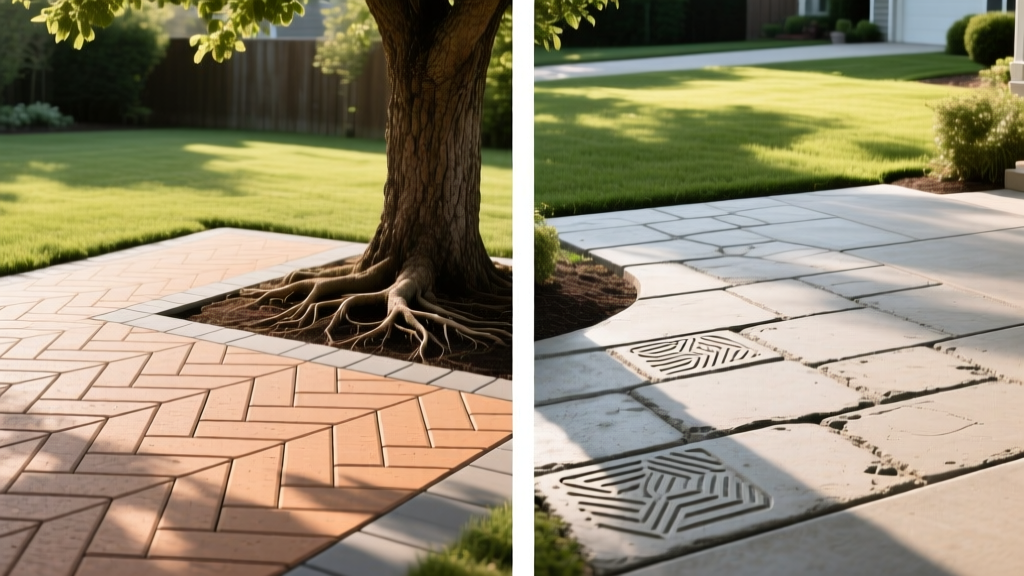
Belgard Pavers vs Stamped Concrete Near Trees: 2026 Cost Guide
Robert HayesPublished
The Intersection of Hardscaping and Arboriculture in 2026
Designing an outdoor living space that seamlessly integrates with your landscape’s living elements is one of the most rewarding challenges in modern landscaping. When planning a new patio adjacent to existing trees, or when selecting trees to plant near a newly constructed hardscape, the material you choose dictates the long-term health of your trees and the structural integrity of your patio. In 2026, the debate between installing a Belgard paver patio versus pouring stamped concrete remains a central topic for landscape architects and arborists alike.
While both materials offer stunning aesthetic appeal, their interaction with tree root systems, soil moisture, and canopy microclimates is vastly different. From the perspective of tree selection and planting guides, understanding how hardscape materials behave in the 'root zone' is critical. This comprehensive guide breaks down the 2026 costs, durability factors, and arboricultural best practices for building patios near trees.
2026 Cost Breakdown: Belgard Pavers vs. Stamped Concrete
When budgeting for a patio project in a tree-dense environment, you must account for specialized base preparation. Standard excavation often damages critical structural roots, requiring arborist supervision, root barriers, and specialized structural soils. According to industry cost reports from the Concrete Network, the baseline costs for materials and labor have shifted in 2026 due to supply chain adjustments and new eco-friendly material mandates.
- Belgard Paver Patios: In 2026, a professionally installed Belgard paver patio ranges from $19 to $28 per square foot. This includes the high-density concrete pavers, geotextile fabrics, open-graded aggregate base, and polymeric sand. When building near trees, an open-graded permeable base is highly recommended, which can add $2 to $4 per square foot but is vital for tree root survival.
- Stamped Concrete: Stamped concrete currently averages $15 to $22 per square foot installed. This includes the concrete pour, coloring agents, stamping mats, and a protective acrylic sealer. However, in tree zones, you may need to invest in suspended slab engineering or specialized expansion joints, pushing the cost closer to the paver range.
While stamped concrete holds a slight edge in upfront pricing, the long-term financial implications of tree root interaction heavily favor modular paver systems.
Durability in the Root Zone: Handling Tree Root Heave
Tree roots are not static; they grow outward and upward in search of oxygen, water, and nutrients. The top 12 to 18 inches of soil contain the vast majority of a tree's fine absorbing roots. When a hardscape is installed over this zone, it alters the soil's compaction, moisture levels, and gas exchange.
The Stamped Concrete Vulnerability
Stamped concrete is a rigid, monolithic slab. When installed over or near a tree's drip line, the heavy tamping of the subgrade and the impermeable nature of the concrete seal off oxygen to the soil. In response, tree roots will grow closer to the surface to breathe, eventually pressing against the underside of the concrete slab. This phenomenon, known as 'root heave,' causes the rigid concrete to crack. Repairing cracked stamped concrete is notoriously difficult; matching the exact 2026 color stains and stamp patterns on a patched section is nearly impossible, often resulting in an unsightly, fractured patio.
The Belgard Paver Advantage
Belgard pavers operate as a flexible, modular system. As noted in Belgard's official hardscape specifications, interlocking pavers shift and settle independently. If a tree root eventually heaves a section of the patio, the repair process is remarkably simple and cost-effective. A landscaper can 'unzip' the affected pavers, carefully prune the non-structural root or excavate and re-level the base, and relay the exact same pavers. There is no cracking, no color-matching nightmare, and no compromise to the tree's health.
Tree Selection for Patio Adjacency
If you are planting new trees near your planned hardscape, species selection is your first line of defense against root damage. The Arbor Day Foundation's planting guidelines emphasize the importance of matching the tree's mature root architecture to its surrounding environment.
Trees to Plant Near Hardscapes
Look for slow-growing, deep-rooted species with high canopies and low litter (to prevent staining on pavers or concrete).
- Ginkgo Biloba (Male cultivars): Deep root system, highly tolerant of urban soil compaction, and drops leaves all at once for easy cleanup.
- Japanese Maple (Acer palmatum): Slower growth rate and less aggressive surface roots make it a safe, stunning focal point near patio edges.
- White Oak (Quercus alba): While massive, its deep taproot structure makes it less likely to heave surface hardscapes if planted at the proper distance from the patio edge.
Trees to Avoid Near Patios
Avoid shallow-rooted, aggressive, or water-seeking species at all costs near hardscapes.
- Silver Maple & Norway Maple: Notorious for aggressive surface roots that will easily shatter concrete and displace pavers.
- Weeping Willow & Poplar: Their roots actively seek out moisture and will exploit any microscopic gaps in your patio base.
- Sweetgum: Aggressive roots combined with spiky 'gumballs' that can stain stamped concrete and get trapped in paver joints.
Comparison Chart: Belgard Pavers vs. Stamped Concrete Near Trees
| Feature | Belgard Paver Patio | Stamped Concrete |
|---|---|---|
| 2026 Avg. Installed Cost | $19 - $28 / sq. ft. | $15 - $22 / sq. ft. |
| Root Heave Repairability | Excellent (Modular & Reusable) | Poor (Requires Patching/Replacement) |
| Soil Permeability | High (with open-graded base) | None (Impermeable slab) |
| Impact on Tree Oxygen | Low (Allows gas exchange) | High (Suffocates surface roots) |
| Canopy Drip Line Safety | Safe for roots with proper base | Risky; promotes surface root growth |
| Moss/Algae in Shade | Moderate (Polymeric sand helps) | High (Smooth surface becomes slick) |
Best Practices for Planting Trees Near Hardscapes
To ensure the longevity of both your trees and your patio, landscape contractors and arborists in 2026 rely on advanced mitigation techniques during the installation phase.
Installing Root Barriers
If you must build a patio within the drip line of an existing tree, or plant a moderately aggressive tree near a new patio, a physical root barrier is essential. High-density polyethylene (HDPE) root barriers should be installed in a trench 24 to 36 inches deep between the tree trunk and the patio edge. This deflects roots downward into the deeper soil profile, preventing them from migrating under the hardscape base.
Utilizing Structural Soil and Silva Cells
When planting new trees directly adjacent to a Belgard paver patio, consider using structural soil or suspended pavement systems (like Silva Cells). These systems provide a load-bearing base capable of supporting the patio's edge while leaving ample void spaces for tree roots to expand, access water, and breathe without lifting the pavers.
Managing Canopy Drip Lines and Moisture
Trees planted near patios require deep, infrequent watering to encourage deep root growth. Shallow, frequent watering near the patio edge will train roots to stay near the surface, increasing the risk of heave. Furthermore, the shade cast by the tree canopy will keep the patio surface damp longer. While stamped concrete can become dangerously slick when shaded and damp, Belgard pavers offer textured, slip-resistant surfaces that provide better traction in shaded, high-moisture microclimates.
Final Verdict for the Tree-Conscious Landscaper
When evaluating Belgard pavers against stamped concrete through the lens of tree health and long-term landscape sustainability, Belgard pavers emerge as the superior choice for 2026. While the initial investment is slightly higher, the permeable nature of a properly installed paver base supports the vital gas exchange and moisture infiltration that tree roots require. More importantly, the modular flexibility of pavers provides an elegant, cost-effective solution to the inevitable reality of root growth, ensuring your outdoor living space and your landscape's canopy can thrive together for decades.

