
Landscaping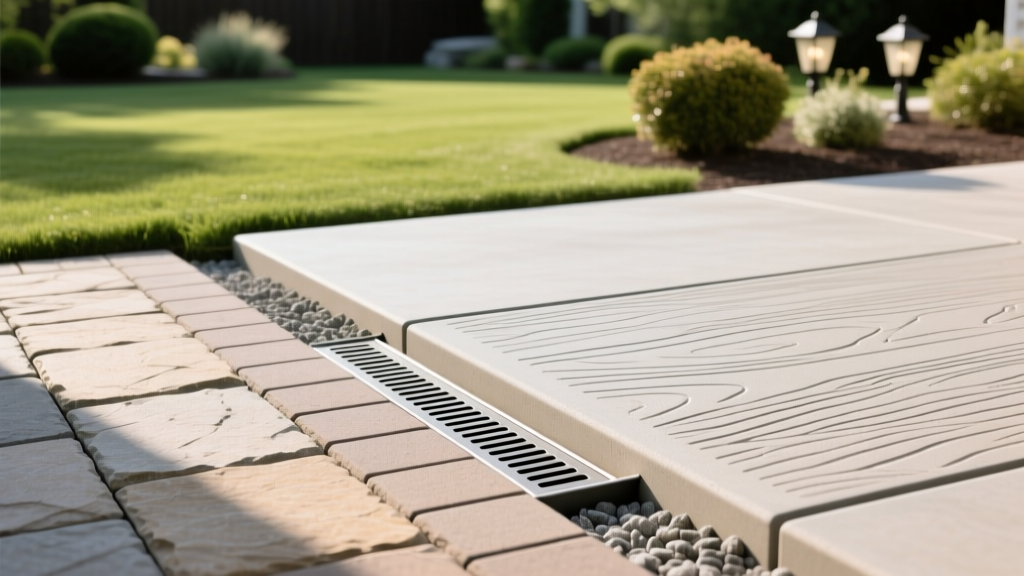
Belgard Pavers vs Stamped Concrete: 2026 French Drain Guide
David ParkPublished
The Unsung Hero of Patio Longevity: Subsurface Drainage
As we move through 2026, outdoor living spaces continue to dominate home improvement trends. Homeowners are heavily investing in premium hardscaping, with Belgard paver patios and stamped concrete remaining the two most sought-after surface materials. However, as a landscaping and drainage specialist, I see countless patios fail prematurely. The culprit is rarely the surface material itself; rather, it is inadequate subsurface water management. When hydrostatic pressure builds up beneath a patio base, it leads to frost heave, soil erosion, and catastrophic settling. This is where a properly installed French drain becomes the most critical component of your hardscape project.
Choosing between a Belgard paver patio and stamped concrete is not just an aesthetic decision—it is a fundamental drainage decision. How these two materials interact with water, accommodate French drain systems, and handle long-term subsurface repairs will dictate the lifespan of your investment. In this comprehensive 2026 guide, we will compare Belgard pavers and stamped concrete strictly through the lens of French drain installation, water management, cost, and durability.
Belgard Pavers: The Drainage-Friendly Hardscape
Belgard has long been an industry leader in interlocking concrete pavers, and their 2026 product lines, such as the Weston Stone and AquaPave series, offer distinct advantages for properties requiring aggressive water management. From a French drain perspective, pavers are inherently superior because they create a flexible, semi-permeable surface.
Permeability and Base Integration
Unlike a solid concrete slab, a Belgard paver patio relies on an open-graded aggregate base. According to the EPA's guidelines on permeable pavement, utilizing open-graded crushed stone (such as ASTM No. 57 and No. 8) beneath pavers allows surface water to infiltrate the ground rather than pooling or rushing toward foundation walls. When installing a French drain beneath or adjacent to a Belgard patio, the open-graded base acts as a subterranean reservoir, feeding excess water directly into the perforated drain pipe. This drastically reduces the surface runoff that typically overwhelms residential gutter systems.
The Repairability Factor
The most significant advantage of Belgard pavers regarding French drains is maintenance access. French drains rely on perforated pipes surrounded by gravel and wrapped in geotextile fabric. Over decades, roots can intrude, or extreme siltation can clog the system. If a drain fails beneath a paver patio, a contractor can simply "unzip" the surface, lift the Belgard pavers, excavate the base, repair or replace the French drain pipe, and relay the exact same pavers. The surface is restored to its original condition with zero visible scars.
Stamped Concrete: The Impermeable Challenge
Stamped concrete offers a beautiful, continuous surface that can mimic natural stone, slate, or wood. However, from a drainage engineering standpoint, a stamped concrete patio is essentially a giant, impermeable umbrella. In 2026, with climate models predicting more intense, localized micro-bursts of rainfall, managing the sheer volume of water that rolls off a concrete slab is a major engineering challenge.
Surface Runoff and Catch Basins
Because water cannot penetrate stamped concrete, it must be aggressively sloped away from structures (typically a minimum 2% grade). A standard French drain, which relies on water seeping down through gravel into a perforated pipe, cannot be placed directly beneath the middle of a concrete slab to catch surface water. Instead, drainage contractors must install surface catch basins or linear channel drains at the patio's edge, which then tie into a solid PVC pipe that eventually daylight or connect to a storm sewer. If the surrounding soil washes out due to a poorly managed edge drain, the rigid concrete slab will lose its support, leading to severe cracking and sinking.
The Nightmare of Subsurface Repairs
Research from Penn State Extension on stormwater management highlights the long-term maintenance requirements of hardscapes. If a subsurface drainage issue causes a stamped concrete patio to settle or crack, there is no easy fix. You cannot lift a concrete slab. Repairing the French drain or the eroded subgrade requires jackhammering the patio, destroying the stamped finish, and attempting to pour and color-match a new patch of concrete—a feat that is nearly impossible to execute seamlessly. In most cases, the entire patio must be demolished and repoured.
2026 Cost and Durability Comparison Table
When budgeting for your 2026 patio project, you must factor in not just the surface material, but the cost of the drainage infrastructure required to protect it. Below is a comparison of Belgard pavers versus stamped concrete, specifically analyzing drainage-related costs and durability.
| Feature | Belgard Paver Patio | Stamped Concrete Patio |
|---|---|---|
| 2026 Installed Cost (per sq. ft.) | $18 - $35 (Includes base prep) | $20 - $40 (Includes forming/pouring) |
| French Drain Integration | Seamless; water permeates joints to drain | Requires edge channel drains & catch basins |
| Subsurface Drain Repair Access | Excellent (Lift and relay pavers) | Poor (Requires demolition and repouring) |
| Frost Heave Resistance | High (Flexible base shifts and settles back) | Low (Rigid slab will crack under pressure) |
| Expected Lifespan (with proper drainage) | 30 - 50+ years | 20 - 30 years |
| Long-Term Maintenance Cost | Low (Joint sand top-ups, easy pipe access) | High (Sealing, crack repair, slab replacement) |
Step-by-Step French Drain Installation for Patios
Whether you choose Belgard pavers or stamped concrete, installing a French drain along the perimeter of your patio—or beneath the base in highly saturated soils—is non-negotiable for longevity. Always consult Belgard's official installation guidelines or your local concrete masonry association for base specifications. Here is the professional standard for integrating a French drain into a patio landscape:
- Trench Planning and Slope: Dig a trench along the patio's perimeter or beneath the planned base. The trench must be at least 18 to 24 inches deep, or below your region's frost line, to prevent freezing. Crucially, the trench floor must be sloped at a minimum of 1/8 inch per foot toward the daylight exit point or dry well.
- Geotextile Fabric Lining: Line the trench with a high-quality, non-woven geotextile drainage fabric. This fabric is the lungs of your French drain; it allows water to pass through while blocking fine soil particles and silt from clogging the gravel and pipe. Leave enough excess fabric on the sides to fold over the top of the gravel later.
- Gravel Base and Pipe Placement: Add a 2-inch layer of washed, angular drain rock (never use round river rock, as it does not lock together). Place a 4-inch SDR 35 rigid PVC pipe with pre-drilled perforations facing downward. Rigid PVC is vastly superior to corrugated black pipe in 2026, as it resists crushing under the heavy load of a patio base and allows for easy snaking if a clog occurs.
- Cover and Wrap: Cover the pipe with more washed gravel until you are within 3 inches of the surface grade. Fold the excess geotextile fabric over the gravel to create a "burrito" wrap, completely sealing the system from topsoil and root intrusion.
- Base Preparation for the Patio: For Belgard pavers, proceed with your open-graded aggregate base directly over the compacted soil (ensuring the French drain is positioned to catch lateral water flow). For stamped concrete, ensure your compacted gravel sub-base is heavily tamped, and that your surface grading directs water toward your installed catch basins, which tie into the main drainage line.
The 2026 Verdict: Which is Better for Drainage?
If your property suffers from poor soil percolation, a high water table, or heavy clay content, Belgard pavers are the undisputed winner. The ability to utilize a permeable base that works in tandem with a French drain system provides unparalleled peace of mind. Furthermore, the ability to lift the pavers to service the drain pipe decades from now saves thousands of dollars in potential demolition costs.
Stamped concrete remains a viable option for properties with naturally excellent drainage, expansive budgets for complex surface channeling, and strict HOA requirements for seamless surfaces. However, as a drainage installer, I must warn you: when you pour concrete, you are locking in your subsurface infrastructure. If the French drain or catch basin fails, the concrete goes with it. Plan your water management strategy carefully, hire certified drainage professionals, and ensure your 2026 patio is built to withstand the elements from the ground up.

