
Landscaping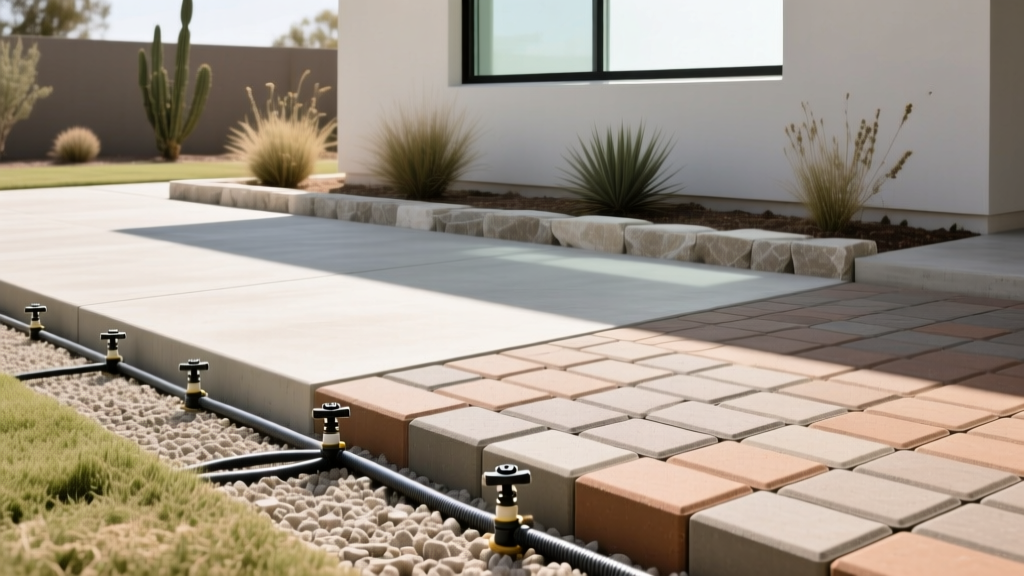
Belgard Pavers vs Stamped Concrete: 2026 Cost & Irrigation Guide
David ParkPublished
The 2026 Hardscape and Irrigation Intersection
When planning an outdoor living space in 2026, homeowners frequently debate the merits of a Belgard paver patio versus traditional stamped concrete. Most landscaping guides focus exclusively on aesthetics, curb appeal, and surface-level design. However, as an irrigation and drainage specialist, I look at what lies beneath the surface. Your choice of hardscaping drastically affects subsurface sprinkler lines, drainage routing, soil moisture retention, and long-term water management. In 2026, with shifting climate patterns bringing more intense rainfall events to many regions, integrating your hardscape choice with a robust irrigation and drainage strategy is no longer optional—it is essential. This guide breaks down the cost, durability, and irrigation impacts of Belgard pavers versus stamped concrete to help you make an informed decision for your landscape.
2026 Cost Breakdown: Belgard Pavers vs. Stamped Concrete
Before we dig into the subsurface mechanics, let us examine the financial investment required for both options in the current 2026 market. Material costs, labor rates, and base preparation for proper drainage all play a role in the final price tag. Below is a comprehensive comparison of the estimated costs per square foot for a standard 400-square-foot patio installation.
| Feature | Stamped Concrete | Standard Belgard Pavers | Belgard Permeable Pavers |
|---|---|---|---|
| Material Cost (per sq. ft.) | $6.00 - $10.00 | $4.00 - $8.00 | $6.50 - $11.00 |
| Labor & Installation | $8.00 - $12.00 | $10.00 - $16.00 | $14.00 - $20.00 |
| Base Prep & Drainage | $2.00 - $4.00 | $4.00 - $7.00 | $8.00 - $12.00 |
| Total Estimated Cost | $16.00 - $26.00 | $18.00 - $31.00 | $28.50 - $43.00 |
| Irrigation Line Routing | Must trench before pour | Flexible routing in base | Integrated drainage layers |
While stamped concrete often presents a lower initial cost, the base preparation required for Belgard pavers—especially permeable systems—offers significant long-term advantages for landscape water management. According to EPA research on permeable surfaces, investing in permeable hardscapes can drastically reduce stormwater runoff, alleviating the burden on surrounding landscape drainage systems and protecting adjacent garden beds from soil erosion.
Durability and Subsurface Irrigation Lines
The durability of your patio surface directly correlates with the safety of your underground irrigation infrastructure. Stamped concrete is poured as a monolithic slab. Over time, soil settlement, freeze-thaw cycles, and invasive tree roots will inevitably cause concrete to shift or crack. When a concrete slab shifts, it can easily shear rigid PVC sprinkler mainlines or crush poly tubing routed beneath or along the edges of the patio. Once a slab is poured, rerouting irrigation lines or adding new drip zones to adjacent garden beds requires concrete sawing, trenching, and unsightly patchwork.
Conversely, Belgard pavers are part of a flexible, interlocking system installed over a compacted aggregate base and bedding sand. If the ground settles, the pavers move with the earth. More importantly, if you need to upgrade your sprinkler system, add a new smart drip irrigation zone for your perimeter planters, or repair a damaged pipe, you can simply unzip the edge of the paver patio, lift the stones, trench the new line, and replace the pavers. The repair remains entirely invisible, preserving the integrity of your hardscape and your irrigation network.
Permeability, Runoff, and Drainage Integration
Water management is the cornerstone of any successful landscape. Stamped concrete is entirely impermeable. When it rains, or when your rotary sprinklers overshoot the lawn and hit the patio, that water must go somewhere. This necessitates the installation of trench drains, channel drains, or sloping the concrete aggressively toward landscape beds. This concentrated runoff can drown nearby plants, wash away mulch, and overwhelm local French drains.
Belgard offers specialized permeable paver systems designed to address this exact issue. By utilizing open-graded aggregate joints, water passes directly through the patio surface into a subsurface reservoir bed. This eliminates surface pooling and reduces the need for complex trench drain networks that often intersect and complicate irrigation mainlines. As noted by Belgard's official hardscape resources, permeable systems can capture and slowly release rainwater back into the local water table, maintaining optimal soil moisture levels for surrounding lawns and reducing the overall watering requirements of your landscape.
The Burst Pipe Test: Repair Accessibility
As an irrigation professional, I always ask my clients to consider the "burst pipe scenario." Imagine it is the peak of summer in 2026, and a pressurized PVC mainline develops a leak directly beneath your patio. How does the hardscape choice dictate the repair?
- Stamped Concrete: You must hire a concrete cutting crew to saw through the stamped slab, excavate the soil, repair the pipe, backfill, and pour new concrete. The new concrete will never perfectly match the faded, weathered stamped pattern of the existing patio, leaving a permanent, unsightly scar across your outdoor living space. Furthermore, the heavy vibration from concrete saws and jackhammers can weaken adjacent irrigation fittings.
- Belgard Pavers: A technician uses a simple paver puller tool to extract the stones directly above the leak. The base sand is swept away, the pipe is repaired, the sand is replaced, and the pavers are re-laid. The patio looks exactly as it did before the leak, with zero structural or aesthetic compromise.
This accessibility makes pavers the undisputed champion for landscapes that rely on complex, multi-zone sprinkler systems routed beneath hardscaped areas.
Smart Irrigation and Hardscape Heat Islands
In 2026, smart irrigation controllers and soil moisture sensors are standard practice for water-efficient landscaping, a standard heavily promoted by EPA WaterSense. However, the material you choose for your patio can create microclimates that affect these sensors. Stamped concrete, particularly in darker, stamped patterns designed to mimic slate or stone, absorbs and radiates immense amounts of heat. This "heat island" effect can bake the soil immediately adjacent to the patio, causing moisture sensors in nearby drip zones to trigger excessive watering, leading to water waste and root rot.
Belgard pavers, especially those with lighter, reflective color palettes and permeable joints, allow for better air circulation and moisture exchange within the underlying soil profile. When paired with a modern weather-based smart controller, your irrigation system can more accurately gauge the true moisture needs of your lawn and garden beds without being skewed by the artificial heat radiating from a solid concrete slab.
Final Verdict for 2026 Landscaping
While stamped concrete may offer a lower upfront cost and a seamless look for minimalist designs, it poses significant challenges for long-term irrigation management, drainage routing, and subsurface repairs. For homeowners who prioritize a resilient landscape, efficient water management, and the flexibility to adapt their sprinkler systems over time, Belgard pavers are the superior investment. By choosing a permeable Belgard system, you not only protect your underground irrigation infrastructure but also contribute to a healthier, more sustainable local ecosystem. Always consult with both a hardscape contractor and a licensed irrigation specialist during the planning phase to ensure your patio and your sprinkler system work in perfect harmony.

